
Once you have decided a plant really does need a new pot, the way you do it decides whether it settles in or sulks. The method is simple: one pot size up, fresh mix with plenty of air in it, the plant at the same depth, a good drink, then patience.
This guide covers the how. If you are still deciding whether to repot at all, start with the guide to when repotting helps and when it harms.
How much bigger should the new pot be?
Only one size. Gardening Australia says a much larger pot is a mistake because there is too much mix for the roots to use, leaving cold, wet mix that sets the plant back. Penn State Extension says the new container should be “slightly larger” than the current one.
The sources do not give a fixed number of centimetres. As a rough guide, a step of a few centimetres in diameter is a sensible reading of “one size up”. Check the rim of the old pot against the new one before you buy.
The new pot needs drainage holes. Penn State advises that if a decorative pot has none, plant into a draining pot and use the decorative one as a cachepot, emptying any standing water after watering.
What potting mix should you use?
A fresh, good-quality potting mix made for potted plants. Penn State warns against garden soil in indoor containers because it can bring disease and pest problems. The ABC News repotting article quotes a horticulturist recommending a “very loose chunky mix” because too much soil and water can harm roots more than skipping a repot.
The sources do not name an exact recipe for each plant. As a general principle, a plant that wants quick drainage, such as a succulent, wants a more open mix than a fern. If the plant is currently in a mix that has shrunk from the pot edge and repels water, a fresh mix also fixes that, since a new mix is wetter on contact.
What is the best time of year to repot in Australia?
The two US extension sources give spring, or spring to early summer, because that is when growth starts. In Australia, spring is September to November, so it lands in the same months you would expect from the plant’s own rhythm. Gardening Australia’s repotting segment for larger plants suggests late winter or early spring.
Region changes the sensible window. In the tropics and subtropics, growth continues much of the year and you have more flexibility; in cooler southern regions, wait until growth is clearly active. The sources reviewed here do not give state-specific dates, so use new growth as your cue. Early summer is still fine; deep summer heat and midwinter are poor times for a stressed plant.
How do you repot step by step?
- Water the plant a day beforehand so the root ball holds together and slides out whole.
- Ease it out. Squeeze a flexible pot or tap the rim; do not pull on the stem.
- Look at the roots. If they circle the outside, tease them loose. Gardening Australia says if teasing fails, cut into the root ball with a sharp knife or secateurs; otherwise, the roots will keep going round and round.
- Add mix to the base so the top of the root ball will sit roughly 3 to 4 cm below the rim, which Gardening Australia gives as the planting depth.
- Set the plant at the same depth it grew before; the Illinois guide says to replant at the same depth it grew in the old pot.
- Backfill and firm gently, leaving room at the top so watering is easy.
- Water in thoroughly and let the excess drain. Gardening Australia’s indoor segment suggests watering in with a liquid seaweed solution.
What aftercare does a repotted plant need?
- Return it to its usual spot. Penn State says to water thoroughly, let it drain, then put it back on display. Avoid moving to a brighter window at the same time.
- Wait for the mix to dry slightly before watering again. A fresh, larger volume of mix holds more water, so overwatering is the main risk. The sources do not give a number of days; check the mix with a finger.
- Expect a pause. Some leaf droop or a quiet few weeks is common. That is editorial experience, not a sourced figure.
- Feed when it is growing. The ABC News article says to feed regularly with a suitable fertiliser, especially when you are repotting less often.
- Do not fuss. If the plant is stressed, shading it from hot afternoon sun is a reasonable precaution.
What are the common repotting mistakes?
The sources point to a few recurring ones: jumping to a much larger pot, using garden soil, burying the stem deeper than before, and repotting a plant that is healthy and simply has a root poking from the base. Another is repotting a plant that is already stressed by overwatering without first checking the roots; in that case the mix and drainage are the first things to fix. If the roots look soft and dark, trim the damaged part and use a clean, well-draining mix rather than a bigger pot. This last point is editorial advice, not drawn from a single source.
What if you do not want a bigger plant?
You can keep it the same size. The ABC News article describes root pruning and returning the plant to the same pot with fresh mix, and Gardening Australia’s larger-plant segment says root pruning usually does no harm and recommends trimming the top growth to match. Divide clumping plants rather than potting them up, and compare the guide to root-bound container plants for diagnosing a tight pot.
Which plants like to be left alone?
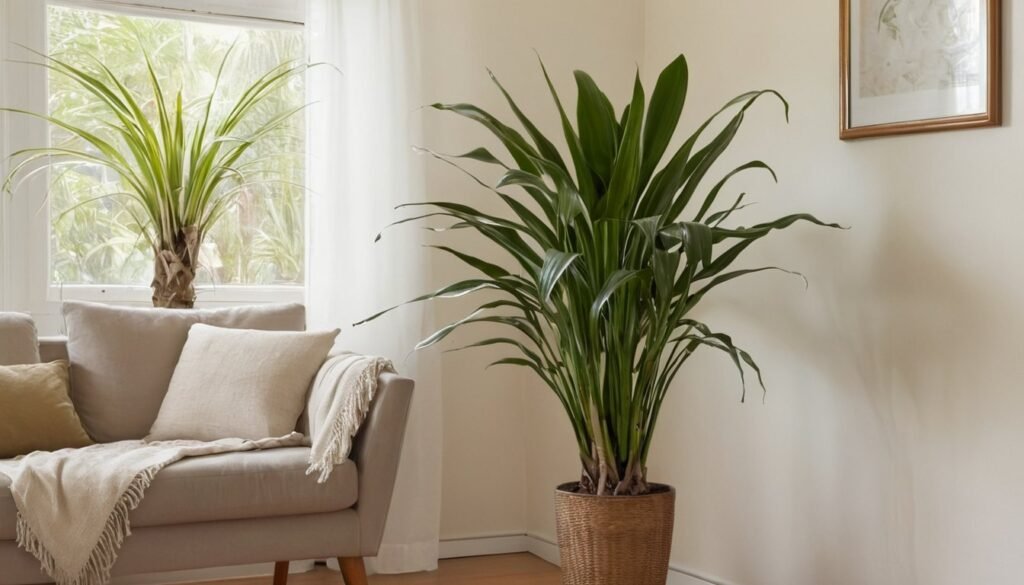
The ABC News article lists aroids such as philodendron, monstera, peace lily and devil’s ivy, alocasias, epiphytes such as orchids, and anthuriums as needing repotting less often. If one of these looks healthy, it is usually better not to disturb it. For the broader care picture, see the beginner guide to indoor plants in Australia.
What is established and what is uncertain?
Established by the sources: step up one pot size; use drainage holes; use fresh potting mix not garden soil; repot when growth is active; plant at the same depth; water in well afterwards; roots poking out of the base do not always mean the plant is pot bound.
Uncertain or editorial: the exact pot diameter step for each plant, the best dates for each Australian region, how many days to wait before the next watering, and how long a plant takes to recover. Two sources are US extension pages, used for general principles only.
Related reading: Is Your Home Too Dry for Houseplants? Reading Humidity.

 By anastasnowla@gmail.com

No comment yet, add your voice below!