
Bok choy, pak choy and choy sum are among the fastest crops you can grow, often ready in 6 to 9 weeks from seed. They prefer mild weather, so sow them in the cooler part of your local growing season, keep the soil evenly moist, and pick them young. The two real problems are bolting in heat and caterpillars, and both are manageable without chemicals.
Bok choy and pak choy are two spellings of essentially the same group of loose-headed, white-stemmed greens. Choy sum is a close relative grown for tender leaves and flowering stems. They are all in the cabbage family, so they share the same pests.
When should you sow in your climate zone?
These greens grow best in cool to mild weather. University of Florida crop notes for choy sum describe a preferred range of roughly 15 to 25 C, and flowering begins early once plants have a handful of leaves (UF/IFAS choy sum guide). That is crop biology, not an Australian calendar.
For Australian timing, one seed supplier gives these choy sum windows (Succeed Heirlooms). Treat them as a starting point and check your seed packet, because sellers do not all agree.
| Climate | Suggested sowing window |
|---|---|
| Tropical | April to August (the dry, cooler months) |
| Subtropical | March to September |
| Temperate | September to March, avoiding the hottest weeks |
| Cool, highland and Tasmania | September to November |
Bok choy and pak choy follow a similar pattern, and compact varieties are often a little quicker. Your own site matters as much as the table. A shaded bed on a hot January day behaves differently from a north-facing wall, so watch for the first run of days that stay hot and plan to stop sowing before then.
Arid inland gardens have short mild windows and fierce heat. Specific arid-zone dates were not verified here, so use autumn and late winter sowings and check with a local gardening group.
Why do Asian greens bolt, and how do you slow it?
Bolting means the plant switches from leaves to a flowering stalk. Heat, long days and plant stress (especially dry spells) all push it that way. Choy sum is more forgiving because the flowering stems are part of the harvest, but pak choy and bok choy turn bitter and tough once the stalk rises.
You cannot stop bolting entirely, but you can delay it:
- Sow at the right time, not in the hottest weeks.
- Keep water even and mulch the bed, so the plants are never stressed by dry spells.
- Give afternoon shade where summers are very hot. Sustainable Gardening Australia suggests part shade in those areas (SGA).
- Harvest promptly. A plant that has started to bolt is still edible when young, and choy sum flowers are edible.
Direct sow or transplant seedlings?
Direct sowing works well and is cheaper. These seeds are small, so sow about 5 to 6 mm deep, keep the surface moist, and expect germination in roughly a week to ten days. Thin seedlings to about 20 to 25 cm apart for full-sized heads, or closer if you plan to pick them as baby leaves.
Seedlings from a nursery are handy if snails or birds keep eating emerging sprouts, or if you want a head start in a short season. Brassicas dislike root disturbance, so handle them gently and plant at the same depth as in the punnet.
Use fertile, free-draining soil rich in compost. Waterlogging is a known problem for choy sum, so a raised bed or pot suits heavy ground.
How much water do they need?
Roots are shallow, so the top layer dries quickly. Sustainable Gardening Australia notes these crops need frequent watering, particularly in hot or windy weather, and recommends mulching and checking soil moisture regularly. Water the soil rather than the leaves, and aim for evenly damp, not soggy.
A thin mulch of straw or similar material keeps the roots cooler. Keep it clear of the stems.
When should you pick, and how do you keep a supply coming?
Pick young. Young leaves are mild and tender, and older ones get bitter. SGA gives about 8 weeks to harvest for pak and bok choy, with outer leaves pickable from about 6 weeks. The supplier above gives 7 to 9 weeks for whole choy sum plants, and leaves can be picked sooner. Ranges vary with variety and weather.
Two ways to harvest:
- Cut-and-come-again: take the outer leaves and let the centre keep growing.
- Whole plant: cut at the base while the head is still compact.
Because the crop is so quick, succession sowing beats one big planting. Sow a short row every two to three weeks inside your window, and each batch comes on as the last finishes. Stop when the weather turns reliably hot.
What small-space options work?
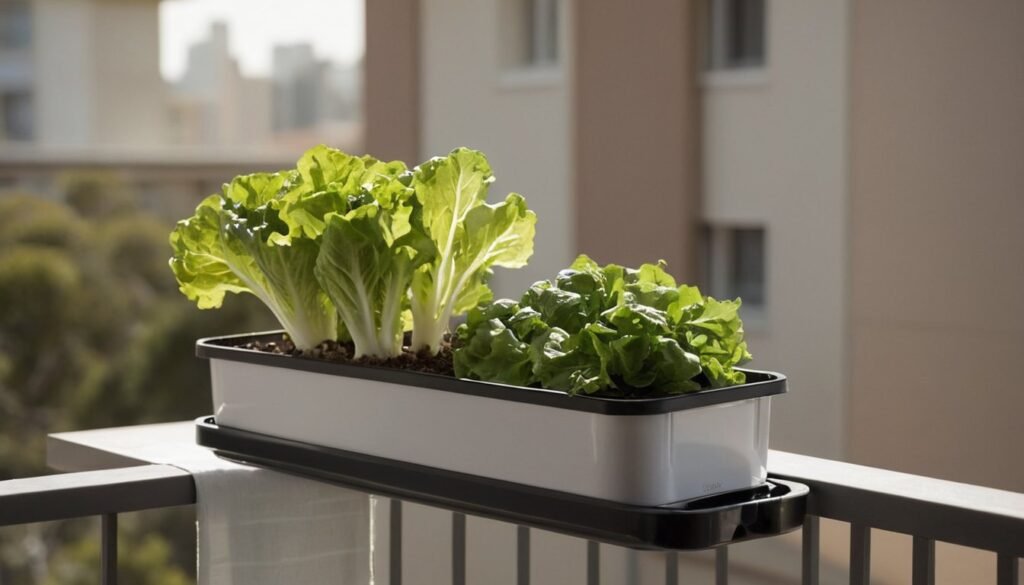
Compact bok choy and pak choy varieties suit pots at least 20 to 25 cm deep, with drainage holes. Use a quality potting mix and water often, since pots dry faster than beds. Because these greens are short-lived, they fill gaps between slower crops.
In a mixed bed, tuck a row beside slower crops. Choose neighbours with different needs, such as onions and leeks that share the same cool-season bed. Another reliable leafy crop for the same patch is a hardy leafy green you can pick from for months.
How do you spot and manage caterpillars and aphids without chemicals?
Cabbage white caterpillars are the main pest. Look for small yellow eggs, irregular holes in outer leaves and dark green droppings. The caterpillars are velvety green with faint yellow stripes along each side, grow to about 30 mm and blend in well (Organic Gardener).
What works:
- Netting first. Cover plants with mesh with holes under 5 mm, held on a frame so it does not touch the leaves, otherwise butterflies may lay eggs through it. Check for eggs and caterpillars before you fit it, and seal the edges.
- Hand removal. Check every few days and remove small caterpillars early (University of Nevada Extension). Rub eggs off leaves with your fingers.
- Leave parasitised caterpillars. One carrying small white silk cocoons is hosting wasps that will emerge.
Cabbage aphids are small, pear-shaped and grey-green with a white waxy coating, usually clustered on leaf undersides and growing tips. A few cause little harm, but big colonies slow growth and distort leaves (University of Minnesota Extension). Species look alike, so do not rely on a positive identification from a photo alone. Wipe off small colonies by hand, remove badly infested outer leaves, and avoid over-fertilising, which tends to produce soft new growth. Leaving flowering herbs nearby encourages ladybirds and hoverflies, though how much they help your patch varies. If a problem outgrows these steps, check your state agriculture department.
Snails also feed on seedlings, so check at dusk and after rain.
Common mistakes
- Sowing into the hottest weeks and watching everything bolt.
- Letting the bed dry out between waterings.
- Netting that rests on the leaves, or has gaps at the edges.
- Sowing everything at once, then facing a glut and a bitter bolted bed.
- Waiting for big heads when baby leaves are already ready.
If you want to line up the next sowing with the rest of your garden, the month-by-month subtropical planting guide is the best place to start.

 By anastasnowla@gmail.com


No comment yet, add your voice below!