
Lettuce bolts (sends up a flower stalk and turns bitter) when heat, dry soil and plant stress push it to flower early. You can delay it, but not abolish it: choose slow-bolt types such as looseleaf and cos, give afternoon shade, keep water steady and sow small batches often.
In hot weather, the realistic goal is a longer harvest, not a plant that never bolts.
Why does lettuce bolt?
Lettuce is a leafy crop that wants to flower eventually. Warm conditions speed that up. The Royal Horticultural Society lists hot, dry weather, dry soil and changes in day length as triggers, and notes that all lettuces will flower in the end.
Business Queensland makes the variety point plainly: varieties are bred for particular temperature ranges, and a cool-weather type grown in warm conditions will tend to bolt.
What is well established: heat, drought stress and a variety mismatched to the season all contribute. What is less clear for home gardens: how much each factor matters. Day length is hard to change in a backyard, so the useful levers are variety, shade, water and timing.
Which lettuces cope best with heat?
Choose by type, then check the seed packet or seedling label for heat or slow-bolt claims.
| Type | Heat behaviour | Practical note |
|---|---|---|
| Looseleaf | Often a forgiving choice | Pick leaf by leaf, so plants keep producing |
| Cos (romaine) | The RHS lists cos and crisphead types as better at resisting bolting | Upright heads; harvest once a good heart forms |
| Butterhead and soft hearting types | Varies a lot by variety | Check the label for warm-season suitability |
Treat a “heat tolerant” label as a claim to test, not a guarantee. Business Queensland suggests trialling a few new varieties side by side with a standard one over several seasons. A home version is to sow two or three types in the same bed and keep notes on which holds out longest.
How do you shade lettuce in the afternoon?
Aim for relief at the hottest part of the day, not permanent gloom. The RHS recommends light shade in the hottest part of the day, which also helps deter bolting in young transplants.
- Site beds for morning sun and afternoon shade. The east side of a wall, fence or taller crop works well.
- Use a removable shade-cloth frame over a raised bed from late spring. Choose a light weave so plants still get good light, because heavy shade gives soft, thin growth.
- Borrow shade from other crops. A tall trellis of cucumbers on the western side of a bed can screen the afternoon sun, provided the lettuces still get morning light.
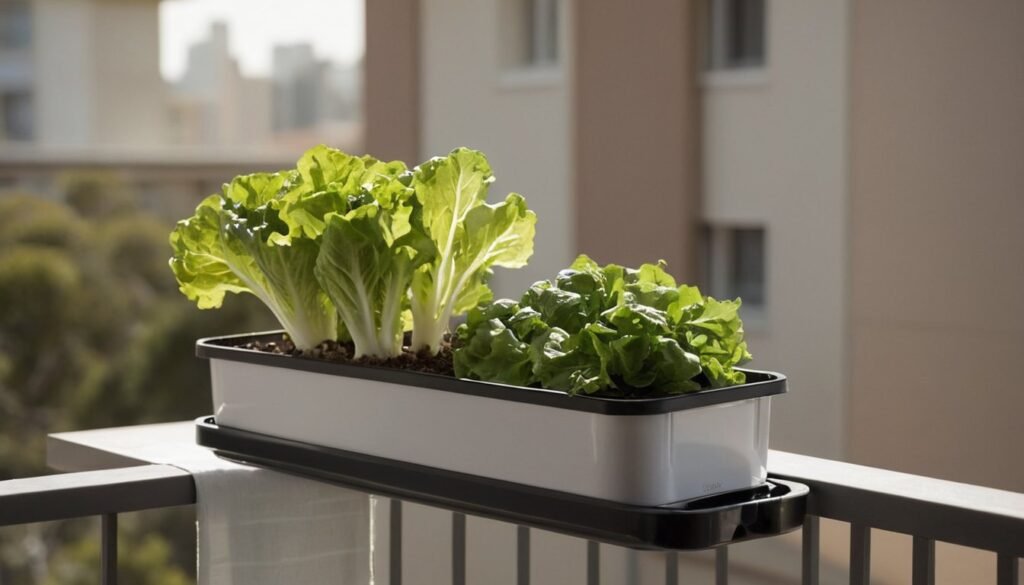
- Move pots. Container lettuces dry out and heat up fast, so shift them out of midday and afternoon sun.
Shade slows bolting but does not stop it. No figure for how many days it buys can be promised, because it depends on your weather and variety.
Why won’t lettuce seed germinate in hot soil?
Lettuce seed is fussy about heat. A review of the research reports that most varieties germinate best at about 15 to 22 degrees Celsius, and that high temperatures can stop germination, a reversible effect called thermoinhibition. Tolerance varies by variety. Seed that fails in a hot spell can germinate once conditions cool.
Practical steps that follow from this:
- Sow in the evening or on a cooler day, as the RHS suggests.
- Shade the seedbed and keep it moist during hot spells.
- Raise seedlings in a cool, bright spot such as a shaded verandah, then transplant at the end of the day.
- If seed has not emerged after a heatwave, wait for cooler weather before re-sowing rather than sowing repeatedly into baking soil.
How does steady watering and succession sowing help?
Dry soil is a recognised trigger, so even moisture matters more than extra water in a panic. Mulch the bed with a thin layer of straw or similar, keep it clear of the stems, and water early in the morning. Containers may need watering daily in summer.
Sow a short row or one tray about every two weeks, as the RHS suggests for a steady supply. In warm months that spreads the risk. When one planting bolts, a younger one is coming on. Pull bolted plants early and compost them, so they don’t hold space.
How should you pick lettuce so it lasts?
Pick looseleaf types leaf by leaf. The RHS advice is to snip a few leaves from each plant once they are about 10 centimetres long, which keeps the plant cropping.
Cut hearting types whole once a good heart has formed. Harvest in the morning, and in hot weather get the leaves into cold water quickly so they do not wilt.
If the centre shoots up, the stem thickens or the leaves turn bitter, harvest what is usable now. Once a flower stalk has formed, quality rarely recovers. Your next sowing is the fix. For the pot next door, heat-hardy herbs can carry the kitchen while lettuce rests.
What timing suits your climate?
Treat these as editorial starting points, not official dates. Local microclimate, rainfall and the variety all change the answer.
| Zone | Easiest lettuce season | Warm-season approach |
|---|---|---|
| Tropical (Top End, far north Queensland) | Cooler, drier months, roughly May to August | Treat lettuce as a dry-season crop; summer is very difficult |
| Subtropical (south-east Queensland, northern NSW) | Autumn through winter into early spring | Late spring and summer need shade, looseleaf or cos types and cooler seed-raising |
| Temperate (Sydney, Melbourne, Adelaide, Perth) | Early spring to early summer and again in late summer to autumn | Shade from midsummer; succession sow through the heat |
| Cool climate and Tasmania | Spring to early autumn | Fewer problems, but sudden heat spells still trigger bolting |
| Arid and inland | Autumn and spring | Midsummer needs strong afternoon shade and daily moisture checks |
For a broader seasonal framework, see the month-by-month sowing guide for warm regions.
What is established and what depends on your site?
Established: bolting is driven by warm, dry conditions and a mismatch between variety and season; lettuce seed germinates best in cool soil; picking and sowing little and often spreads risk. Climate-dependent: which months are workable, how much shade is enough, and which named variety performs best. Those answers come from your own garden, so keep a short note of sowing date, variety, first harvest and first sign of bolting. After two seasons you will have local evidence that no generic calendar can supply.
Common mistakes
- Sowing a cool-season variety in midsummer and expecting a normal crop.
- Letting pots and beds dry out, then flooding them.
- Using heavy shade all day, which leaves leaves pale and thin.
- Sowing once in a big block instead of small, regular batches.
- Keeping plants that have started to bolt instead of replacing them.
If lettuce still fails in your hottest months, it is reasonable to grow it in the cooler half of the year and fill summer beds with crops that like the heat.

 By anastasnowla@gmail.com


No comment yet, add your voice below!