
Plant a whole choko fruit that has sprouted, with the shoot poking above the soil, beside a very strong fence or trellis once frost has passed. It is one of the easiest vegetables in a frost-free garden, but it is also a big, fast vine. Plan the support and the pruning before you plant, not after.
Where do chokos grow well?
Gardening Australia says chokos are at home in Brisbane and grow well in any frost-free garden. They want a support and some shelter from wind.
Warm, sunny conditions are the sweet spot. Chokos are frost-tender, and Yates notes that frost can brown and kill back leaves and stems, while severe frost can kill the plant. Choko is also described as needing around four to five months without frost to crop.
| Climate | What to expect |
|---|---|
| Tropical and subtropical coast | Good fit. Vines can grow most of the year and may live for several seasons. |
| Warm temperate, mild frost-free sites | Often workable in a sheltered spot. Check your own frost history. |
| Cool temperate, highlands, Tasmania | Frost cuts the season. Expect dieback in winter and a short growing window; fruiting is less certain. |
| Arid and hot inland | Not well documented in the sources used here. Heat, wind and watering will be the limits; try one vine before committing. |
Sources differ on how adaptable the plant is. Yates lists it for all climate zones, while Gardenate describes it as suited to warmer climates, and notes that frequent hot nights slow flowering. Treat cool-climate success as local and uncertain.
How do you plant a choko?
You do not buy seed. You plant the fruit itself.
- Take a mature fruit and leave it somewhere warm until a shoot appears. Yates suggests waiting until the shoot is about 10 cm long before planting out.
- Wait until frost risk has passed. In cooler areas that means spring.
- Choose a sunny spot with well-drained soil. Yates advises at least four hours of sun a day and warns that waterlogging can kill vines.
- Plant the fruit mostly buried, with the sprouted end above the soil. The University of Florida IFAS describes laying the fruit on its side, narrow end sloping upward, in a hole about as deep as the fruit is wide.
- Water well, mulch the base, and keep the soil moist but not soggy while the shoot gets going.
Gardenate suggests about 100 cm between plants, though one vine is often plenty for a household. Gardening Australia’s plant finder adds a useful tip: smooth, bland-tasting types are common, so fruit from a garden group or farmers market may give you better flavour than a supermarket one.
What support does a choko need?
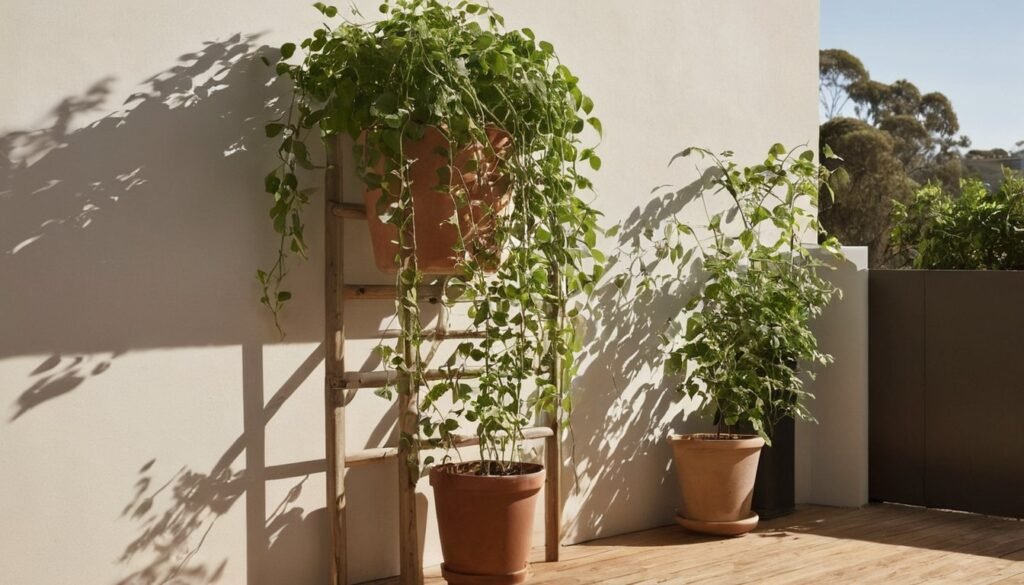
A strong one. Yates calls for a sturdy trellis, fence or pergola because the vine is vigorous and fast-growing. Gardenate notes it can cover a shed or fence as it spreads.
Build the structure first. A flimsy tomato stake will not last a season. Good options include:
- A solid timber or steel fence with horizontal wires or battens for tendrils to grip.
- A pergola or arbor. University of Florida IFAS notes gardeners often use an arbor so they can harvest in the shade.
- A heavy-duty panel trellis fixed firmly to posts, not just leaning on a wall.
Keep the vine away from trees, gutters and neighbours’ boundaries unless you want to keep cutting it back. A wind-sheltered position also helps, as Gardening Australia advises.
How do you control its size?
You manage a choko by cutting it back, not by hoping it stays small. Yates recommends pruning each winter, leaving two to four young shoots to produce the next crop. Gardening Australia advises against pruning in autumn because that removes growth that would fruit over winter in warm areas. In practice, wait until the main cropping is done.
Other ways to keep it in check:
- Pick fruit regularly, which keeps the plant productive rather than letting it set large mature fruit.
- Trim stray runners back to the trellis through the growing season.
- Grow it in a large pot only if you accept a smaller plant. Yates suggests a pot at least 30 cm wide, and a potted vine will still need strong support.
Chokos are naturalised in some parts of Queensland, so if you live near bushland or a creek, check your council’s weed list and keep fruit and trimmings contained rather than dumping green waste outside your garden.
When do chokos flower and fruit?
Timing depends on your climate. Gardening Australia says plants grow vigorously year-round in Brisbane and fruit from autumn through to the end of spring. Yates says fruit appears about 18 weeks after planting and production continues for several months. Gardenate gives a longer window, around four to six months. Take the range as a guide, not a deadline.
The plant is monoecious, with separate male and female flowers on the same vine, and the University of Florida IFAS says insects pollinate them, with fruit developing about 35 days after pollination. Yates says one vine is enough because choko is self-pollinating.
If a healthy vine produces leaves but no fruit, check these before changing anything else:
- Too much shade. Yates says shaded vines fruit less.
- Very hot nights. Gardenate notes frequent hot nights slow flowering.
- Very young vine. The University of Florida IFAS says yields are best once the plant is two to three years old.
- Nutrition. Yates suggests a potassium-rich plant food for vines that are not fruiting. Use any fertiliser at label rates.
Why pick chokos young?
Both Yates and Gardenate say to pick small: roughly 5 to 7 cm long (Gardenate says up to 6 cm), light green with a tender skin. The University of Florida IFAS also advises harvesting young, when the rind and seed are soft. Older fruit gets tougher and may begin to sprout on the vine.
Pick often. Regular harvesting extends the season, according to Yates. Chokos are mild, so they take on the flavour of what they are cooked with, and young fruit can be eaten raw or cooked. Keep a few fruit back as next season’s planting material if you want another vine.
Will it come back each year?
In frost-free areas, yes. Yates describes choko as perennial where there is no frost, living several years. In cooler or frost-prone gardens the vines usually die back in winter and may regrow from the base in spring, or you replant a new sprouted fruit. Mulch the base and cut back dead growth after the cold has passed.
Common mistakes
- Planting before frost has passed.
- Underbuilding the support, then watching the fence sag.
- Burying the sprouted end completely in a cool spot, or leaving the fruit to rot in waterlogged soil.
- Letting fruit grow large and tough instead of picking young.
- Pruning hard in autumn and losing winter fruit in warm areas.
- Planting in dense shade, then wondering why there is no crop.
What to grow alongside it
Chokos take a lot of space, so give them their own fence line. Match them with other warm-season plantings using the month-by-month sowing guide for warm areas. If you like long-lived, warmth-loving edibles, the rhizome growing guide for a tropical-style garden suits similar conditions, and the guide to growing a sprawling pumpkin vine will help you plan space for another vigorous climber.

 By anastasnowla@gmail.com

No comment yet, add your voice below!