
Garlic is a cool-season crop. In most of Australia you plant cloves in autumn, grow them through winter and spring, and harvest six to eight months later. It does best where winters are cool and the soil drains well; in the warm north it is more marginal, so local advice matters.
The choices that matter most are planting time, clove quality, drainage and drying the bulbs properly after harvest.
Where does garlic grow well in Australia?
Garlic is grown commercially from Queensland to Tasmania, so it is not limited to cold places. The NSW Department of Primary Industries factsheet gives the best monthly average temperature range as roughly 13 to 24 degrees and notes it is grown as a winter and spring crop. It adds that garlic can be grown in any district if water is available during dry spells.
Here is how that plays out by climate zone. Treat it as a starting point, not a rule.
| Climate | Typical approach | What to watch |
|---|---|---|
| Temperate (Sydney, Melbourne, Adelaide, Perth) | Plant in autumn, roughly March to May | Heavy or wet soil; wet weather near harvest |
| Cool, highlands and Tasmania | Plant in autumn; go a little deeper in very cold sites | Short season; check local timing |
| Subtropical (south-east Queensland, northern NSW) | Plant from about mid-March to late April | Warm springs; late planting gives small bulbs |
| Tropical and arid | Marginal; trial a few cloves in the coolest months | Heat and humidity; ask local growers |
Queensland Department of Agriculture and Fisheries information describes planting from mid-March to late April in southern Queensland because garlic needs a cool growing season, and says later plantings produce smaller bulbs. A month-by-month sowing guide for warm areas helps you fit garlic in alongside your other crops.
Why do cool winters matter for bulbing?
Garlic puts on leaves first, then switches to forming the bulb as temperatures and day length rise. The NSW factsheet states that yield depends on how much leaf growth the plant makes before bulbing starts, and that the longer the vegetative period, the larger the bulbs. Heat and long days hasten maturity.
University of Illinois Extension adds that garlic needs a cold period for good bulb formation. In warmer Australian regions, ABC Organic Gardener suggests chilling bulbs in the fridge at close to 10 degrees for two or three weeks before planting. That step is not needed in colder areas.
In practice: plant early enough for a long cool growing season, and expect smaller bulbs if you plant late or get a hot spring.
Should you choose softneck or hardneck garlic?
The two types behave differently.
- Softneck: no flower stalk, pliable necks you can plait, and a longer storage life of about six to eight months when well cured.
- Hardneck: sends up a flower stalk (a scape), and stores for a shorter time, about three to four months.
Illinois Extension notes hardnecks are usually recommended for cold regions, although some softnecks also suit cold climates. For Australia, softneck is a sensible choice if you want bulbs that last; hardneck suits cooler areas where you also want the scapes. Either way, the cultivar should suit your region, so ask a local grower or nursery what does well nearby.
ABC Organic Gardener notes that Australia has more than 300 cultivars sorted into groups by size, skin colour and storage time. It suggests growing early, mid and late types so one bad season does not take the whole crop.
How do you plant garlic cloves?
- Choose a sunny, well-drained spot. The NSW factsheet lists fertile, well-drained loam with a pH between 5.5 and 7.0 as ideal, and warns heavy clay can give misshapen bulbs. In a poorly draining bed, build it up or use a deep container.
- Rotate. Avoid ground that has grown garlic, onion, leek or chives in the past two years.
- Pick good planting stock. Larger cloves from large bulbs give the best crop, and the small centre cloves are best discarded. Break bulbs apart shortly before planting. Locally grown bulbs are already adapted to your conditions; bulbs from very different climates may take several seasons to adapt.
- Plant pointy end up, about 2 cm deep and 15 cm apart in rows 15 to 30 cm apart, as ABC Organic Gardener recommends. In very cold regions, plant about 5 cm deep.
- Mulch lightly and water evenly. Roots are shallow, so keep the top soil moist but not soggy, and stop watering as the tops begin to yellow.
Garlic does not need rich feeding. Dig in compost before planting and avoid heavy late nitrogen, which the NSW factsheet says can result in softer bulbs with a shorter shelf life.
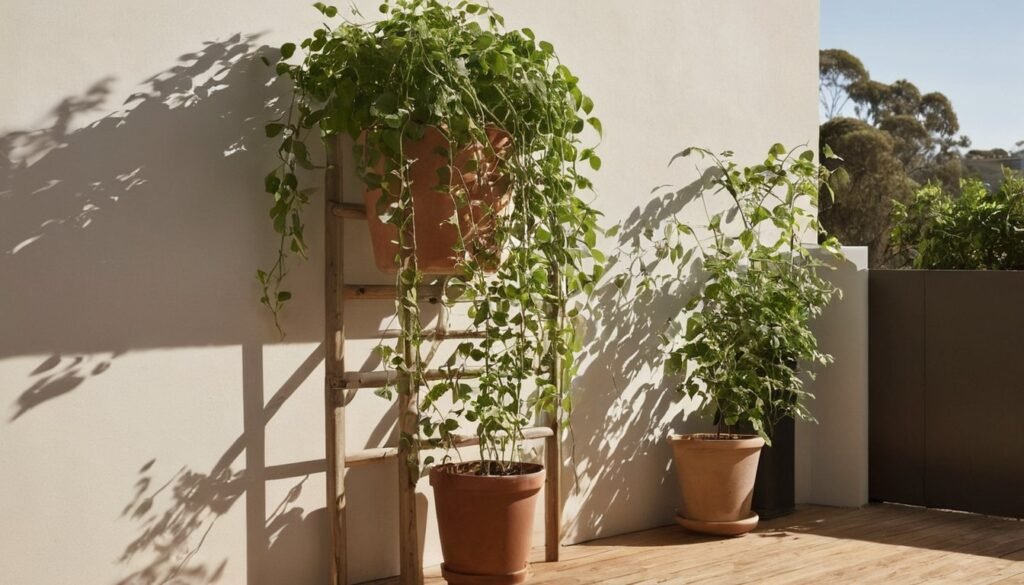
Once the garlic is out in late spring, the space is free for a warm-season crop, such as a vigorous vine for warm gardens. Through winter, the list of cool-season crops that suit a subtropical winter shows what else shares garlic’s sun and watering needs.
When is garlic ready, and how do you cure it?
Garlic typically takes six to eight months from planting. ABC Organic Gardener’s harvest signs are that leaves begin dying back while four to six green leaves remain. The NSW factsheet says the crop is ready when the necks begin to soften and are partly dry.
Do not leave it too long. The factsheet warns that delaying harvest several weeks can let the cloves separate and become discoloured. Stop irrigation at the first signs of maturity, because continued watering or rain can discolour bulbs and rot the scales.
To cure:
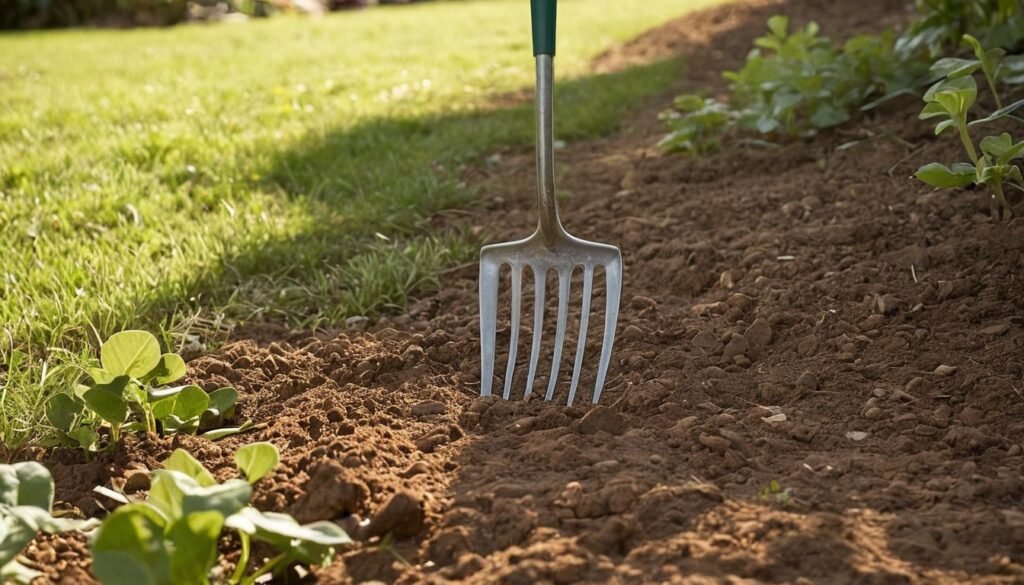
- Lift the bulbs carefully with a fork, keeping leaves and roots attached. Shake off loose soil rather than washing.
- Keep them out of direct sun, which can sunburn bulbs, and out of rain or dew. The NSW factsheet advises moving bulbs to a well-ventilated shed if rain or dew is likely.
- Hang them in bunches in a warm, dry, airy place. ABC Organic Gardener suggests three to six weeks.
- Once the necks are dry, trim the roots and cut the tops, leaving about 5 cm of stem, or longer if you plan to plait softnecks.
How should you store garlic?
Store cured bulbs somewhere cool, dry and ventilated, such as a mesh bag or open basket. Avoid sealed plastic and damp spots. This is general practice rather than a tested Australian standard, so check your bulbs regularly. Softnecks generally keep longer than hardnecks, so use hardnecks and any damaged bulbs first.
Keep your best, largest bulbs for replanting. ABC Organic Gardener suggests setting aside 10 to 15 per cent of your best cloves for next season. NSW DPI notes bulbs for replanting do best stored at about 10 degrees.
How do you recognise garlic rust?
Rust is a fungal leaf disease of alliums. Early signs are small white to yellow flecks on the leaves. These enlarge into oval or elongated spots with powdery orange pustules, and black spore structures appear later in the season. The Pacific Northwest Plant Disease Management Handbook describes heavily infected plants that look orange overall, with yellowing outer leaves and sometimes smaller bulbs.
Non-chemical steps from that source:
- Rotate out of alliums for two to three years.
- Remove volunteer garlic, onions and allium weeds.
- Plant at lower density and avoid excess nitrogen.
- Keep foliage as dry as possible, watering at the base.
If you are unsure what is affecting your leaves, compare with a trusted local source before acting. Where a chemical step might be considered, check the product label and your state agriculture department.
What common mistakes should you avoid?
- Planting too late, which gives a short growing season and small bulbs.
- Planting in heavy or waterlogged soil.
- Crowding plants, which favours leaf disease.
- Leaving mature bulbs in wet soil or harvesting too late.
- Storing bulbs before curing is finished.
- Planting bulbs from a very different climate and expecting the same result in the first year.
What is established and what depends on your site?
Established: garlic needs a cool growing season, drained soil, a long leaf-growing period before bulbing, and thorough drying after harvest. Climate-dependent: the exact planting month, best cultivar, whether pre-chilling helps, and how much rain you get near harvest. Local growers, nurseries and your state agriculture department know your conditions best.

 By anastasnowla@gmail.com
No comment yet, add your voice below!