
Brown tips on indoor plants mean the tissue at the leaf’s end has died, but they do not tell you why. Dry roots, persistently wet roots, aircon draughts and accumulated mineral salts can produce similar damage. Check the pot before adding water or blaming the tap.
The useful clues are what the mix feels like, where the plant sits and what changed before the browning appeared. An old brown tip records past stress; it is not automatically a request for action today.
What should you check first?
Feel below the surface of the potting mix and lift the pot to judge its weight. A dry surface can hide a wet root zone, while a quick splash can leave most of a dry root ball untouched. Compare the pot with how it feels after watering and draining.
| What you find | What it suggests | First move |
|---|---|---|
| Light pot, dry mix below the surface, leaves losing firmness | The root ball has dried too far for this plant | Water thoroughly, let it drain, then monitor moisture |
| Heavy pot, wet mix, yellowing or soft growth alongside brown tips | Poor drainage or watering too often | Empty the outer pot and check drainage before watering again |
| Damage most obvious on leaves facing an aircon outlet | Direct airflow or temperature stress may contribute | Move the plant out of the air stream, retaining suitable light |
| Crust on the mix or pot rim, with repeated tip damage | Mineral or fertiliser build-up is worth investigating | Review feeding and drainage; do not assume tap water is responsible |
| Broad pale or brown patches on the window-facing side | Excess direct sun is another possibility | Soften exposure and check whether damage stops spreading |
These are starting points, not diagnoses from a single symptom. More than one problem can be present.
Is underwatering causing the crispy edges?
Underwatering means the plant cannot access enough water when it needs it. That can happen even if you water regularly: small surface drinks may never wet the full root ball.
When the mix is genuinely dry, water slowly across the surface until water drains from the base. Allow it to drain freely and empty the saucer or decorative outer pot. Check that the mix actually absorbed water; immediate runoff down a gap beside a shrunken root ball can be misleading.
If water keeps bypassing dry mix, a brief soak of the nursery pot can help it rehydrate. Remove it once the mix has taken up moisture and drain it fully. A soak is a response to dry mix, not a routine for an already wet pot.
Then adjust when you check the plant. Ferns and succulents should not share a watering rule. A pot that repeatedly dries unusually fast may also need its root crowding assessed before you simply increase watering frequency.
Can overwatering give leaves brown tips too?
Yes. Persistently wet, poorly aerated mix can impair roots, so a plant may struggle to supply its leaves even with plenty of water in the pot. Crispy leaf edges alone do not distinguish this from underwatering.
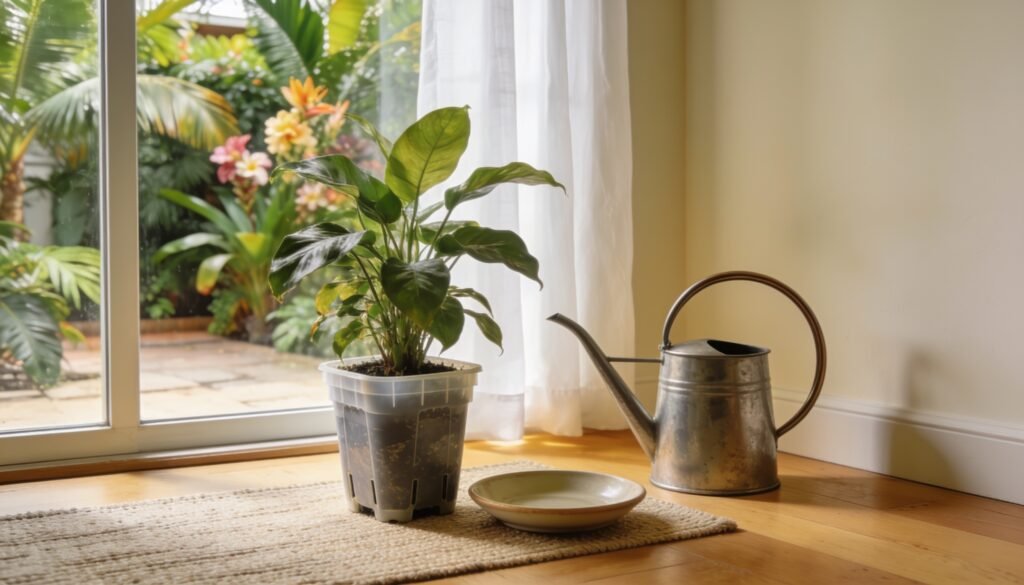
Look for the combination: a pot that stays heavy, mix that remains wet, and declining foliage. Check that the nursery pot has drainage holes and is not standing in hidden water inside its cover pot.
Stop topping it up while it is still wet. If the plant continues declining, inspect the root ball and consider whether broken-down, compacted mix needs replacing. Do not move straight into a much larger pot, which can leave more wet mix around struggling roots.
Tiny flies rising from the surface are another reason to investigate persistent dampness. The guide to little flies breeding around your pots covers that related problem.
Could the aircon be drying the leaves?
A humid Queensland garden does not guarantee humid conditions beside an indoor cooling outlet. Air conditioning can reduce room humidity, and direct airflow exposes leaves to a different environment from the rest of the room.
Check placement while the system is running. Does the air stream hit the foliage? Did browning start after moving the plant beside your desk or changing aircon use? Move it clear of the outlet while keeping appropriate light.
This room-level check matters in subtropical, tropical, temperate and cool-climate homes alike. Base indoor watering on the actual pot and room conditions, rather than importing an outdoor seasonal schedule.
Misting is not a lasting fix for direct airflow. Nor should you keep roots constantly wet to compensate for dry air around the leaves.
Is Australian tap water the problem?
There is no single Australian tap-water profile. Mineral content varies, and brown leaf tips cannot identify which dissolved substance, if any, is involved.
Repeated watering and feeding can leave soluble salts in potting mix, particularly when drainage is poor. A pale crust is a clue to investigate, not proof that your water caused the damage. Review whether you have been feeding unnecessarily and whether excess water can leave the pot.
For an otherwise healthy plant in freely draining mix, watering thoroughly and allowing runoff to escape can help carry accumulated salts out. Do not repeatedly drench an already soggy, struggling root ball.
Leaving tap water overnight does not remove dissolved mineral salts. Avoid buying a filter on the strength of one brown leaf; fix obvious moisture and placement problems first.
Should you cut off brown tips?
You can trim dead tips with clean, sharp scissors for appearance, leaving a narrow brown margin rather than cutting into healthy green tissue. Keep substantially green leaves: they still contribute to the plant.
Photograph the damage before trimming. Watch whether browning extends and whether subsequent leaves develop normally; the old brown tissue will not recover. Avoid changing water, light, pot and feeding all at once unless there is an obvious urgent problem such as standing water.
For a broader check of the setup, use the beginner’s guide to light, pots and watering.
Related: How Often to Water Indoor Plants (Overwatering Is the Killer).

 By anastasnowla@gmail.com
1 Comment
[…] Related: Brown Tips on Indoor Plant Leaves: What They Actually Mean. […]