
Coir, peat and compost do different jobs. Coir and peat mainly hold water and keep a mix soft and airy, while compost mainly adds nutrients and organic matter. Most good mixes pair a water-holding material with something coarse that keeps air in, so no single ingredient is “best”.
Which to use depends on whether you are filling pots or improving a bed, and on how much weight you give the environmental trade-offs.
What does each material actually do?
| Material | Main job | Notes |
|---|---|---|
| Coir (coco peat) | Holds water, softens a mix | Made from coconut husk fibre; sold as compressed bricks or loose |
| Peat | Holds water | Partly decomposed organic matter from cold, swampy places; slightly acidic |
| Compost | Adds nutrients and organic matter | Needs to be mature and good quality |
| Bark, perlite, coarse sand | Keep air and drainage in the mix | Bark also stops a mix slumping |
The Northern Territory Government’s potting mix guide lists these roles. It describes coir as good at trapping water, peat as able to hold up to eight times its weight in water, and mature, high-quality compost as a nutrient addition. It also lists bark, perlite and washed sand as ingredients that provide air and drainage.
How do coir and peat compare on water holding and pH?
Both hold a lot of water. The practical differences are in how they behave once dry and in their acidity.
- Water holding: Colorado State University Extension describes coir as strongly water-retaining. Peat holds plenty too, but dry peat is hard to wet again.
- pH: The same source describes coir as pH-neutral and peat as acidic. The NT guide agrees that peats are slightly acidic. Coir products vary between suppliers, so a label or supplier note is a better guide than a general rule.
- Shrinkage: The NT guide notes that peat-based mixes shrink when dry, so a pot that has dried out may pull away from its sides and let water run straight down the gap.
- Nutrients: Colorado State describes coir as having a higher cation exchange capacity than peat, meaning it holds onto nutrients well, and says coir naturally contains potassium. If you use a lot of coir, your fertiliser plan may need adjusting, so follow the label.
Treat these as general tendencies. Natural materials vary from batch to batch, which is why a mix that suits one gardener can drain faster or stay wetter for another.
Is coir or peat more sustainable?
The sources point to a clearer concern with peat, though neither is free of trade-offs.
Peat forms very slowly. The Royal Horticultural Society says it takes about 100 years to form 10 cm, and that peatlands store a large amount of carbon, which is why it advises buying compost clearly labelled peat-free. It also notes that unlabelled bags probably contain peat. That advice comes from a UK organisation, so treat it as an explanation of the principle rather than Australian guidance.
Coir is a by-product of coconut processing, so it uses material that would otherwise be waste. University of Illinois Extension presents it as an eco-friendly replacement for peat and notes that it is washed during processing. It is also produced in distant tropical countries, so transport and processing are part of its footprint. I could not find an Australian source comparing the two across their whole life cycle, so this article does not rank them on that basis.
A sensible approach: choose peat-free labelling if that matters to you, use mature compost to replace part of any water-holding ingredient, and avoid assuming “natural” means “no impact”.
How do you rewet dry coir or peat?
Dry material repels water at first, and that catches many people out.
- Coir bricks: Place the brick in a bucket or tub and add water. Illinois Extension says all the gardener needs to do is soak it. Add water in stages and let it absorb rather than flooding it, then fluff with your hands.
- Loose coir or peat in a pot: Water slowly, wait, and water again. Several light passes work better than one heavy pour that runs down the sides.
- Pot that has shrunk away from its sides: Stand the whole pot in a tub of water until the surface looks damp, then drain it. Gently firm the mix back against the edges.
- Mix with a wetting agent: Some potting mixes include a wetting agent to help water soak in, as noted in the NT guide. If you add one, follow the product label.
Lukewarm water often soaks in faster than cold. That is a common practical tip rather than something the sources above test, so treat it as optional.
Which is best in pots, and which in garden beds?
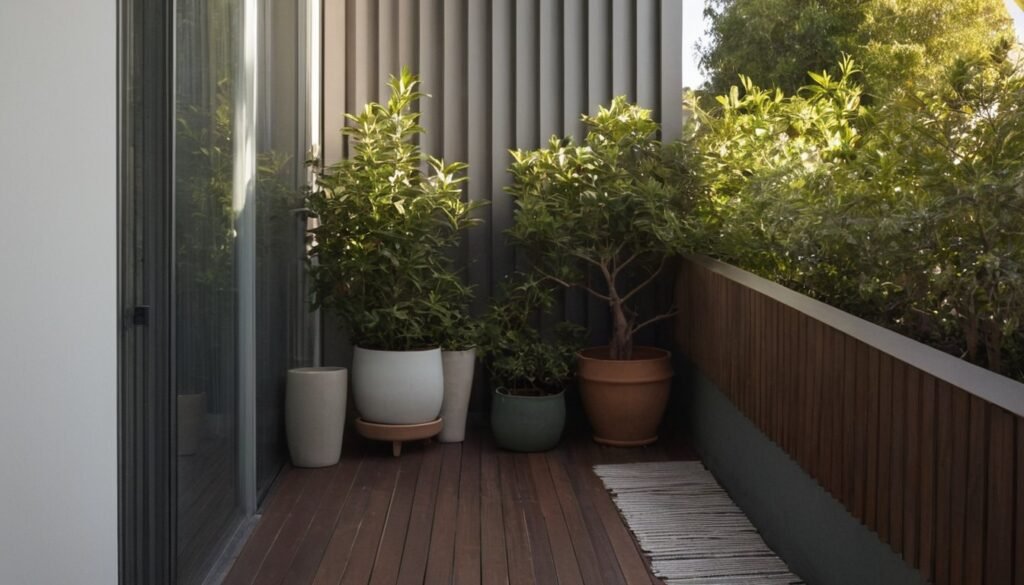
In pots, the mix has to hold water and still drain, because roots have nowhere else to go. Use a purpose-made potting mix, or blend a water-holding material such as coir with a coarse ingredient such as bark or perlite. Garden soil on its own is heavy and prone to waterlogging in a container, as the NT guide notes.
In beds, the soil you already have does most of the work. Compost is the usual improver, worked into the top layer or laid on the surface. The RHS advises against spreading bagged potting compost over beds because it is ineffective. Coir and peat are rarely needed in beds; their main value is lightening a very heavy patch.
If your problem is a slope shedding water and soil, a better mix will not fix it. Start with the advice on holding soil on a sloping site.
What mistakes should you avoid?
- Using bagged potting mix as bed soil. It is built for containers, and the RHS says spreading it over beds is ineffective.
- Assuming a peat-free bag behaves like an old mix. It may be mostly compost or bark, so check moisture with a finger rather than copying a routine from a previous bag.
- Skipping the rewetting step. A dry block or pot can look fine on the surface while the core stays dry.
- Using immature compost. The NT guide recommends mature, high-quality compost only.
- Relying on fine material alone. Without coarse ingredients, a mix can pack down and drain poorly.
Mulch sits on top of the soil rather than inside it, so it is a separate decision. For choosing between a loose covering and fabric, see the discussion of mulch versus landscape fabric.
How do you keep a new mix evenly moist?
A mix that is properly rewetted still needs a watering routine that matches your climate. Pots in tropical and subtropical summers dry faster than pots in a cool temperate winter, and small pots dry faster than large ones. Push a finger into the mix rather than watering by the calendar.
The watering guide for Australian gardens covers frequency and depth in more detail.
What is established and what depends on you?
Reasonably well established: coir and peat both hold water; peat is acidic and difficult to rewet once dry; compost provides nutrients and organic matter; coarse ingredients add air.
Depends on the product and your site: the exact pH of a coir product, how quickly your mix dries out, and how much fertiliser it needs.
Genuinely uncertain: the overall environmental ranking of coir versus peat once transport and processing are counted. The sources here support a concern about peat but do not settle the full comparison.

 By anastasnowla@gmail.com

No comment yet, add your voice below!