
Fruit splits when its flesh swells faster than its skin can stretch. The usual trigger is a long dry spell followed by heavy rain or a big soaking, and it is a physical problem rather than a disease or pest. You can’t reverse a split, but steady moisture, mulch and picking ahead of wet weather reduce how often it happens.
This guide covers tomatoes, citrus (especially navel oranges) and stone fruit, and how to tell splitting from damage caused by something else.
Why does fruit split after rain?
The skin of a growing fruit is a fixed envelope that stretches slowly. When the soil is dry, growth slows. When water suddenly becomes plentiful, the flesh takes it up and expands quickly. If the skin can’t keep pace, it opens.
NC State Extension describes this for tomatoes: a large watering or a summer storm after a dry period is a main trigger, and high heat and fast, warm, humid growth can add to it. Treat the extension sources used here as principles from US climates. The mechanism is the same in Australia, but the timing is yours to work out locally.
Two things make Australian gardens prone to it:
- Wet-season or storm patterns. In tropical and subtropical areas, dry-season stress followed by a summer storm cycle is a classic set-up. In temperate zones, the same thing happens after a dry spring or hot, dry week followed by rain.
- Variable irrigation. Watering lightly and irregularly, then soaking, mimics the dry-then-wet swing.
How do I read the crack on a tomato?
The pattern of the split gives a clue about the conditions behind it. University of Georgia Extension separates two types.
| Type | What it looks like | Linked to |
|---|---|---|
| Radial | Splits running from the stem end down towards the base | High temperatures with prolonged rain or wet soil |
| Concentric | Rings circling the stem end | Alternating fast and slow growth (wet-dry or hot-cold cycles), usually as fruit nears maturity |
Treat this as a guide rather than a precise diagnosis. Both types come back to uneven growth, and the same plant can show both in one season.
Small, shallow, healed cracks are mostly cosmetic. NC State notes that small cracks are fine to eat if there is no rot, mould or insect damage; trim the cracked area first. Deep splits that have been open and wet for a while rot quickly, so use or discard those fast.
Why do navel oranges and other citrus split?
Citrus splitting usually starts at the blossom end and appears as the fruit swells late in the season. University of Florida IFAS lists several contributing factors:
- Navel types, which are among the more susceptible fruit
- A rapid influx of water after drought, or irrigation just before heavy rain
- Fruit in full sun, which tends to be warmer with a thinner rind
- Extreme crop loads, either very light or very heavy
- Rind weaknesses set early, around flowering and fruit set
That last point means a split in autumn can trace back to conditions months earlier. It also means a single fix mid-season won’t always help. What you can influence late in the year is the water: keep soil moisture even and avoid sudden jumps.
Timing varies with climate. In subtropical and tropical areas, fruit sizing runs through the hot, wet months. In temperate zones, splitting is more likely as navels finish sizing in autumn and winter. Watch your own tree’s calendar for a season or two and note when splits appear.
What about stone fruit cracking near harvest?
Most of the detailed evidence is for sweet cherries, which are the most rain-sensitive stone fruit. The Growing Produce review (a trade publication) explains that water pools at the stem bowl and the tip, so fruit stays wet after rain stops. Skin thins late in growth, fruit that touch in a cluster hold water against each other, and a saturated root zone can also push water into the fruit.
For peaches, plums and nectarines, treat the same logic as a reasonable inference rather than established fact for every variety: ripe, nearly harvest-ready fruit in the final swelling phase is the most vulnerable, and cracked fruit is open to rot.
Practical steps for home trees:
- Pick ripe or nearly ripe fruit before forecast heavy rain and finish ripening indoors.
- Pick the cracked fruit first, because it invites rot and can spread problems to neighbours.
- Keep soil moisture steady through the final weeks, rather than letting the tree dry out.
- Prune for airflow so fruit dries faster after rain.
Susceptibility differs between varieties and seasons, so ask a local nursery which varieties split least in your area.
How do I prevent splitting?
You can’t control the weather, but you can smooth out the swings.
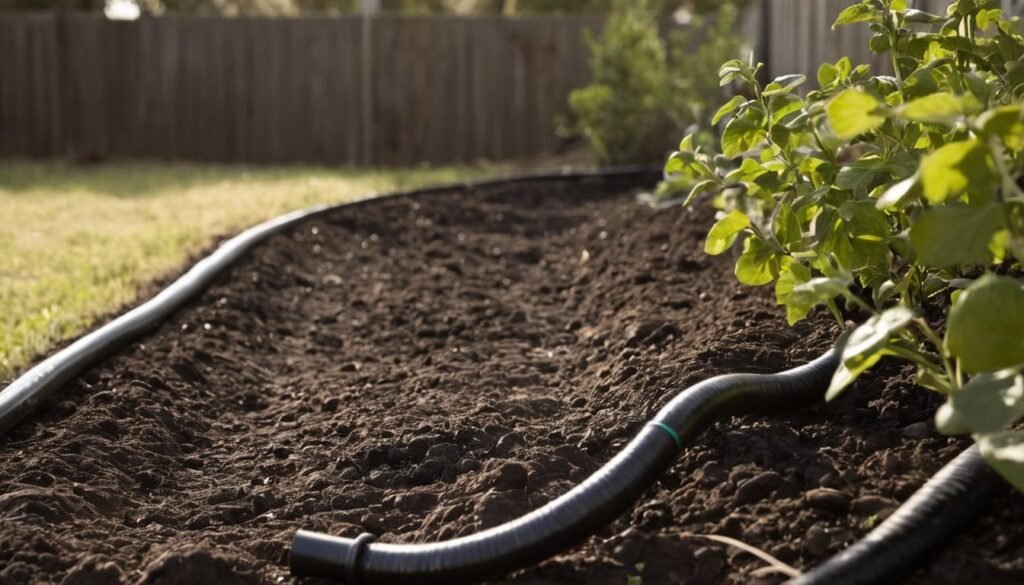
- Mulch. Spread organic mulch over the root zone, kept clear of trunks and stems. It slows evaporation and softens the dry-wet cycle. NC State recommends a generous layer of straw or similar organic material.
- Water deeply and regularly. Infrequent, deep watering that keeps the root zone evenly damp beats light daily sprinkling followed by a soaking.
- Rebuild moisture gradually. After a dry spell, increase watering over several days rather than flooding the plant at once.
- Improve the soil. Compost-rich soil holds moisture more evenly. Container plants dry out faster and swing more, so check them daily in summer.
- Choose varieties well. Thicker-skinned tomato varieties tend to crack less. Check the variety description or ask a local nursery.
- Pick early. For tomatoes, pick at first colour when heavy rain is forecast and ripen indoors; NC State notes that ripening fruit is more likely to crack in heavy rain.
For wider context on how problems like this fit with others, see the wider guide to what goes wrong in Australian gardens.
Is it splitting, or something else?
Splitting is a clean opening in otherwise healthy skin, usually in a ring or line. Other problems look different.
- Fruit fly. Sting marks are small puncture spots with discoloured skin around them, and rot can follow quickly, according to Business Queensland. Cut a suspect fruit open: white maggots in the flesh point to fruit fly, not splitting. This guide covers recognition only. For management and any reporting questions, check your state agriculture department.
- Blossom end rot. This starts as a sunken, leathery patch at the base of the tomato rather than a split. See the guide to the sunken dark patch on tomato bases.
- Fungal rot after splitting. A split fruit can be colonised by rots, so mould inside the crack is a secondary problem. Wet-weather fungal problems on other plants, such as those in the rose leaf-spot guide, follow the same logic of damp conditions and poor airflow.
What are the common mistakes?
- Soaking a stressed plant to make up for a dry fortnight.
- Letting pots dry out between waterings, then flooding them.
- Leaving split fruit on the plant, where it rots and attracts pests.
- Assuming a split means disease and reaching for treatments. A chemical step is rarely the answer here; if you suspect a disease, check the product label and your state agriculture department.
- Expecting a single fix. Variety, weather and tree history all play a part.
What’s established and what’s uncertain?
Established: uneven water supply is the main driver, and steady moisture plus mulch helps. Less certain: exactly how much a given variety, rootstock or season will matter in your garden, and how far the cherry evidence applies to other stone fruit. Local conditions decide the rest.

 By anastasnowla@gmail.com

No comment yet, add your voice below!