
Turmeric grows from a rhizome planted in spring, in part shade, in rich, moist, free-draining soil. It does best in tropical, subtropical and warm temperate areas, and in cooler or frosty places it is a pot plant that needs a warm, protected spot. Expect to wait roughly 7 to 10 months, then harvest after the leaves yellow and die back.
The plant is simple once it is established. Most failures come from rotting in wet soil, planting too early in cold ground, or digging before the plant has finished growing.
Where does turmeric grow best in Australia?
Turmeric is a tropical plant. Daleys Fruit Nursery lists tropical and subtropical zones as its preference, and Yates says it grows best in tropical, subtropical and warm temperate climates. The Diggers Club puts the in-ground line at north of Sydney, with pots recommended further south.
| Climate | Practical approach |
|---|---|
| Tropical (north Queensland, Top End) | In the ground. Foliage can persist longer; plant at the start of the wet season |
| Subtropical (south-east Queensland, northern NSW) | In the ground or pots. Plant in spring |
| Warm temperate coast | Ground possible in a sheltered spot; pots give more control |
| Cool temperate, Tasmania, highlands, frosty inland | Pots only, kept warm and frost-protected, or moved indoors in winter |
Your own site matters more than the label on your region. A sheltered, north-facing courtyard behaves differently from an exposed hillside in the same suburb.
Which rhizomes should you plant?
You have two realistic options.
Supermarket or market rhizomes. These can sprout, but there is a catch. Yates notes that conventional produce may have been treated with a sprouting inhibitor, so it prefers organic rhizomes. Rob Pyne suggests a plump, firm organic piece with visible buds, free of soft or mouldy patches, soaked in lukewarm water for a few hours or overnight to rinse off growth retardants.
Stock sold for planting. Nurseries and specialist suppliers sell rhizomes or young plants intended for growing. This costs more effort to find but removes the uncertainty about treatment. Whichever route you take, buy from a reputable local supplier rather than assuming any rhizome will behave.
Whether a particular shop rhizome sprouts is not something you can tell by looking. Treat it as a trial, and have a backup piece ready.
How do you sprout and plant the rhizomes?
- Wait for warmth. Plant in spring. Rob Pyne gives a soil temperature of about 15°C as the signal, with September to October for subtropical areas, October to December for temperate areas once frost risk has passed, and the start of the wet season for the tropics.
- Optionally pre-sprout. Rob Pyne describes laying a soaked rhizome with its buds upward in shallow, warm water in bright indirect light until a shoot and roots form. He notes this is only a head start, because the plant needs soil to produce a worthwhile harvest.
- Cut large pieces. Pieces with at least one bud each can be planted separately. Let cut surfaces dry for a day or two first, which is a common practice rather than a cited requirement.
- Plant shallow. Sources agree on a few centimetres below the surface, buds up. Published depths vary: Yates gives 5 cm, the Diggers Club 5 to 10 cm.
- Space generously. Yates suggests 30 to 40 cm apart; Diggers suggests about a metre. The difference is a good reminder that spacing depends on how large you let clumps grow.
- Water in and mulch. Rhizomes can take several weeks to show shoots, so do not dig them up to check.
What light and soil does turmeric need?
Aim for part shade: gentle morning sun with afternoon shade, or dappled light under a tree or beside a fence. Rob Pyne suggests at least 6 hours of sun in summer with more shade in winter, while Daleys lists a broader sun range and one customer advises shade on very hot days. In hot inland or western positions, lean towards more shade.
The soil should be rich, moist and free-draining. Work in compost or well-rotted manure before planting, and mulch to hold moisture. If your soil sets like concrete or stays soggy, a raised bed or a large pot solves both problems. This is the same drainage thinking behind most rhizome crops in warm gardens.
Water is the main variable. Keep the soil consistently moist through the growing season, but never waterlogged. Waterlogged rhizomes rot.
Can you grow turmeric in a pot?
Yes, and in cooler zones it is the sensible choice. Yates recommends a container at least 300 mm wide and deep with quality potting mix and drainage holes. Bigger pots dry out more slowly and give clumps room.
Place the pot where it gets warmth and bright light but not harsh afternoon sun, and bring it into shelter before frost. Pots in cold areas may need to sit through winter in a protected spot or indoors. Because a dormant pot can sit wet and rot, water very little once the leaves die back.
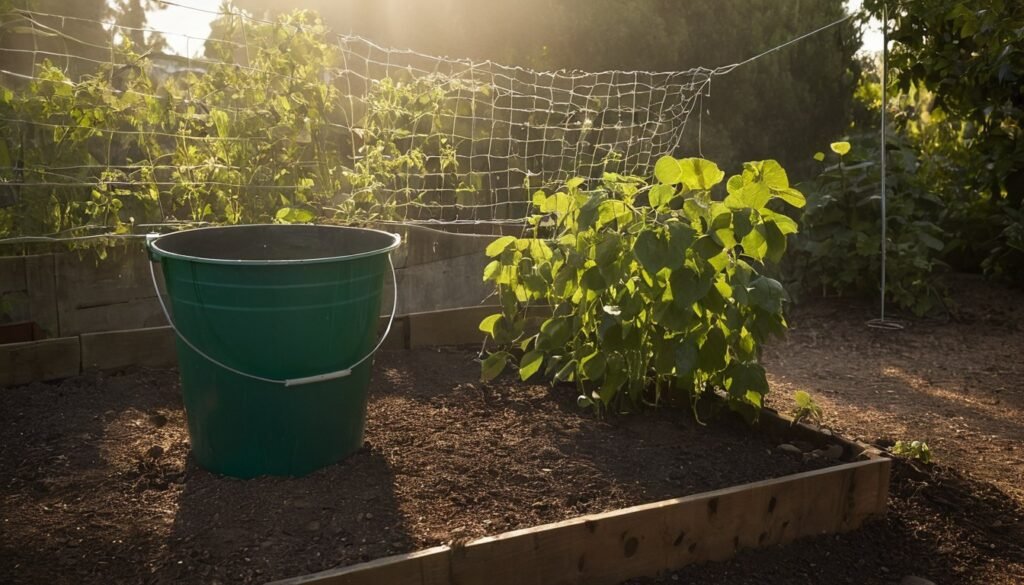
If you are planning a warm-season bed or pot display, the month-by-month sowing guide for warm areas helps place turmeric alongside other crops. A fast climber such as the one in our snake bean growing guide can also supply summer afternoon shade on a trellis, though check that it does not shade the turmeric too heavily or compete for water.
When do you harvest turmeric?
Wait for the plant to tell you. Yates puts harvest at about 9 to 10 months after planting, and Rob Pyne at 7 to 10 months, in both cases once the leaves yellow and die back. Daleys describes autumn die-back as normal dormancy and winter foliage loss as a harvest signal. Timing shifts with climate, so treat the months as a guide.
Dig gently with a fork or hand trowel well outside the clump so you do not spear rhizomes. Yates suggests taking rhizomes from the outside of the clump and leaving the rest to grow on. Waiting too long makes rhizomes more fibrous and woody.
After lifting, brush off soil and, as Rob Pyne describes, cure the rhizomes in the sun for a few days.
How do you store and replant?
- For the kitchen: Keep cured rhizomes in a cool, dry, dark place, as Yates advises.
- For replanting: Hold back some plump, firm pieces with buds and store them the same way until spring, then replant as above. If a piece is soft or mouldy, discard it.
- Staying in the ground: After peak harvest, cut yellow or brown stems back to ground level. Yates suggests watering sparingly, or not at all unless the weather is very dry, until new shoots appear in spring. The Diggers Club likewise recommends minimal watering from late autumn through winter.
- Rotation: Rob Pyne suggests growing a legume between turmeric crops, as with other rhizomes.
Common mistakes
- Planting into cold soil. Rhizomes sit and rot. Wait for spring warmth.
- Overwatering dormant plants. Moist in the growing season, almost dry in winter.
- Assuming shop rhizomes will sprout. Some may have been treated. Try several or buy planting stock.
- Digging too early. The leaves need to yellow first.
- Crowding. Overcrowded clumps compete for water and nutrients.
What is established and what depends on your garden?
Established across sources: spring planting, part shade, moist but free-draining soil, die-back as normal dormancy, and harvest 7 to 10 months after planting. Not settled: exact depth, spacing, the best pre-sprouting method, and how far south the plant is reliable in the ground. Where your climate is borderline, use a pot, which lets you move the plant if conditions change.
For a companion rhizome with similar needs, read the ginger growing guide for warm gardens next.

 By anastasnowla@gmail.com
No comment yet, add your voice below!