
Shade cloth helps most when a small garden gets hard afternoon sun and a heatwave is forecast. Use it as temporary protection for heat-sensitive plants, tie it on without damaging the building, and take it down when the weather eases.
Think of it as a tool for a few hot days or weeks, not a permanent fix. Plants that already enjoy full sun usually do not need it, and too much shade has costs of its own.
When does shade cloth actually help?
It helps when strong sun and heat stress plants faster than you can water them. Typical signs are leafy greens wilting by early afternoon, scorched leaf edges, and pots too hot to touch on the sunny side.
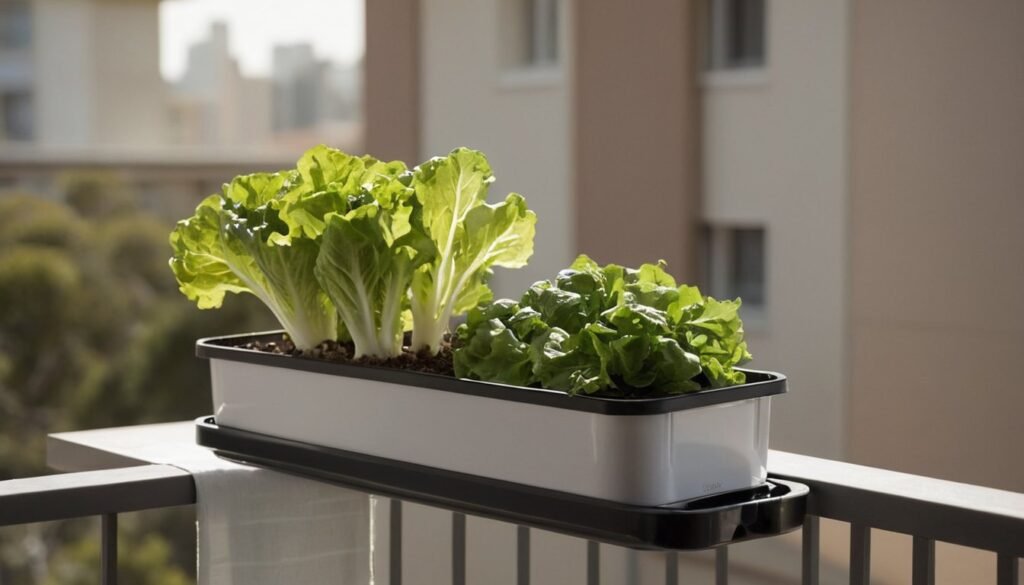
Balconies make this worse than a garden bed. Pots are small, soil dries quickly, and walls and paving can radiate heat back. If you are new to balcony growing, the overview of balcony gardening across Australian climates covers aspect and exposure first.
Shade does not replace water. One Organic Gardener writer, who covers beds when the forecast passes 30 degrees, still treats watering as the other essential job. Check pots every day in hot weather, and make sure excess water can escape; the guide to stopping balcony pots waterlogging explains how.
What shade percentage should you choose?
Shade cloth is sold by the share of sunlight it blocks. The sources opened for this guide give a range, not one answer:
| Source | What it describes | Note |
|---|---|---|
| ABC Organic Gardener writer | Cloth mostly 50 percent shade factor, some 75 percent, used over lettuces and leafy greens | One gardener’s experience |
| City of Salisbury (SA) pack | About 70 percent white overhead on east and north sides; lower-percentage cloth on west and south | Community-garden guidance |
Neither is a controlled trial. Treat them as starting points. A lower-percentage cloth lets through more light, so it is the gentler choice for plants that want sun. A denser cloth cools more but can leave sun-lovers leggy or slow to fruit. Which is best for your balcony depends on your aspect, your plants and how fierce your summer is, so adjust after a week of watching.
What about colour?
The City of Salisbury pack names white cloth for protecting vegetables from summer heat and suggests green or black at a lower percentage on the west and south. That is the only colour guidance opened for this guide, and it reflects one council’s practice. Claims that one colour is clearly best are common in product marketing, but they were not backed by an Australian trial in the sources checked. Choose a colour that suits your light and your view, and note that a dark cloth looks heavier on a small space.
Which plants benefit in an Australian summer?
Plants most likely to appreciate protection on hot days:
- Lettuce and other leafy greens. The Organic Gardener writer singles out lettuces and leafy greens as the vulnerable ones.
- Newly planted seedlings. The Salisbury pack advises covering seedlings for a few days after planting in summer.
- Shade-leaning herbs and ferns in pots on a west-facing edge.
Plants that usually cope with strong sun and need little shading: watermelon and eggplant (Organic Gardener), and capsicum, chillies and eggplant in western sun (Salisbury). Fruiting crops such as tomatoes are sun-hungry, so use a light cloth and only for the worst afternoons.
If part of your balcony is shaded by the building, you may do better moving shade-loving plants there than adding cloth. The list of plants that cope with a shady balcony is a good starting point.
How do you set up a temporary frame?
A frame does not need to be elaborate. A Sustainable Gardening Australia project uses four tall stakes in the ground, bamboo crossbars, and cloth with hemmed sleeves for poles. On a balcony you usually cannot drive stakes into anything, so adapt the idea.
- Decide the sun side. Watch where afternoon sun lands. Shade that side first rather than roofing the whole space.
- Use freestanding supports. Tall stakes or canes anchored in heavy, weighted pots, a freestanding clothes rack, or a trellis already in a planter can hold a cloth. Test that the support is stable before you hang anything.
- Keep the cloth above the plants. Leave a gap so air moves between foliage and cloth.
- Tie, do not nail. Use soft twine, cable ties or removable hooks and clips designed for the surface. Avoid drilling or gluing to walls, rails or ceilings.
- Leave sides open where you can. Open sides let heat escape and, per the Salisbury pack, keep access for beneficial insects.
How do you attach it without damaging a rented place?
Renters can usually get a good result with no marks:
- Tie the cloth to your own freestanding frame rather than to the building.
- Wrap rails with a soft cloth before tying, to prevent rubbing or paint wear.
- Use removable clips or clamps made for rails, and check they will not mark the finish.
- Keep a small kit of twine, clips and weights so you can put it up and take it down in minutes.
Check what is allowed with your landlord or building manager before attaching anything to a rail or wall.
What about wind?
A sheet of cloth on a balcony can catch wind like a sail, especially on upper floors. The Sustainable Gardening Australia project stresses securing the cloth so it does not thrash about. On a balcony, that matters more because a loose frame or cloth could fall or blow off.
Keep the setup small, low and light, and tie it down firmly. If you want to fix anything to the building, or you are unsure how much wind load your balcony can take, ask your building manager. This guide does not give structural advice. On a very windy day, take the cloth down.
How do you use it in a heatwave, and when do you remove it?
Heatwave plan, based on what the sources describe and common sense:
- Put the cloth up the day before a forecast hot spell, so plants are not shocked.
- Water early in the morning and check again in the afternoon.
- Move small pots away from hot walls, onto a lower or shadier spot.
- Remove the cloth late in the afternoon if heat is trapped beneath it; the Organic Gardener writer does this to release built-up warmth.
- Take it down when the heat eases, or roll it up and store it.
Leaving cloth up through cool or cloudy weeks can reduce light for plants that want it. The Sustainable Gardening Australia project describes its sunshade as being for the hottest months and rolled up and stored in winter.
Timing varies. In the tropics, the season for heat stress and wet-season cloud differs from the temperate south, where hot spells are shorter and sharper. In cool highlands and Tasmania, you may need cloth only on a few days. Judge by your own conditions.
Common mistakes
- Using dense cloth on sun-loving fruiting plants all summer.
- Pressing cloth directly onto foliage, trapping heat.
- Skipping watering because plants are shaded.
- Attaching to the building without checking it is allowed.
- Leaving cloth up after the heat has passed.
- Treating one gardener’s cooling figure as a guarantee.
Quick summary
- Use shade cloth as temporary protection on hot days, mostly for leafy greens and new seedlings.
- Percentages and colours in the sources are rules of thumb, not trial results.
- Use a freestanding, tied-on setup that does not mark the building.
- Keep it low, light and secure, and ask your building manager about anything fixed to the structure.
- Remove it when the heat passes.

 By anastasnowla@gmail.com

No comment yet, add your voice below!