
Water the soil well, then cover it with a layer of mulch before the heat arrives. Mulch slows evaporation from the soil surface and makes soil temperature change more gradually, which takes some pressure off roots on very hot days.
Mulch is not a substitute for watering. It makes each watering last longer, and it works best when it is laid before the hot spell rather than during it.
What does mulch actually do in hot weather?
Several Australian and extension sources agree on two effects. ABC Gardening Australia says mulch stops the top of the soil drying out and keeps soil temperature more constant. The Burke’s Backyard fact sheet describes the same thing as stabilising soil temperature in the root zone and helping the soil hold water.
That is the established part. The size of the effect depends on the mulch, its depth, the soil and the weather, and published figures vary. Treat any promised percentage saving as a rough guide, not a guarantee for your bed.
Which mulch should you use?
The main choice is between organic mulches, which break down and feed the soil, and inorganic ones such as gravel, which do not.
| Mulch | Good for | Watch out for |
|---|---|---|
| Pea straw or other straw-based mulch | Vegetable and herb beds; easy to lay and fills gaps | Breaks down quickly, so it needs topping up |
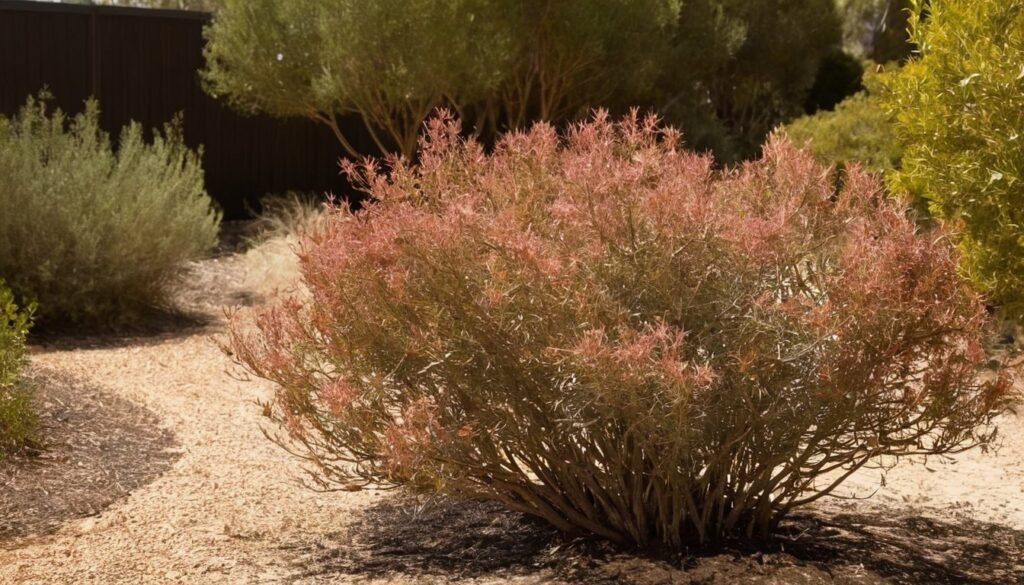
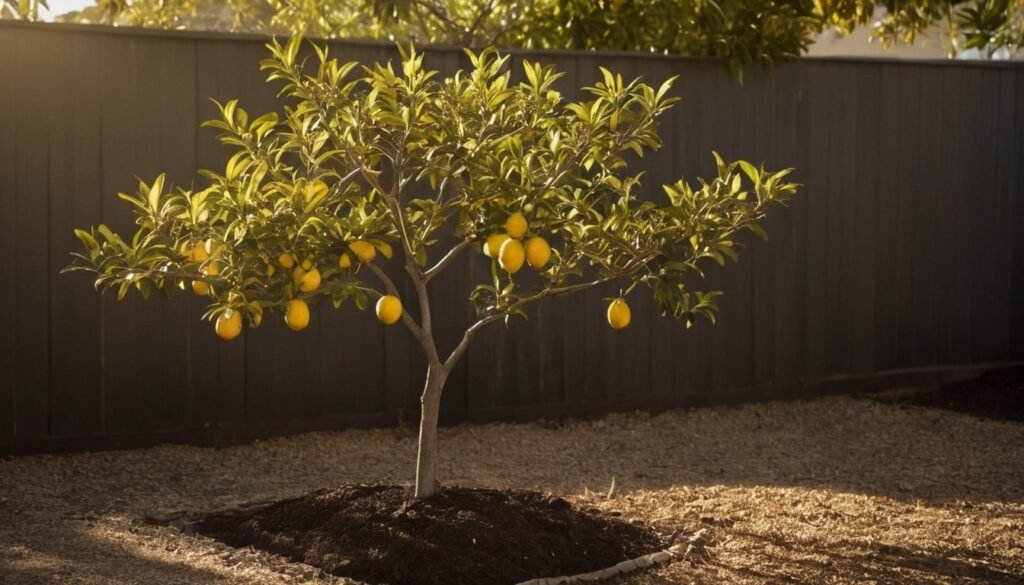
| Medium to coarse bark or wood chips | Shrubs, fruit trees, native beds | Fresh woody material can draw nitrogen from the soil |
| Leaf mulch | Native gardens | Breaks down more slowly and supplies fewer nutrients |
| Gravel, scoria or rock | Pots and drought-tolerant plantings | Can absorb a lot of heat and may harm plants |
| Fresh lawn clippings | Better composted | Can become water-resistant when laid thickly |
The Sustainable Gardening Australia guide warns that rock mulch may absorb too much heat, which is a good reason to avoid it around heat-sensitive plants. Charles Sturt University also notes that lawn clippings can turn water-resistant.
What about reflective versus dark mulch? Published home-garden guidance on colour is thin, so this article makes no claim either way. In general, organic mulches are the better-supported choice, and heat-absorbing rock is the one to be cautious about.
How do you lay mulch before a heatwave?
- Clear the bed. Remove weeds, grass and dead plants. Plant any new seedlings first, as Burke’s Backyard advises, and install drip lines before the mulch goes on.
- Water deeply. Mulch holds in the moisture that is already there, so a dry bed stays dry underneath. Soak the soil thoroughly first. See our guide to how often and how deeply to water through summer.
- Check the soil. If the soil is poor or compacted, improve it before mulching. Compost is better worked into the soil first and then topped with a coarser mulch. If you are unsure what suits your bed, read about what compost and coir bring to a growing mix.
- Spread the mulch evenly. Aim for an even layer, with no bare patches.
- Leave a gap around stems. Pull the mulch back from each plant (see below).
- Water again. A light watering settles the layer, and lets you check that water is soaking through rather than running off.
How thick should the layer be?
Sources differ, so treat depth as a range. ABC Gardening Australia suggests roughly 2 to 6 centimetres for coarse mulches. Burke’s Backyard suggests 75 to 100 mm. University of Illinois Extension advises 2 to 4 inches (about 5 to 10 centimetres) around trees and shrubs. Sustainable Gardening Australia says chunky mulch can go deeper without blocking rain or irrigation.
A practical reading: use the thinner end for fine or fast-breaking material such as straw around seedlings, and the thicker end for coarse bark around established shrubs. Thick, fine mulch is the one to avoid, as it can hold a lot of water that roots never use.
More is not always better. University of Illinois Extension notes that excessive depth can stress roots in wet conditions. In humid subtropical summers with storms, a very deep layer over poorly drained soil is a real risk.
How far should mulch sit from stems and trunks?
Keep it clear. Burke’s Backyard says not to pile mulch against stems and trunks, as this can lead to trunk rot. University of Illinois Extension gives a clearance of at least 4 inches (about 10 centimetres) for trees. For small vegetable seedlings, a hand’s width of bare soil around each stem is a sensible editorial rule, but no source here sets a figure for them.
Shape the mulch like a doughnut, not a volcano. Moisture trapped against a stem or trunk is the problem, not the mulch itself.
When does timing matter, and how does climate change it?
Burke’s Backyard suggests mid spring or early summer as the best time to apply mulch. That fits most of Australia, but local conditions decide the details:
- Tropical north: the wet season brings its own risk of waterlogging, so keep the layer modest and the base of plants clear. Mulch before the build-up heat.
- Subtropical coast and inland Queensland and northern New South Wales: spring is a good window, with a top-up in early summer if the layer has thinned.
- Temperate south: late spring suits, once the soil has warmed.
- Cool climate, Tasmania and highlands: heatwaves are less frequent, but they do occur. Late spring or early summer is a sensible time to have mulch down, once the soil has warmed through.
- Arid inland: moisture retention matters most, and coarse organic mulch, topped up often, is the usual choice.
These are editorial suggestions built on the sources above, not zone-specific official dates.
What about pots and raised beds?
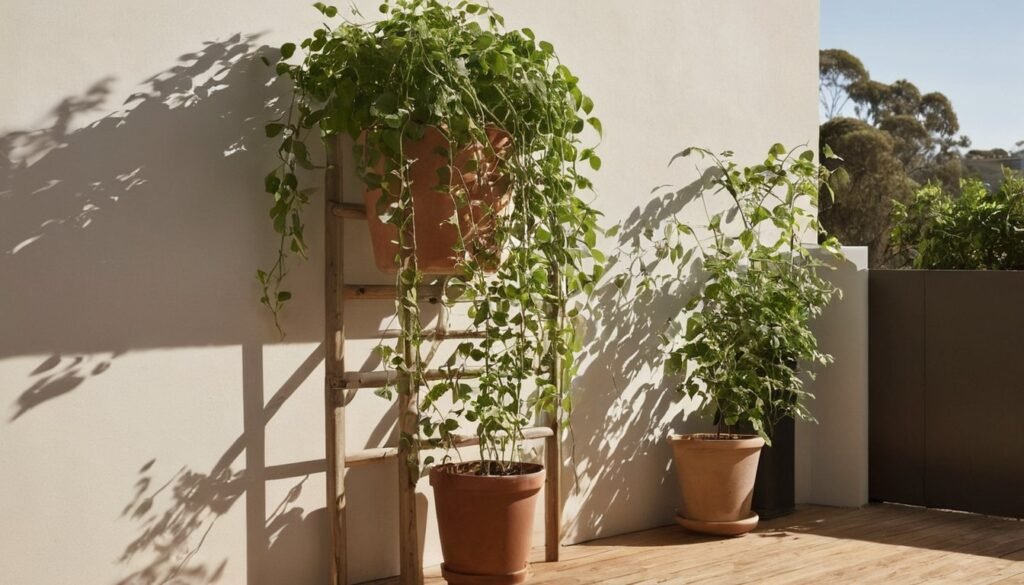
Containers and raised beds dry out faster than ground soil, so they are where a mulch layer is most likely to help. The same rules apply: water first, keep the layer clear of stems, and use a material that lets water through. Pea straw or a medium bark suits most vegetable and herb containers. Gravel is sometimes used on pots, but the heat-absorption caution above applies, particularly on a sun-baked balcony or paved courtyard.
A thin layer is easier to manage in a pot, because there is little room for it and a thick one can stop you seeing whether the soil below is wet. Lift the mulch aside and check before you add water.
Common mistakes
- Mulching dry soil, which locks in dryness.
- Piling mulch against stems.
- Laying fine mulch thickly.
- Using fresh woody mulch with no thought for nitrogen. ABC Gardening Australia suggests a balanced organic fertiliser before mulching to counter this; our guide to how to read the numbers on a fertiliser bag explains the labels.
- Assuming mulch replaces watering. Burke’s Backyard is clear that mulched gardens still need water.
- Forgetting to top up. Organic mulch breaks down and thins over time.
Mulch works best as one part of a heat plan alongside deep, infrequent watering and healthy soil. Check each bed during a hot spell by pushing a finger through the mulch: if the soil underneath is dry, water, whatever the surface looks like.

 By anastasnowla@gmail.com
No comment yet, add your voice below!