
Boronias reward a good spot and punish a poor one. Give them excellent drainage, a cool and evenly moist root zone, dappled light and shelter from hot wind, and many will flower well for years. Put them in heavy soil, baking afternoon sun or a wet, humid, poorly ventilated corner and they often fade fast.
The “short-lived” label is partly true. It is also largely about site and handling, not an unavoidable fate.
Why do boronias have a fussy reputation?
Growers have long called boronias “one year wonders”. An Australian Plants online article from 1996 repeats that phrase but argues the records it had seen did not support it, and that many failures start with the plant itself and the first few weeks at home. That is one grower’s account, not a controlled trial, so treat it as informed experience.
What the sources do agree on is the cause of most losses. Boronia roots are shallow, spread sideways and are not vigorous, so they cope poorly with waterlogging, drying out or large temperature swings. Nursery plants bought in full flower are often tightly root-bound, which adds stress at planting.
Species also differ. Boronia serrulata (native rose) is described by the Australian National Botanic Gardens (ANBG) as losing plants in poorly drained soil. Boronia pinnata is described as tougher and “long-lived in a sheltered spot and with light trimming”. Boronia deanei grows naturally in swamps and, in ANBG observations, seemed to care little about drainage. Check which species you are buying before assuming the rules for another one apply.
What does the ideal boronia spot look like?
Think of the places boronias come from: sandstone ridges, sandy heath and open forest, where roots stay cool under rocks and leaf litter while the top gets filtered light.
- Light: dappled shade or morning sun with afternoon protection suits most. The ANBG notes that B. serrulata tolerates conditions from heavy shade to nearly full sun, but that B. pinnata can be damaged by intense sun or strong wind, and that B. deanei turns sparse and spindly in heavy shade.
- Aspect: the ANPSA article suggests an east or north-east aspect or dappled shade to shield roots from temperature swings. In Australia, north-facing gets the most sun, so a north-east spot with tree or building shade later in the day is a reasonable aim.
- Shelter: a gap between taller shrubs, or beside a wall that blocks the hottest wind, helps.
- Drainage: this is the make-or-break factor (see below).
If you are unsure how a site behaves, watch it for a day in summer before planting. A spot that looks shady at 9 am can be in full sun by 2 pm.
How do you get drainage and a cool root run right?
The ANPSA article ranks drainage as the most important factor. The ANBG suggests a raised rockery for B. serrulata and rocks around the roots to keep them cool.
- Test the drainage. Dig a hole, fill it with water, and see whether it drains within a reasonable time. If water sits, choose a different spot or build up the bed.
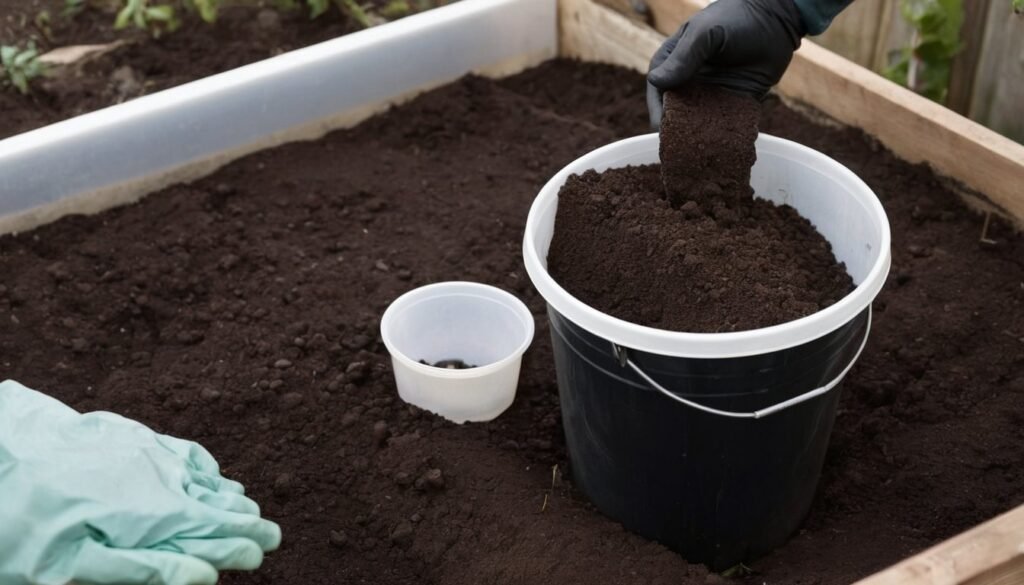
- Raise the bed if the soil is heavy. The ANPSA article suggests raised beds of 150 to 300 mm, with new soil mixed into the natural ground so roots can reach the subsoil. A pile of good soil sitting on clay can behave like a bathtub.
- Improve the soil, not just the planting hole. Coarse sand and compost can open up heavier soil. Local soil varies, so judge by how it drains.
- Plant at the same depth as in the pot, and loosen a tightly wound root ball gently.
- Add rocks or a rock edge on the sunny side to shade the root zone.
Does mulch help, and how should you use it?
Mulch helps keep the root zone cooler and more evenly moist, which is exactly what boronias want. The one rule: keep organic mulch away from the stems. The ANPSA article warns that mulch piled against stems can lead to collar rot, and says gravel or rock is an alternative.
Spread a layer of coarse organic mulch or stone, and leave a clear gap around the base of each plant. Top it up as it breaks down, always keeping the gap. Our guide to matching native plants to your site and climate covers mulch choice more broadly.
How much and when should you water?
Aim for steady moisture. The ANPSA article says letting the soil dry out and then soaking it stresses plants. Young plants need regular watering until established, and B. deanei is noted by the ANBG as wanting adequate water through summer.
Humid heat is the risk. The same article warns that watering in hot, humid weather invites root-rotting fungi, and that warm, moist soil encourages root rot. In practice:
- Water in the cooler part of the day and check the soil first rather than watering to a schedule.
- Water the soil, not the foliage, and keep air moving around the plant.
- If a plant wilts in humid weather, check for waterlogged soil before adding more water. Wilting from root rot looks like thirst.
Local watering rules differ, so check your own council or water authority.
How and when should you prune a boronia?
Prune lightly, and straight after flowering. The ANPSA article suggests removing about a third of the growth when the plant is growing well, ideally just after flowering. Cutting flowers for the house counts as pruning too.
The ANBG says B. pinnata needs the “little trimming it needs to avoid bare wood”, and describes occasional tip pruning for B. deanei. The sources point to trimming early to avoid bare wood, so a cautious approach is to cut back into leafy growth only and avoid hard cuts into bare stems.
Flowering is mostly in spring. At the ANBG in Canberra, B. pinnata flowered from early September into December, peaking in October, and B. deanei flowered for about a month from early October. Timing shifts with climate and species, so expect earlier flowering in warmer areas.
Can you grow boronias in pots?
Yes, and a pot can solve a drainage problem. The ANBG suggests a tub or large pot for B. pinnata, moved into shade as needed. The ANPSA article recommends an open, free-draining potting mix and light fertilising, and notes that pots can be moved to catch winter sun or get summer shelter. A slow-release fertiliser suited to natives, used at label rates, is a safe general choice.
A few practical points:
- Choose a pot with large drainage holes, and lift it onto feet so water can leave.
- Repot a plant bought in flower into the next size up, as the ANPSA article suggests, rather than a much bigger pot.
- Shade the pot itself. A dark pot in full sun can overheat the roots.
- Water more often than in the ground, but only when the mix has started to dry.
Which climate zones suit boronias best?
Boronias are not one climate story. The species described by the ANBG come from New South Wales sandstone and heath country, so heat and humidity are likely constraints further north. The details below are general guidance. Local conditions vary and the species list is long.
| Zone | What to expect | Practical response |
|---|---|---|
| Temperate (Sydney to Melbourne, Adelaide, Perth) | Closest to natural conditions for sandstone and heath species | Dappled light, excellent drainage, summer root cooling |
| Cool, highlands and Tasmania | Frost is manageable for some: B. serrulata is described as frost hardy and B. deanei showed no frost sensitivity in Canberra | Choose a sheltered spot, expect later flowering |
| Subtropical (south-east Queensland, northern NSW) | Summer humidity and warm wet soil raise root-rot risk | Raised bed or pot, afternoon shade, water carefully, pick the species with care |
| Tropical and arid | No published guidance found for boronias here | Treat as high risk; ask a local native nursery before buying |
If you garden in the subtropics, a pot with a gritty mix, morning sun and afternoon shade gives you the most control. For a more forgiving aromatic option in humid areas, consider a tougher scented native shrub for warm gardens. If you want a bold flowering native for sunnier spots instead, try a bold architectural native for sunnier beds.
What are the most common boronia mistakes?
- Planting into heavy, poorly drained soil without raising the bed.
- Piling mulch against the stems.
- Giving full afternoon sun and wind.
- Wet-and-dry watering swings, or watering heavily in humid heat.
- Hard pruning into old bare wood.
- Buying a root-bound plant in full flower and leaving it in the same pot.
- Assuming one species’ needs apply to all.
Treat the first year as the test. A boronia that establishes, gets through its first summer and flowers the following spring has usually found the right spot.

 By anastasnowla@gmail.com
No comment yet, add your voice below!