
Choose garden plants by matching their growing needs to your light, frost exposure, soil and available space, then narrow the choices by flowers, foliage and the work you want to do. Australian natives and familiar favourites can share a garden successfully when their needs fit the same conditions. A plant that looks right but needs constant rescue is usually the wrong choice for that spot.
This Plants & Natives overview organises the decisions behind a useful shortlist: climate first, then plant role, then care. It covers native beds, flowering favourites, pots and screening, with detailed plant guides at the end.
Start with the conditions and the job
Before visiting a nursery, decide what the planting must achieve. A shade tree, a loose screen and a flowering pot are different jobs, even if all three plants have attractive flowers. Write down the available width as well as height, and look at the site after rain and at different times of day.
| Your situation | What to prioritise | Direction to explore | Maintenance implication |
|---|---|---|---|
| Sunny ground, little frost, wanting flowers and birds | Local climate suitability, drainage and mature spread | Mixed native shrubs, including suitable grevilleas and bottlebrushes | Establishment watering and occasional shaping still matter |
| Sunny ground with regular frost | Documented cold tolerance for the particular species or cultivar | Natives and other shrubs already growing well in similar local exposure | Less winter intervention if the match is right |
| Morning sun and afternoon shade | Plants suited to part shade, plus room for airflow | Foliage shrubs and flowering plants with matching light needs | Expect flowering to depend on the actual light available |
| Deep shade under trees | Shade tolerance and competition from existing roots | Suitable native ferns or understorey plants | Water access may matter as much as shade |
| Sunny pot or courtyard, low frost risk | Compact habit, drainage and access for watering | Compact natives or appropriately sized flowering favourites | Pots need more frequent moisture checks than established beds |
| A narrow boundary needing screening | Mature width, foliage density and pruning response | A compact hedge or a loose row of suitably sized shrubs | Formal clipping creates more work than a natural outline |
Treat these as selection routes, not guarantees for every member of a plant group. A cultivar is a named selection with particular characteristics; it may have a very different size or habit from another plant sold under the same broad common name.
Why Australian growing conditions change the shortlist
Frost risk belongs to the site, not just the postcode
A coastal Queensland garden and an inland Queensland garden can need different plants. Likewise, a sheltered courtyard is not the same growing space as an open hollow. The Bureau of Meteorology explains that frost formation depends on factors including topography, wind, cloud and location. Use regional information as a starting point, then check the exposure of the actual bed. Bureau of Meteorology frost guidance.
For subtropical coastal sites with little frost, warmth-loving ornamentals can be sensible candidates. In frost-prone inland, temperate and cool districts, make the plant’s cold tolerance a first filter. A pot offers some flexibility if you can move it to shelter, but a large established container soon becomes difficult to shift.
Humidity, heat and drainage are separate questions
For humid coastal Queensland, ask whether the plant suits humid conditions as well as warm temperatures. Something adapted to dry heat does not automatically suit a warm, damp garden. Leave room between plants for their mature foliage, and avoid treating crowded planting as an instant finished bed.
For dry inland districts and southern gardens with dry summers, consider hot wind, reflected heat and your ability to water new roots. For tropical gardens, consider both wet-period drainage and dry-period watering. These are reasons to inspect the soil and exposure, rather than choosing from a national list marked simply “hardy”.
Drainage means water can move through the root zone; it does not mean keeping every plant dry. Observe where water lingers after rain. A plant that needs free drainage is a poor candidate for a persistently wet depression, even when the surrounding garden looks sunny and suitable.
Choose a planting opportunity, not a national date
In subtropical gardens, look for a mild spell with manageable soil moisture rather than planting just before oppressive heat or prolonged heavy rain. In frost-prone temperate and cool gardens, account for cold exposure before establishing tender plants. In Mediterranean-climate southern and south-western gardens, weigh the benefit of cooler, wetter conditions against the chosen plant’s tolerance of cold and wet roots. In tropical gardens, plan around local wet and dry conditions and reliable aftercare.
Those are editorial planning principles, not fixed planting windows. Use the relevant Bureau of Meteorology regional climate guide for local weather context, then check the planting guidance for your chosen species. Australia’s seasons run the opposite way to northern-hemisphere calendars, and tropical wet–dry patterns need their own treatment.
True Australian natives: choose habitat and plant form
“Native” means native to Australia; “local native” narrows that to plants naturally occurring in your area. Neither description means every plant will thrive in every Australian garden. Rainforest plants, inland shrubs and coastal heath plants evolved under different conditions.
Start a native shortlist with the job each plant will do. Small trees can provide the upper layer, shrubs give body and shelter, and groundcovers or strappy plants fill the lower layer. Check the mature size of each named selection. A compact grevillea and a tree-sized grevillea are not interchangeable just because their flowers look similar.
Low-water planting starts with the right match
For a lower-water bed, choose plants suited to your soil, rainfall pattern and exposure, then group plants with similar watering needs. Locally appropriate dryland species may be useful candidates, while moisture-loving natives belong in a different shortlist. Do not assume an Australian origin removes the need for establishment care.
Low maintenance also involves shape. A shrub that fits its space naturally may need little intervention; the same shrub squeezed beside a path becomes a recurring pruning task. Look beyond the nursery pot and picture the full-grown plant beside its neighbours.
Bird-attracting gardens need more than one flowering shrub
Grevilleas, banksias and bottlebrushes offer native flowering options, subject to species and site suitability. Build a garden with varied heights and sheltered foliage as well as flowers. Different plant forms make the space more useful than a bare lawn surrounding one nectar-rich specimen, though no planting can promise particular bird visitors.
Choose a mix with different flowering periods where locally suitable, rather than expecting one plant to supply everything. Keep the plan manageable: a few well-chosen shrubs with lower planting beneath them can provide a coherent beginning in a suburban bed.
Familiar non-native favourites: what each one needs
Australian garden character is not confined to Australian species. Frangipani, tropical hibiscus and bougainvillea are familiar choices in warm gardens, but they have different habits and care demands. Check botanical names when origin matters: a familiar common name, particularly hibiscus, can cover a much wider group than the ornamental plant you have in mind.
Frangipani for a sunny feature
Frangipani suits a sunny position with free drainage and enough space for its branching canopy. In warm, low-frost subtropical gardens it can serve as a feature tree; in colder districts, its need for shelter becomes a stronger constraint. Plan for the mature spread rather than relying on repeated cutting to keep it in a small corner.
In subtropical and temperate gardens, common deciduous frangipanis can lose their leaves through the cooler part of the year. They therefore make a poor choice where continuous leafy screening is essential. Leaf behaviour can differ in tropical conditions, so judge the plant against local conditions and its usual pattern before assuming something is wrong.
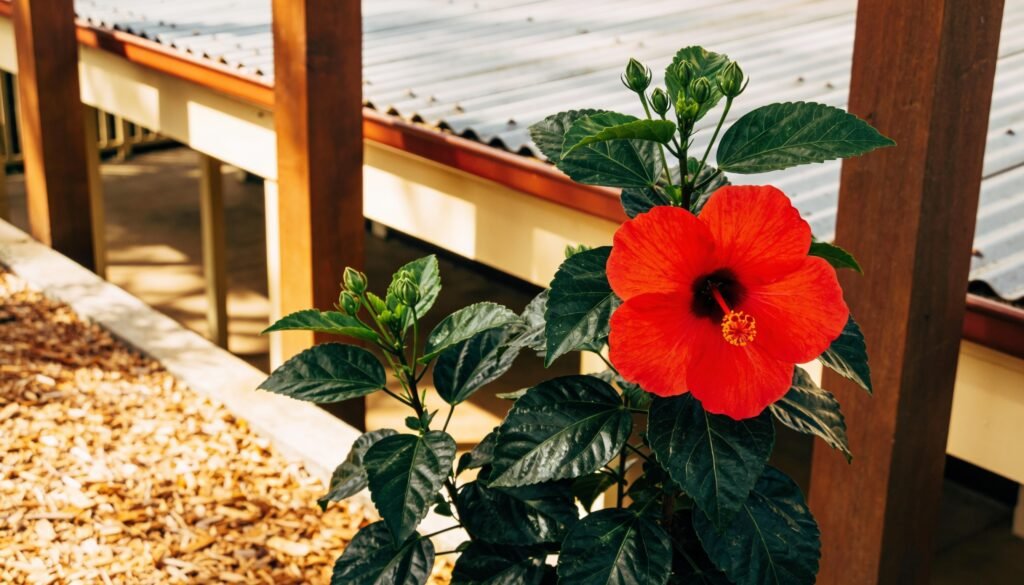
Tropical hibiscus for leafy flowering structure
Tropical hibiscus is worth considering for warm, sheltered gardens where you can provide adequate light, moisture and room for a leafy shrub. In subtropical sites, compare the effects of full sun with a position receiving some afternoon shelter. In frost-prone districts, check suitability carefully before making it a permanent garden feature.
It is not an interchangeable substitute for a dryland native. Consider watering access and how much shaping you want to do. If flowering is the main purpose, a deeply shaded position is a weak starting point, whatever the flower colour on the label.
Bougainvillea for sun and room to grow
Bougainvillea suits a sunny, freely draining position, with the chosen variety determining how much space and support it needs. In warm, low-frost gardens, vigorous forms can become substantial plants. Check whether you are buying a compact shrub form or a plant that will need ongoing training.
In colder sites, winter exposure may rule it out or make a sheltered container more practical. For a small courtyard, choose the growth habit first and colour second. If an established plant produces plenty of leaves but little colour, review light and general growing conditions before adding more inputs.
Plants for pots and small spaces
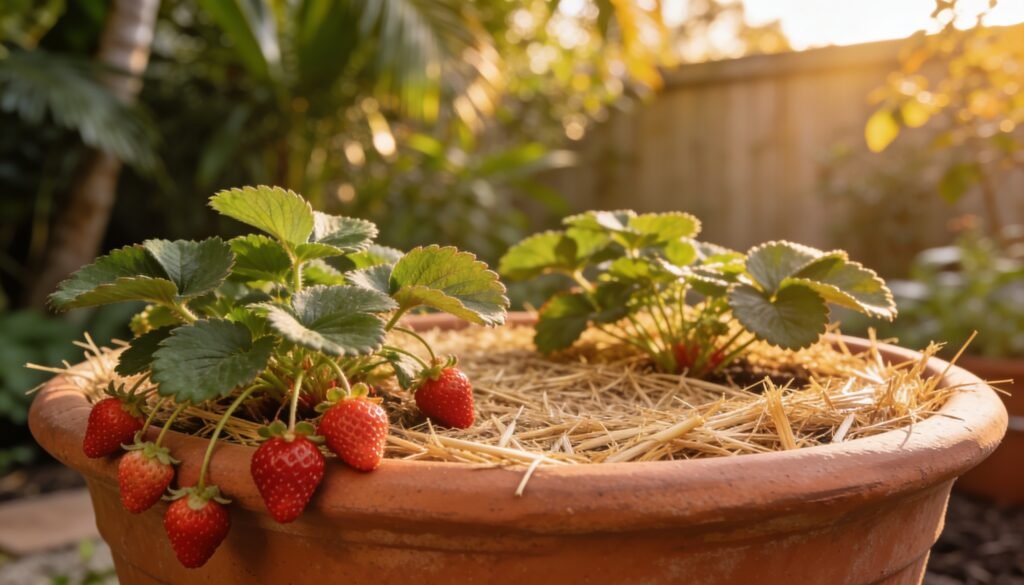
A pot changes the growing environment: roots have a limited volume of mix, moisture can fluctuate quickly, and the container itself can become hot. Native plants do not escape those limits. Choose a species or cultivar with a suitable container habit, rather than assuming any young shrub will remain small because its roots are confined.
Compact grevilleas, selected native groundcovers and appropriately sized strappy plants are directions to investigate. Match each named selection to the balcony’s light and wind. A sunny label does not tell you whether a small pot beside reflective paving will be manageable while you are away at work.
Use a container with drainage openings and a potting mix appropriate to the plant. Keep the drainage route clear, and check moisture within the mix rather than judging only the surface. Make room to water and inspect the plant without moving the whole display.
For mixed pots, match growth rates and watering needs as well as colours. A vigorous plant can overwhelm slower companions. In a small space, a single well-chosen specimen in a suitable pot may be easier to maintain than a crowded arrangement. Allow for future repotting when deciding how many containers you can realistically manage.
Hedging alternatives: choose the shape you can maintain
Start by deciding whether you need a clipped wall, a loose screen or just a lower visual boundary. A formal hedge requires repeated shaping; a loose screen allows individual plants to retain more of their natural form. The available width often decides which approach is practical.
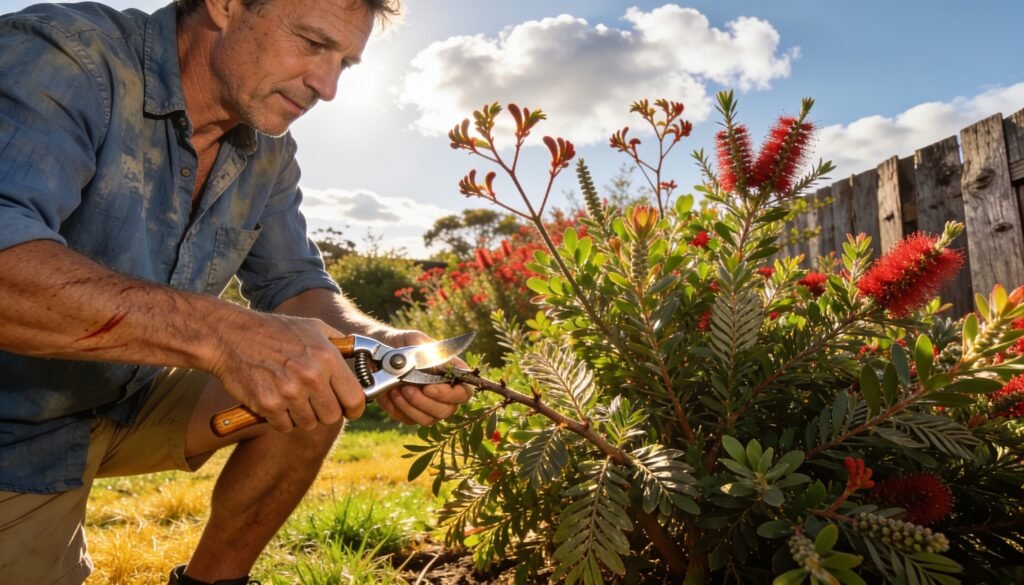
Lilly pillies, suitable bottlebrush selections and other locally adapted shrubs can be candidates for screening, but compare exact cultivars for height, spread and foliage density. For flowering screens in warm, low-frost sites, tropical hibiscus may also warrant consideration. In colder districts, make verified cold suitability the first filter rather than copying a coastal planting.
A mixed shrub border is another option where there is enough depth. It can combine flowers and foliage without requiring every plant to be clipped to the same outline. For a low boundary, compact shrubs or clumping foliage plants may do the job with less height to manage.
Avoid buying a naturally large plant on the assumption that pruning will always keep it narrow. Check access to both sides of the planting and leave space for its eventual width. An attractive hedge that blocks the path has failed the original selection brief.
Plan the first summer before buying
“Drought tolerant once established” does not describe a plant straight out of its nursery pot. Its roots initially occupy a small area, so the original root ball needs attention even when the surrounding ground seems moist. Water it in thoroughly, then check both the root ball and nearby soil as it settles.
Use moisture checks to guide watering instead of imposing one timetable on every plant. A newly planted shrub in sandy ground, another in heavier soil and a courtyard pot may need different attention on the same day. Mulch can help moderate the soil surface; keep it clear of stems and leave room to inspect the base.
In subtropical Queensland and tropical gardens, check after both drying weather and heavy rain: extra water is not the answer to already saturated soil. In dry-summer southern and inland gardens, plan how new plants will receive water through hot, dry spells. In cool districts, a mild summer still does not remove the need to check new roots during dry or windy weather.
Buy only as many plants as you can establish properly. Keep the labels, note where each plant went, and observe growth before filling every remaining gap. That gives you a better basis for the next planting decision than a trolley full of unrelated favourites.
What to read next
Explore specific plant guides below. Choose the guide that matches your shortlist or the plant already in your garden.
- A sunny feature tree: Getting a frangipani established and understanding its growth covers planting, cuttings and everyday care.
- Unexpected leaf changes: Sorting seasonal frangipani leaf loss from orange-spotted foliage helps you investigate an existing tree.
- Flowering native shrubs: Choosing and looking after grevilleas for bird-attracting colour takes the native selection framework into one varied group.
- An easier-care native bed: Building a shortlist of tough Australian species for your site develops the low-maintenance planting choices.
- Warm-garden flowers and foliage: Keeping tropical hibiscus growing and shaping it sensibly explores the shrub’s ongoing needs.
- A leafy plant with little colour: Working through the reasons a bougainvillea stays green focuses on flowering problems.
- Containers and courtyards: Matching Australian native species to container life helps narrow the options for limited root space.
Related: Hibiscus in Australia: Care, Pruning and the Beetle Problem.
Related: Bougainvillea Not Flowering? Make It Bloom.
Related: Tough Native Plants for Low-Maintenance Australian Gardens.
Related: First Frost, Last Frost: What Frost Actually Does and Who Needs to Care.

 By anastasnowla@gmail.com
No comment yet, add your voice below!