
You can protect most gardens from grasshoppers with a physical barrier over the plants you care about most, early-morning hand removal, and a willingness to accept some chewed leaves. Sprays are not part of this approach.
Start by working out what you actually have. Most garden visitors are ordinary grasshoppers, not locusts, and the two call for different responses.
Is it a grasshopper or a locust?
Appearance is a poor guide. Business Queensland says the main difference is behaviour. Locusts can gather and swarm, and when nymph numbers are dense they can migrate away from breeding areas. Grasshoppers usually stay alone and in one area.
The same page notes that the wingless grasshopper and the eastern plague locust are commonly mistaken for each other, so size and colour alone will not settle it.
Practical clues:
- A few insects scattered across your beds over weeks: this is the normal grasshopper pattern.
- Dense groups of young, wingless insects moving together, or large flying groups: this may be locust activity. Report locust swarms to your state agriculture department.
Australia has about 500 native grasshopper species, according to Business Queensland’s grasshopper page. Only a handful are regular garden nuisances.
How can you tell it is grasshopper damage?
Grasshoppers chew. Business Queensland describes wingless grasshoppers damaging plants by chewing leaves and stems.
Look for:
- ragged holes and notched leaf edges
- seedlings cut back or stripped to stalks
- chewed soft stems and young shoots
Check at dusk and early morning, because the insects may shelter in long grass or thick mulch at midday. If you find holes but no insect, other chewers are possible. Caterpillars leave a similar pattern, so tracing holes back to caterpillars is a useful cross-check. Earwigs also chew; see another common night-time chewer for how to tell them apart.
Why do grasshoppers move into gardens in dry spells?
Part of this is established and part is inference.
Established: Business Queensland reports that pasture outbreaks tend to follow moderately dry years, and that drought increases damage to trees because they become a source of moist foliage. It also notes that nematodes, an important natural control, depend heavily on rainfall.
Inference: when paddocks and verges dry off, a watered vegetable bed is one of the few green patches left. That is a likely reason gardens suffer even when the surrounding land looks parched, but the source does not state it for home gardens.
Timing depends on climate. Business Queensland’s pasture data points to mid-summer and autumn as peak damage, but a warm spring can bring early nymphs in the tropics, subtropics and warmer temperate areas. In cool highlands and Tasmania the season is shorter. Local conditions in any year matter more than the calendar, so start checking when the weather warms.
What is the most reliable way to protect plants?
Use a barrier. Green Harvest, an Australian organic gardening supplier, advises covering plants with an exclusion fabric, which also helps against other pests such as fruit flies and caterpillars. It says floating row covers or mosquito netting are especially useful early in the season.
To make a cover work:
- Cover seedlings and tender crops straight after planting, before chewing starts.
- Hold the mesh clear of the leaves on hoops or a light frame, because insects can chew through where foliage touches it.
- Bury or weigh down every edge. A gap at ground level is an open door.
- Open one corner to harvest and weed, then close it again.
- Inspect regularly for tears or gaps.
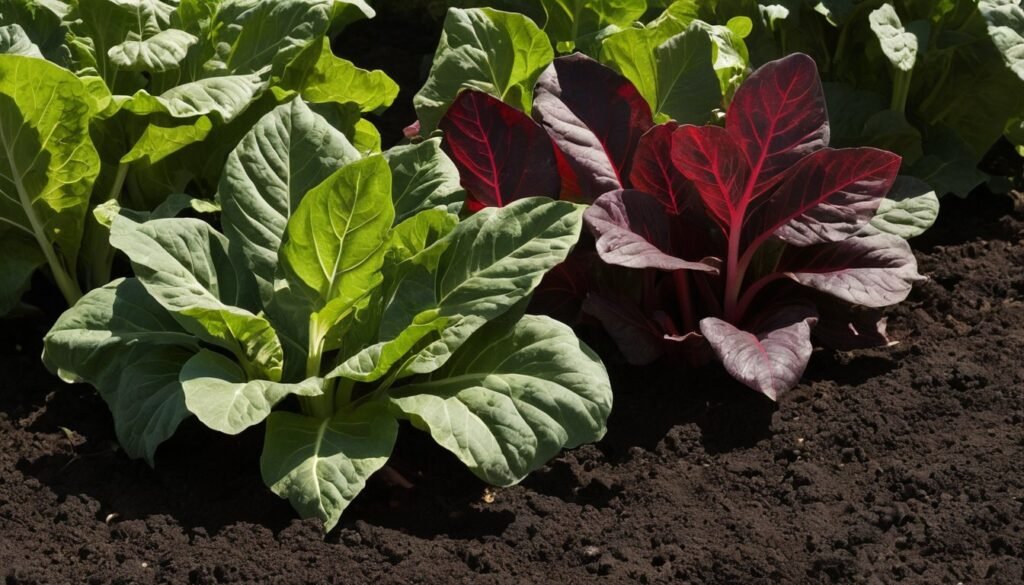
There is a trade-off. Crops that need insect pollination, such as pumpkins and beans, may need the cover lifted during flowering. Leafy crops like lettuce and silverbeet suit a permanent cover well.
Do hand removal and predators help?
Both help, with realistic limits.
Hand removal. Green Harvest notes that grasshoppers are very slow in the early morning, so they can be picked off by hand or caught in a butterfly net. It suits a small bed far better than a large block.
Chickens and birds. Business Queensland lists crows, magpies and ibis as predators, and Green Harvest says birds are a major control, including chooks and guinea fowl. If you keep chickens, a shared fence beside the vegetable patch gives them access to the insects. Keep them out of seedling beds, since they scratch and eat plants too.
Other natural enemies. Business Queensland reports that parasitic wasps (Scelio species) can parasitise up to 30 per cent of eggs, and several fly parasitoids attack nymphs and adults. You cannot easily manage these in a backyard, but they are one more reason to avoid broad-spectrum sprays.
What can you do about soil and surroundings?
Green Harvest says grasshopper eggs are mainly laid in soil, though some are laid on leaves, and that digging or cultivating in spring can expose eggs to predators. Light digging of bare, unplanted patches is a reasonable step where it suits your soil.
Business Queensland’s pasture advice is to avoid bare patches where females can lay eggs. In a small garden that suggests keeping open ground covered with plants or mulch where practical, and keeping weeds and long grass in check.
Green Harvest also suggests a border of tall green grass as a trap crop, with the caveat that it works only if left unmown and not allowed to dry out. Treat this as a trial, not a proven fix.
A simple weekly routine
Small habits beat occasional big efforts. Once the weather warms, spend two minutes each morning walking the beds before the sun is high.
- Pick off any grasshoppers you can reach while they are slow, and drop them into a bucket of water.
- Look under the lower leaves and along the base of fences, where nymphs often gather.
- Re-tuck any loose mesh edges, especially after wind or after you have harvested.
- Note which plants are being targeted. Tender seedlings and new growth usually go first, so those get covered first.
Grasshoppers are also food for birds, so a few in the garden are normal and not a sign you have failed. The aim is to keep them off the plants that matter, not to remove every one.
Keep a rough note of the date you first see chewing each season. Over two or three years it becomes a local calendar that is more useful than any general rule, because it reflects your own rainfall, microclimate and neighbouring land.
When should you accept some damage?
Often. A few chewed leaves on established, vigorous plants rarely cut the harvest. Put your effort into seedlings, young leafy greens and tender new growth, and let robust plants carry some chewing.
Common mistakes:
- Covering plants too late, after seedlings are already stripped.
- Leaving mesh edges loose or resting on the foliage.
- Judging a pest by size or colour alone and assuming a swarm is just a few grasshoppers.
- Letting chickens into young beds.
- Relying on one method. Combine mesh, morning removal and tolerance.
If numbers become overwhelming, or you suspect locust activity, contact your state agriculture department. For the wider picture of what chews what, the broader guide to the pests you are likely to meet is a good next step.

 By anastasnowla@gmail.com

No comment yet, add your voice below!