
Buy a grafted tree, plant it in a warm, frost-free, wind-sheltered spot on a mound of well-drained soil, and keep it watered without letting the roots sit wet. Drainage matters more than any other single factor, because avocados are prone to Phytophthora root rot.
Expect fruit within a few years from a grafted tree. A tree grown from a kitchen stone is a different proposition, as explained below.
Will an avocado grow in your climate?
Avocados are tropical and subtropical in origin, but climate is not a hard limit. Gardening Australia’s avocado guide offers a useful rule of thumb: if you can grow citrus well, you can probably grow an avocado, provided you choose a warm, protected, frost-free position.
| Climate | What to expect |
|---|---|
| Subtropical (south-east Queensland, northern NSW) | Suits most backyards. Choose a variety to match your winters |
| Tropical north | Heat and humidity favour some varieties over others. Flowering of some types, notably Hass, is unreliable in the hottest northern coastal areas, per Business Queensland |
| Temperate | Possible in sheltered, frost-free spots. Choose varieties described as cool-tolerant |
| Cool, highlands, Tasmania | Frost is the limit. Treat as marginal and ask a local nursery what survives nearby |
| Arid | Needs reliable irrigation and shelter from heat and wind; treat as marginal |
Business Queensland notes that mature trees tolerate brief cold, but not when flower buds, flowers or fruit are present. Young trees are more vulnerable than mature ones. Local microclimate counts: a north-facing wall or a spot under a tall tree canopy can make a real difference.
If you are planning a whole subtropical edible garden, the month-by-month subtropical planting calendar shows how an avocado planting window fits with other jobs.
Grafted tree or seedling?
Choose grafted. The ABC guide says seedlings can reach about 20 metres and may take many years to bear fruit, if they do at all. Grafted cultivars are smaller, more predictable and generally fruit within a couple of years.
A seed carries genes from both parents, so the fruit of a stone-grown tree is not guaranteed to resemble the avocado you ate. Growing a stone for fun is harmless. Just do not plan a harvest around it.
Rootstock matters too. Business Queensland’s planting advice says rootstock strongly affects performance and ranks tolerance to Phytophthora root rot as the top selection priority. It also recommends buying from an accredited nursery. Ask the nursery which rootstock and which variety you are getting, and whether it is a type A or type B.
Do you need two trees? A and B flower types
Avocado flowers open twice, first as female and then as male, and varieties fall into two groups (A and B) that run on opposite schedules. Gardening Australia explains that A and B types are out of sync, so planting one of each can help pollination, while a single tree can still set fruit.
The practical picture, as sourced:
- Business Queensland says that in most of eastern Australia, single-variety plantings pollinate and set fruit adequately.
- In colder areas, an opposite type nearby can help fruit set in some seasons.
- Gardening Australia says avocados are partially self-fertile, but yields rise when you plant more than one.
Hass, Reed and Wurtz are A types. Shepard, Fuerte and Sharwil are B types. If you have room for only one tree, plant one and accept that cropping may vary from year to year. If you have room for two, pair an A with a B.
Where and how should you plant it?
Drainage is the make-or-break issue. Business Queensland calls soil the most important factor in site selection and says avocados are very sensitive to poor drainage and vulnerable to Phytophthora root rot. Excess water makes the disease more likely and more severe. This is a drainage problem, so fix the site rather than reaching for a product.
- Pick the site. Choose full sun, or morning sun with some afternoon shade in hot areas, in a sheltered spot. Avoid low spots where water collects.
- Test drainage. Fill a planting hole with water. If it is still standing the next day, choose another site or build up.
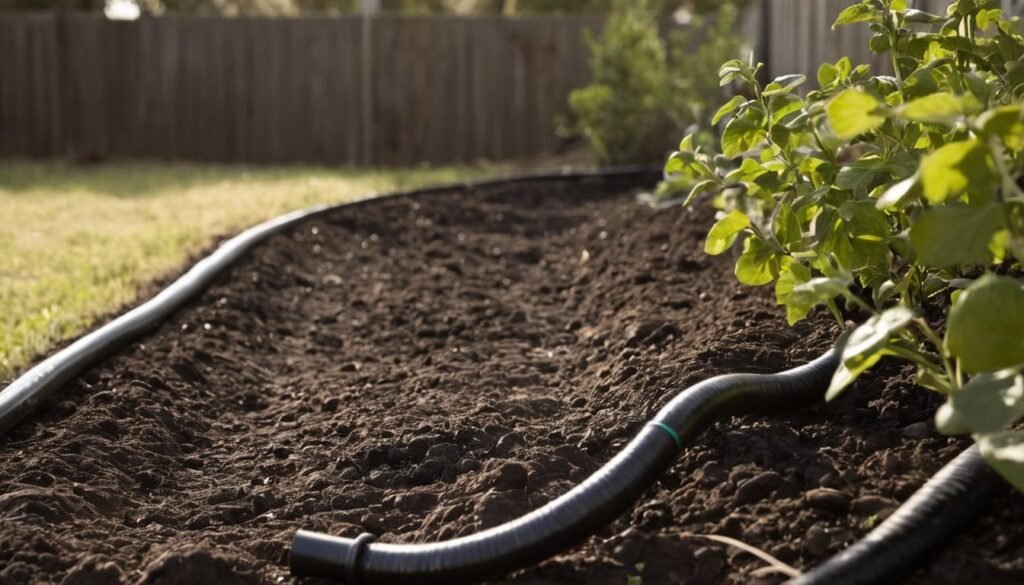
- Build a mound. Business Queensland says orchard rows are mounded before planting. In a backyard, a broad low mound lifts the root zone above wet soil. Gardening Australia suggests gypsum and compost for heavy soil, and a slope or mound.
- Plant at container depth. The University of California IPM program warns that planting too deep lets water stand against the trunk, which promotes crown rot.
- Plant at the right time. Business Queensland gives September to October where frosts occur and April to May in warmer areas, to avoid very hot weather during establishment.
- Disturb the roots as little as possible. Water in well.
Leave plenty of room. Mature size depends on the variety, from about 2.5 metres for Wurtz to many metres for Hass or Fuerte, per Gardening Australia.
How do you look after a young tree?
Watering. Roots are shallow, so young trees dry out quickly, especially in hot, windy weather. Gardening Australia suggests a good soak every couple of days while a young tree establishes. Business Queensland warns that both too little and too much water cause problems, including root rot. Water deeply but not constantly, and let the surface dry between waterings.
Mulch. Lay organic mulch such as lucerne, sugar cane or straw around the drip line to hold moisture. Gardening Australia says to keep it off the trunk, because mulch piled against the stem can cause collar rot. A ring with a clear gap around the trunk is safer.
Wind. Business Queensland says windy sites abrade fruit and break limbs. A fence, hedge or windbreak planting on the windward side helps, and the shelter should not shade the tree all day. Fast-growing greens such as the ones in the guide to growing Asian greens can fill the space around a young tree, but keep them outside the mulch ring and watering zone you need to manage for the avocado.
Sunburn. Thin young canopies expose bark and fruit to hot sun. Shade cloth on the west side helps. For exposed trunks, the University of California IPM program suggests a 50:50 mix of white latex paint and water. That is a Californian practice, so treat it as a sensible option rather than an Australian standard.
Frost. Cover young trees with frost cloth on cold nights if you are in a marginal area.
How do you keep the tree a manageable size?
Start with the variety. The ABC guide lists mature sizes ranging from about 2.5 to 3 metres for Wurtz and about 4 metres for Bacon and Reed up to roughly 9 metres or more for Hass and Fuerte.
Pruning also helps. Business Queensland says canopy management keeps trees at a practical size, lets light in and rejuvenates branches. Its advice is to do major pruning after harvest, in autumn or winter, because pruning too early can cause rapid regrowth and too late can cause sunburn and poor fruit set. That advice is aimed at orchards, so in a backyard, prune lightly and often rather than cutting hard. Gardening Australia shows that a Wurtz can be held near 2.5 metres this way.
A tree in a large pot is another way to limit size, much like the approach in the guide to citrus in pots, but it needs close watering and a free-draining mix.
When is the fruit ready to pick?
Do not rely on feel while the fruit is still on the tree. Business Queensland’s harvest guidance tests maturity by picking a few fruit and leaving them at room temperature. Mature fruit should ripen within 7 to 12 days without shrivelling and taste good, not watery.
Commercial growers also use a dry matter test. Home gardeners can use the room-temperature test as a practical check, and by recording when each variety first ripens year to year.
Avoid picking in hot weather or when fruit is wet. Snip the stalk rather than pulling the fruit off, as Business Queensland recommends for non-Hass varieties. Fruiting seasons vary by variety, so a mixed planting spreads the harvest.
Common mistakes
- Planting in a low, wet spot or on compacted clay without a mound.
- Piling mulch against the trunk.
- Overwatering a young tree after a dry spell, or letting it dry out completely.
- Expecting a stone-grown tree to fruit like the parent.
- Leaving a young tree exposed to hot wind and afternoon sun.
- Picking fruit by colour or size alone.
- Planting a large-growing variety in a small yard.
If a tree declines in wet conditions, check the label of any product and your state agriculture department before using it. Improving drainage comes first.

 By anastasnowla@gmail.com



No comment yet, add your voice below!