
Broccoli is a cool-season crop, so in warm parts of Australia the job is to time it so the head forms in cool weather. Plant it in autumn and early winter in the tropics and subtropics, and aim for a long cool stretch before heat arrives. Keep the soil evenly moist, give each plant room, and cut the main head early to get side shoots.
Most failures come from heat, thirst or caterpillars. All three can be managed without chemicals.
When should you plant broccoli in your climate zone?
Broccoli heads best in mild weather and runs to flower when it gets hot. Oregon State University Extension puts the bolting trigger at about 27 degrees Celsius (80 F). That is a US source, so treat it as a principle rather than a local rule. The practical aim is to have the plant making its head while days sit well below that.
Community planting calendars such as Gardenate split Australia into zones. These are guides, not official dates, and your own microclimate matters more than a calendar. They suggest roughly the following:
| Zone | Start seed or transplant (approximate) | Notes |
|---|---|---|
| Tropical | April to July | Cooler, drier months only |
| Subtropical | February to May | An autumn start gives a winter harvest |
| Temperate | August to September, then November to April | Spring and late-summer starts |
| Cool, highlands, Tasmania | August to September, then November to March | Summer sowing is workable |
| Arid / central Australia | December or January to March or April | Per the NT Government Agnote below |
For central Australia, the Northern Territory Government’s broccoli Agnote describes broccoli as a cool-season crop that can be planted early, in December or January, so it matures as the weather cools. Planting continues until March or April. That is specific to Alice Springs, so do not copy it to coastal gardens.
If you want the same logic applied across all your vegetables, a wider planting calendar for warm gardens shows how broccoli fits among the other cool-season crops.
How do you start seedlings and prepare the bed?
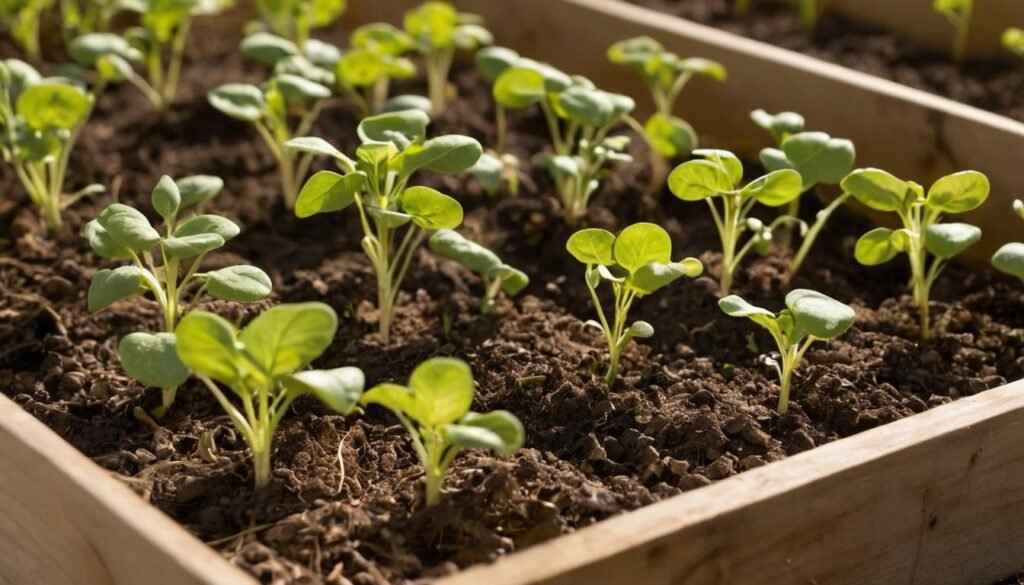
Raise seed in trays or small pots and transplant when seedlings are about 5 to 10 cm tall, as the NT Agnote suggests. Avoid letting seedlings dry out and wilt before planting. In hot weather, shade new transplants for a few days.
Prepare the bed in advance:
- Dig the soil as deeply as you can and mix in compost or well-aged manure.
- Rake level and firm lightly so water does not drain away unevenly.
- Water the bed well before transplanting.
- Plant at the same depth the seedling was growing, or slightly deeper.
- Mulch to hold moisture, keeping it clear of the stem.
Transplants held too long in their pots or left too dry tend to produce tiny early “button” heads, according to Illinois Extension. Poor establishment is a common cause.
How far apart should plants be?
Sources vary, which reflects variety and soil. Gardenate suggests 35 to 50 cm, while Oregon State gives 12 to 24 inches (about 30 to 60 cm). A sensible home-garden target is 40 to 50 cm in each direction.
Crowding costs you more than space. Closer plants compete for water, hold humidity in the foliage and are harder to inspect for caterpillars. Give them room, and the central head and later side shoots both develop better.
How much water does broccoli need?
Steady moisture matters most while the head is developing. Illinois Extension recommends ample soil moisture as heads develop and links drought to premature flowering.
In practice:
- Water deeply and less often rather than lightly every day, once plants are established.
- Water the soil, not the leaves, and do it in the morning.
- Mulch to even out swings between wet and dry.
- Check sandy soils more often than loam, and pots more often than beds.
The NT Agnote shows how much demand rises with plant size and heat: young plants need far less than mature plants in summer. Watch the plant and the soil rather than following a fixed schedule.
How do you harvest the head and keep side shoots coming?
Cut the main head while the buds are tight and before the yellow flowers open. Cut at a slant and take some stem. The NT Agnote suggests about 10 cm of stalk, and Illinois Extension says to cut before the head loosens.
After the central head is removed, many varieties produce smaller side shoots from the lower leaf axils. Illinois Extension says this can keep harvests coming for several weeks, though late shoots may be only 1 to 2 inches across. Cut them regularly before they flower.
Not every variety does this. The NT Agnote notes that hybrid varieties give a central head followed by side shoots, and Oregon State says only some varieties produce them. Check the plant label or seed packet before relying on a second crop.
Leave the plant in the ground after the first cut. Pulling it out wastes the side shoots.
What causes heat bolting, and what can you do?
Bolting is early flowering. Oregon State names heat as a cause and notes that bolted broccoli can taste bitter. Illinois Extension adds drought, extreme planting dates and stressed seedlings.
What you can control:
- Timing: start so the head forms before hot weather, not during it.
- Water: keep moisture steady and avoid wilting.
- Seedling care: harden off and plant before roots are cramped.
- Harvest early: cut a head that is starting to loosen, even if it is smaller than you hoped.
What you cannot control is an unseasonal warm spell. If a plant bolts, harvest what is edible and use the space for something suited to the season. Whether a particular variety copes better with warmth in your area is a question for your local nursery.
How do you stop cabbage white caterpillars without chemicals?
Green caterpillars from white butterflies chew holes in leaves and can hide in the head. They blend in, which makes them hard to spot.
Non-chemical methods that hold up:
- Cover early. Oregon State recommends plant covers early in the season. Fine insect netting over hoops, sealed at the edges, stops butterflies laying eggs.
- Inspect often. Check the undersides of leaves and the base of the head, especially after you see white butterflies.
- Hand-pick. Remove caterpillars and eggs by hand. Oregon State lists hand-picking as a control.
- Keep plants healthy. Strong, evenly watered plants tolerate some leaf damage.
Pest pressure shifts through the year and with location. If you decide a product is needed, check the product label and your state agriculture department.
Common mistakes
- Planting in spring in the subtropics, so heads form in rising heat.
- Letting seedlings dry out before planting.
- Spacing plants too tightly.
- Letting the head open into yellow flowers before cutting.
- Pulling the plant out after the first harvest.
- Leaving netting loose so butterflies get under it.
Related brassicas share timing and pests, so cabbage and cauliflower in the same bed follow almost the same pattern. When the broccoli finishes, you can turn the bed over to warm-season crops, and the timing advice for summer tomatoes in Queensland is a good next step.

 By anastasnowla@gmail.com


No comment yet, add your voice below!