
Match the pot to your plant and your watering habits. Terracotta and fabric lose water fast and suit dry-loving plants or gardeners who overwater. Plastic and glazed pots hold moisture longer, so they suit thirsty plants and busy people. In strong Australian sun, pot colour and thickness often matter as much as the material.
No pot is best everywhere. The choice depends on your climate, how much sun the spot gets and how often you water.
How do the four materials compare?
This table summarises the general pattern reported by Australian pot-choosing advice and extension sources. Individual pots vary with wall thickness, colour and size.
| Feature | Terracotta | Plastic | Glazed ceramic | Fabric bag |
|---|---|---|---|---|
| Water loss | Fast; water moves through the walls | Slow | Slow to moderate; glaze seals the clay | Fast; breathable sides |
| Root-zone heat in sun | Moderate; evaporation cools it, but thin walls warm up | Can be high, especially in dark colours | Thick walls help shield roots | Evaporation tends to keep it cooler, but it dries sooner |
| Weight | Heavy | Light | Very heavy | Very light |
| Durability | Chips and breaks if knocked | Long-lived if UV-stable; cheap grades go brittle in sun | Heavy and breakable; glaze can chip | Shortest lived; fabric wears and fades |
| Frost cracking | Can crack in extreme cold | Rarely an issue | Can crack if water gets into damaged glaze | Not an issue |
| Cost-free considerations | Often reusable or passed on | Easy to find second-hand | Often found second-hand | Can be reused for a season or two |
The “cost-free” row is about what you can reuse or salvage rather than buy. Pots passed between neighbours, saved from a skip or left from an earlier garden are often perfectly good.
The fabric column rests on general grower experience rather than Australian measurements. Treat it as a pattern, not a guarantee.
Which material loses water fastest?
Clay is porous, so moisture evaporates through the walls as well as from the surface. A terracotta pot can dry out noticeably sooner than a plastic pot of the same size on the same balcony. That helps if you tend to overwater and hurts if you forget.
Plastic and glazed pots hold water longer, which suits ferns, leafy greens and other plants that dislike drying out. Fabric bags breathe through every side, so they usually need the most frequent watering of the four.
Potting mix matters too. A mix that holds water well in a terracotta pot can behave like a swamp in a plastic one. If you have to choose, adjust the pot to fit your watering habit rather than the reverse.
Does pot colour change root-zone heat?
Yes, and in Australian summers this is the most overlooked factor. Dark surfaces absorb more heat. University of Illinois Extension notes that dark containers in full summer sun can absorb enough heat to damage roots and dry the mix very quickly. A press summary of colour research reports that darker pots warm the soil more, with reduced root growth in some trials, and that light colours matter most for heat-sensitive plants.
Most of that research comes from nursery and overseas conditions, so exact temperature differences on your balcony will vary. The direction of the effect is consistent, though.
Practical rules for hot, sunny spots:
- Choose light colours for west-facing walls, hot paving and heat-sensitive plants such as lettuce or coriander.
- If you own dark pots, move them to afternoon shade in summer or shade the sides with a board, screen or trailing plants.
- Thick walls (many glazed pots) slow heat reaching the roots.
- Heat-tolerant herbs from dry climates cope better in dark pots than leafy vegetables do.
Cooler regions such as Tasmania and the highlands can use dark pots to warm roots in spring, as long as summer sun does not push them too far.
Does double-potting help?
Placing a plain plastic pot inside a larger decorative pot, with a gap between, adds an insulating air layer. It can slow midday heating of the root zone, and it hides an ugly pot.
Two cautions. First, the inner pot must still drain freely, and the outer pot must not trap water around it. Lift the inner pot out to empty any pooled water. Second, a gap filled with damp material can breed mould and mosquito wrigglers, so keep it dry or empty.
Other insulation ideas are simple: group pots so they shade each other’s sides, mulch the surface and stand pots on feet so air moves underneath. For a different approach to steady moisture, see our guide to self-watering wicking beds, which keeps a reservoir below the mix.
Do all pots need drainage holes?
Yes, for nearly every plant. Outdoor pots usually have holes in the base so excess water can leave. Decorative cache pots have none; the plant should sit in an inner pot you can lift out, or you remove it before watering.
If a pot has no holes and you are keeping the plant in it, drill several holes in the base using the right bit for the material. Ceramic and glazed pots are easy to crack, so many gardeners prefer to use them only as outer covers.
Common drainage mistakes:
- Putting a layer of gravel at the base instead of making holes. It does not replace drainage.
- Standing the pot flat on a saucer that stays full. Empty it after watering.
- Letting a pot sit on hard paving where the holes seal against the surface. Use feet or a spacer.
What about recycled and reused containers?
Reuse is cheap and often works well, but check each container.
- Food-grade tubs and buckets: Drill holes, wash well and prefer light colours. Sun-brittle plastic cracks after a few seasons.
- Old pots: Scrub off residue and old roots before reusing, especially if the last plant struggled with disease.
- Wooden crates and half barrels: They insulate well but rot over time. Avoid timber that was treated or has unknown history if you grow edibles.
- Metal tins: They heat fast in the sun and rust, so they suit only small, short-term plantings.
- Containers that held chemicals or unknown products: Do not use them for edible plants.
Size matters more than origin. A container that is too small dries out within hours in summer. Use our pot size guide to match volume to the plant before you start drilling.
Which plants suit which material?
These are general patterns, not rules.
- Terracotta: rosemary, oregano, thyme, lavender, succulents and cacti. It also suits gardeners who overwater.
- Plastic (light colour): leafy greens, ferns, tropical foliage plants and anything that wants steady moisture. Good for large, movable plantings on a balcony.
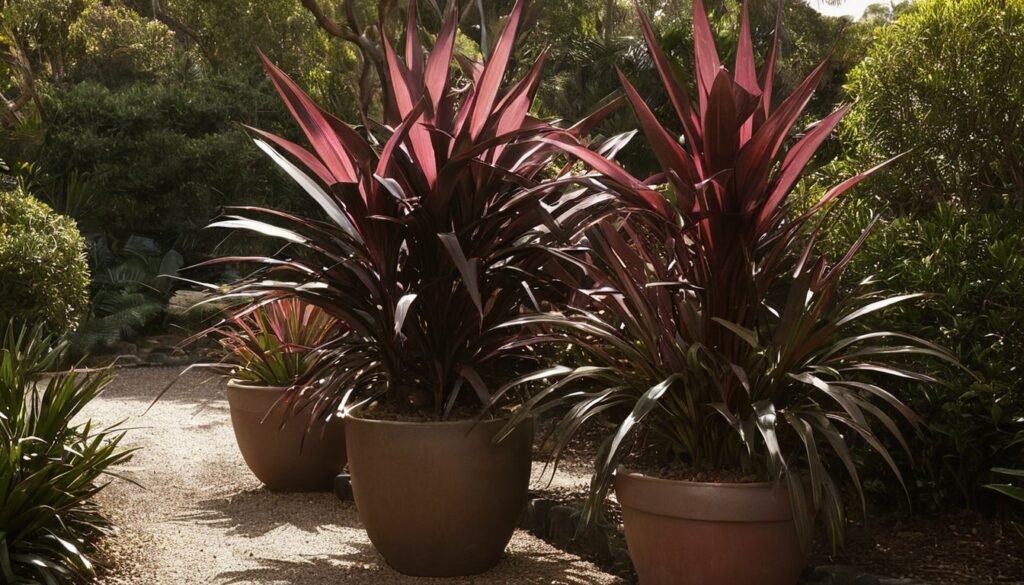
- Glazed ceramic: big feature plants, citrus in tubs and spots with strong afternoon sun, where the thick walls and slow water loss help.
- Fabric bags: shrubs, perennials and robust vegetables where you accept frequent watering. Roots that reach the air at the wall tend to stop growing there, which can encourage branching, though this benefit matters less for short-lived annuals.
Weight matters on balconies. Check how much load your balcony can carry, especially with large glazed pots, and remember that a wet pot is much heavier than a dry one. Light pots can blow over in wind, so Illinois Extension advises matching container weight to the plant’s top growth.
What are the common mistakes?
- Choosing a pot for looks and ignoring where the sun hits it.
- Using a thin black plastic pot on a hot north- or west-facing wall in summer.
- Assuming terracotta “breathes” so it never needs a saucer or holes.
- Leaving empty terracotta outside in a hard frost where water can collect and freeze.
- Skipping drainage holes in decorative pots.
- Changing pot material without changing watering frequency.
Which pot should you pick?
Start with the plant. If it likes dry roots, use terracotta. If it wants steady moisture, use light-coloured plastic or glazed ceramic. In hot spots, favour light colours or thick walls and add shade. For the wider layout of a small outdoor space, the balcony gardening guide shows how to combine these choices.

 By anastasnowla@gmail.com
No comment yet, add your voice below!