
Lavender can work in a humid garden, but the type you choose matters. French lavender (Lavandula dentata) and Spanish-type lavender (L. stoechas), or hybrids bred from them, are generally recommended for subtropical Australia, while English lavender is the least suitable.
Even the better types need sharp drainage, open spacing and sun. Expect a shorter life than in a dry, cool-winter climate.
Which lavender types cope best with humidity?
Lavenders come from Mediterranean regions, so none is truly at home in warm, wet summers. The sources found here agree on the order of suitability, but they are nursery, retail and extension advice rather than controlled trials. Treat the table as a guide, not a guarantee.
| Group | Humidity outlook (as sourced) | Notes |
|---|---|---|
| English (L. angustifolia) | Least suitable for Brisbane-area gardens, according to a Queensland gardening information site | Best kept for cool, dry-summer areas such as Tasmania and cool highlands |
| French (L. dentata) | Typically recommended for subtropical areas | Toothed leaves; less used for cooking or perfume |
| Spanish/Italian (L. stoechas) and hybrids | Recommended for humid areas by an Australian retailer’s advice article, if air circulation and gravel mulch are provided | Still needs excellent drainage; a US extension profile notes it can be short-lived |
| Tropical north | Poor | Treat as a temporary potted plant, bought in the dry season |
Nurseries also sell newer ornamental cultivars bred for humid gardens. They may be selected for looks rather than fragrance, so check the label for the type and its stated climate.
Before buying any lavender, check your council’s weed list.
Why does humidity kill lavender?
Humidity itself is only part of the problem. Wet soil and still, damp air around the foliage do the damage. A nursery growing guide says lavender dislikes wet feet and humidity, and that in humid or wet conditions it is prone to fungal infection and root rot.
The NC State Extension profile says Spanish lavender needs excellent drainage and that good air circulation in hot, humid conditions helps limit leaf spot and powdery mildew. The profile describes a North American climate, so use it for the principle only.
In practice, summer storms and heavy clay are what end most lavender plants in subtropical gardens. That is an editorial observation, not a measured statistic.
How do you set up drainage for lavender?
Plant lavender where water leaves quickly. Full sun, at least six hours a day, helps foliage dry.
- Choose the highest, sunniest spot. Avoid low corners, downpipe outlets and spots beside irrigated lawn.
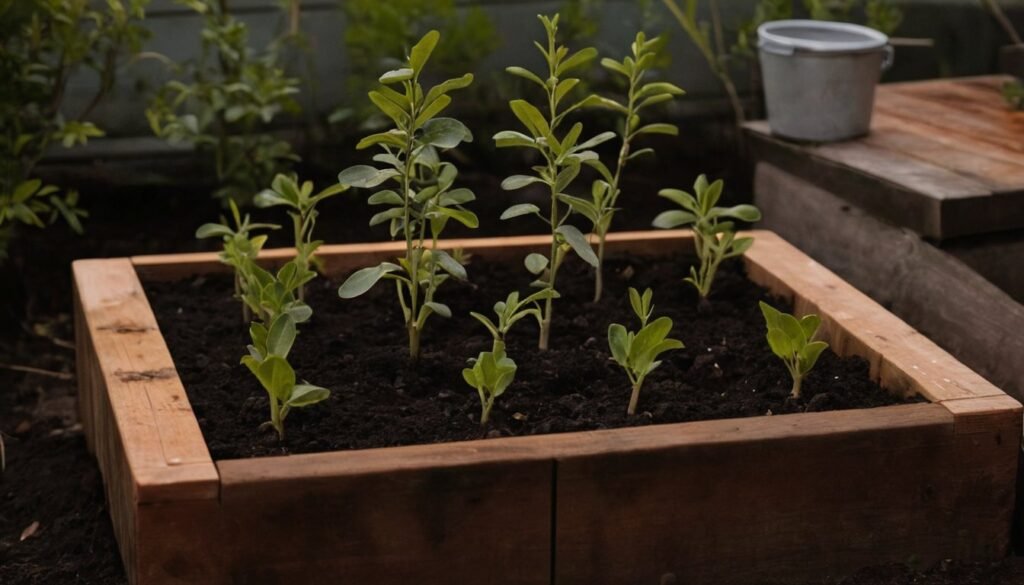
- Raise the planting. Use a mound or raised bed of free-draining soil. A raised frame over compacted clay still holds water, so check that it drains.
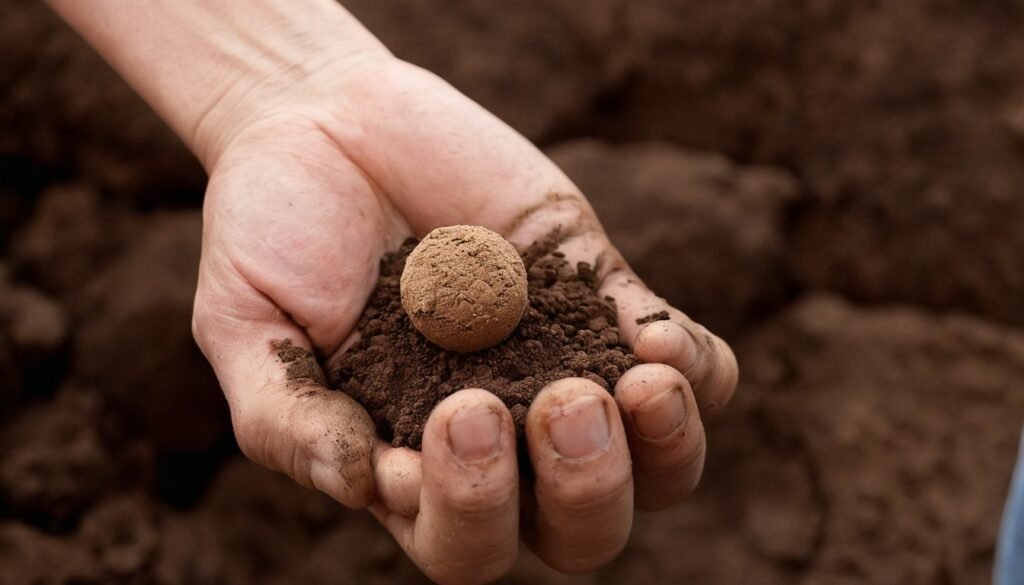
- Open up heavy soil. Add coarse material and organic matter so water passes through. The Queensland and nursery guides both stress free-draining soil.
- Plant slightly high. Keep the crown above the surrounding soil level so water runs away from the stem base.
- Water at the root zone, not over the foliage, and let the soil dry between waterings once established.
- Adjust acidic soil if needed. The retail and Queensland guides mention lime or dolomite. Test your pH first and follow the label.
Should you use gravel or organic mulch around lavender?
For humid gardens, use gravel or a similar inorganic mulch. The retail advice article recommends gravel in place of organic mulch, which holds moisture around the trunk and lower branches.
Keep any mulch clear of the stem so the crown stays dry. This is the opposite of the usual advice for vegetables and natives, where thick organic mulch is helpful. Lavender is an exception because its crown dislikes sustained moisture.
How much space does lavender need for airflow?
More than looks tidy. The nursery guide suggests 30 to 40 cm between plants and, in humid areas, lots of space around them for airflow.
- Do not pack lavender into a hedge in a humid garden. A hedge traps damp air.
- Keep it clear of larger shrubs that shade or crowd it.
- Prune to keep a rounded, open shape so air moves through.
How do you prune lavender without cutting into old wood?
Prune lightly after flowering. The Queensland guide advises a light trim after flowering to rejuvenate the plant and not cutting into old wood.
The New York Botanical Garden explains why. Old wood will not generate new green growth, so cut back about one-third and leave a few buds above the woody part of each stem. The advice is northern-hemisphere, so ignore its months and prune after your plant’s flowers fade.
Common pruning mistakes:
- Cutting hard into bare, woody stems.
- Leaving the plant unpruned for years until it is leggy and open at the base.
- Pruning in the middle of a wet spell, when cuts stay damp.
Regular light pruning slows woodiness, according to the retail article, which recommends trimming by half to two-thirds for that purpose. That is a heavier cut than the botanic garden’s one-third, so start conservative and stay in green growth.
How long does lavender last in the subtropics?
Plan on a few years. The Queensland guide says plants typically decline within a few years, and the NC State profile says Spanish lavender can be short-lived. Replacing a worn plant is normal, not a failure.
Take cuttings or buy a fresh plant when the base turns woody and growth stops. Replant in a new spot rather than the same hole, in case drainage or disease was the problem.
Is a pot the best option for humid gardens?
Often, yes. The retail article calls lavender perfect in pots, and the nursery guide says it grows very well in containers. A pot lets you control drainage completely and move the plant into the best light and airflow.
- Use a pot with large drainage holes and a free-draining mix, not heavy garden soil.
- Lift the pot onto feet so water can escape.
- Move it to a drier, sheltered spot during long wet spells.
- Feed lightly during active growth with a slow-release fertiliser at label rates, and avoid feeding a dormant plant.
In the tropical north, the retail article advises buying in the dry season and treating lavender as a temporary potted plant.
What can you grow if lavender keeps failing?
If you want grey-green foliage, scent and pollinator visits without the fight, choose plants suited to your site. Native mint bush is an aromatic Australian plant worth considering; check its guide for how it suits your climate and drainage. A guide to caring for salvias covers another flowering, sun-loving plant that may suit humid gardens better; check its needs against your site.
For a broader approach, use the pillar guide to choosing plants for an Australian garden to match plants to your climate zone, soil and drainage before you buy.
Quick checklist
- Choose French or Spanish-type lavender, or a hybrid, for subtropical sites.
- Plant high, in free-draining soil, in full sun.
- Use gravel mulch and keep it off the stem.
- Space plants for airflow.
- Prune lightly after flowering, only in green growth.
- Keep a pot as a backup, and budget for replacing plants every few years.


 By anastasnowla@gmail.com


No comment yet, add your voice below!