
Cast-iron plants, ZZ plants and Chinese evergreens are realistic low light indoor plants. Snake plants and green-leaved trailing plants can also cope with dimmer positions, but expect slower growth, not a thriving jungle. No living houseplant grows indefinitely without light: a windowless room needs suitable artificial growing light or a different decorating choice.
This list favours plants that tolerate limited daylight and manageable care. It does not promise that every empty corner deserves a pot.
What does low light actually mean?
Low light means a position receiving weak natural light for part of the day, without much direct sun. It does not mean a cupboard, an internal bathroom with the door shut, or a hallway illuminated only when someone walks through.
Stand where the leaves will sit and switch off the room lights during daylight. Can you comfortably read ordinary print there? That is a rough screening check, not a measurement or guarantee. A spot that feels gloomy even to your eyes is a poor starting point. The RHS guide to shady rooms also stresses that shade-tolerant plants still need some light.
In a Queensland rental, a verandah roof, neighbouring wall or closed blind can matter more than the direction the window faces. Assess the actual shelf, not the brightness beside the glass. A tall bookcase can put leaves in shadow while the room looks perfectly cheerful.
Which plants belong on the shortlist?
Cast-iron plant: for a quiet foliage corner
Aspidistra has broad, upright leaves and suits a floor position that still receives daylight. Choose it for durable foliage, not rapid filling-out. A plant that holds its leaves well but adds little growth may be doing about as much as that location allows.
Let the surface mix dry before watering, and check beneath it rather than assuming a dry crust means the whole pot is dry.
ZZ plant: for someone who can leave the watering can alone
Zamioculcas offers glossy, upright foliage and tolerates lower light. Its water-storing underground stems make frequent watering a poor match. Let the mix dry between waterings and empty the outer decorative pot afterwards.
It is a good candidate for a dim desk beside a window; it is not a solution for a desk with no daylight at all.
Chinese evergreen: choose the foliage carefully
Aglaonema is another option for softer, indirect light. Look towards green-dominant forms rather than assuming every brightly patterned cultivar has identical requirements. Keep it away from the direct blast of air conditioning, and avoid leaving its roots in soggy mix. The RHS low-light plant profiles support these three choices, with care varying between them.
Snake plant: tolerant, with a limit
Snake plants can hold their shape in lower light, which makes them tempting for narrow corners. They generally grow better with more light, though, and a plant sitting unchanged is not proof of ideal conditions. Allow the mix to dry between waterings. A dim position plus constantly wet roots is the combination to avoid.
Green devil’s ivy or heartleaf philodendron: for a shelf near daylight
These trailing options suit the brighter end of low light. Keep the growing tips exposed to window light rather than trailing into a dark recess. Increasing gaps between leaves and increasingly small new leaves are reasons to reassess the position, not to keep trimming and hope for bushiness.
Which popular plants should you leave off the dark-room list?
Skip sun-loving succulents, most cacti and culinary herbs for genuinely dim rooms. A compact shop specimen can gradually stretch and weaken there. An attractive photograph taken on delivery day tells you nothing about long-term suitability.
Fiddle-leaf figs, bird of paradise and strongly variegated foliage plants are also poor first choices for the darkest available position. Give them a brighter location instead of treating a general houseplant label as a light recommendation.
Peace lilies deserve an asterisk: foliage can tolerate lower light, but plentiful flowers are a different expectation. Ferns also need more thought than “shade plant”; moisture management and room conditions can make them less forgiving than this shortlist.
How do you keep a low-light plant going?
Start with one plant in the brightest practical position. A freestanding stand can lift leaves above furniture without turning a rental into a renovation project. Open blinds when practical and keep foliage free of heavy dust.
Check the pot before watering. Slower growth and reduced evaporation can leave mix damp longer, so copying a sunny windowsill’s watering routine is a common mistake. Check below the surface and notice the pot’s weight. Water when that plant needs it, let excess drain, and never leave the nursery pot sitting in collected water.
Tiny flies rising from persistently damp mix are another reason to review the routine; see how to tackle flies breeding in potting mix. Damaged leaf ends need a broader check, because crispy edges have several possible causes.
When should you move it?
Take a starting photo and compare subsequent growth. Stable foliage with slow growth is a reasonable low-light outcome. Progressive leaf loss, increasingly sparse stems or weaker new growth call for reassessment of both light and roots.
Move a struggling plant towards brighter indirect light rather than giving it a sudden spell in strong outdoor sun. Extra fertiliser cannot replace missing light, and brief window visits do not reliably compensate for spending most of its time in darkness.
If your only available spot has no useful daylight, choose suitable growing light or an artificial plant. For a living plant, finish by matching the position and watering routine with the practical houseplant starter guide.

 By anastasnowla@gmail.com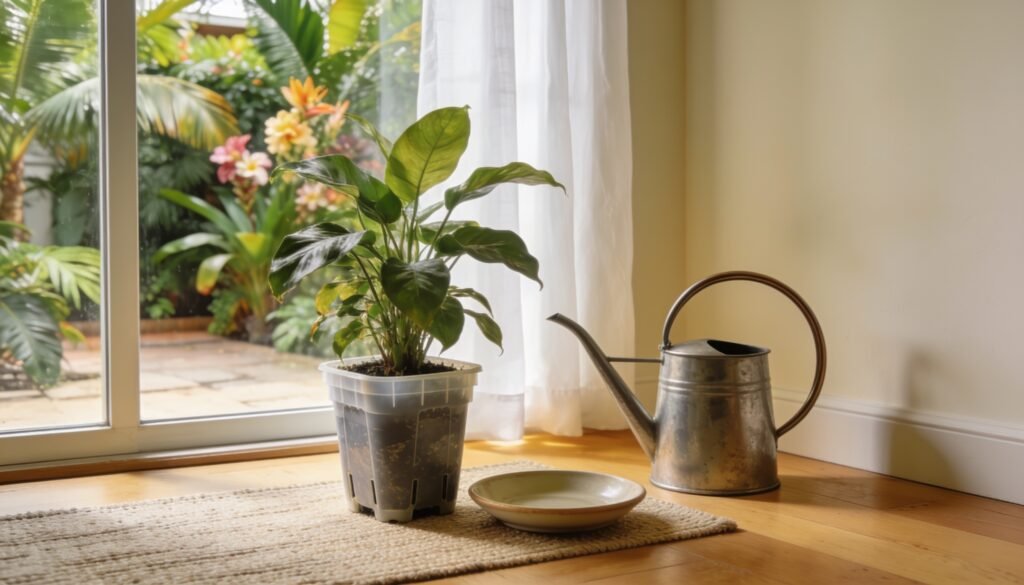
1 Comment
[…] Related: Indoor Plants for Low Light: The Real List. […]