
Mulch is the highest-return habit in Australian gardening — nothing else you can do in an afternoon saves as much water, kills as many future weeds and feeds as much soil. But “mulch” covers everything from sugar cane fluff to river pebbles, and using the wrong one in the wrong place quietly undoes the benefit. The rule that sorts them: match the mulch’s lifespan to the bed’s lifespan.
Fast mulches for fast beds (veggies and annuals)
Sugar cane, pea straw, lucerne. These are the soft, quick-rotting mulches — and their rotting is the point: they feed soil while they protect it, then disappear right when you’re replanting anyway. Sugar cane is the Queensland default (cheap, clean, easy); lucerne adds the most nutrition and costs like it; pea straw sits between. Lay them thick-ish but loose over damp soil, keep clear of seedling stems, and expect to top up each season. Their one vice: a fine mulch laid thick can mat into a thatch that sheds light rain — fluff it occasionally, and if water is beading through to dry soil beneath, you’re meeting the repellence problem.
Slow mulches for slow beds (trees, shrubs, natives)
Chunky bark, wood chip, forest blends. Coarse, long-lasting, and the right look and function under established plantings — they suppress weeds for a year or more and break down slowly into humus. Arborist chip (the mixed fresh chip from tree work) is the budget champion for large native and shrub areas. Two honest rules: keep all wood mulch pulled back from trunks and stems — the classic “mulch volcano” against bark holds moisture where rot and pests start — and keep wood mulch clear of contact with house timbers and slab edges; mulch doesn’t summon termites, but piling cellulose against your building is poor hospitality, and regular pest inspections remain the actual protection.
The special-purpose shelf
Compost as mulch — technically the best thing you can spread and the worst weed suppressant; use it as the under-layer with straw or chip on top: the classic two-layer finish. Living mulch (dense groundcovers) for permanent beds you never want to top up again. Pebbles and gravel — honest verdict: decorative, and horticulturally the weakest option for garden beds. Stone feeds nothing, heats the root zone in an Australian summer, and becomes a weed-seed trap you can’t top up over. Reserve it for succulent bowls, arid-style designs and paths — not around roses or veggies. Fresh lawn clippings: thin layers only, or they slime; better through the compost first.
The bushfire note
In bushfire-prone areas, flammable mulches close to the house are part of your fire-risk picture — local fire authorities publish guidance on garden design and materials near buildings, and that guidance (not a gardening site) is the reference. Where it matters, non-flammable ground treatments near structures and organic mulches further out is the standard shape of the compromise.
Laying it right (where mulch earns or loses its keep)
Weed first, water deeply, then mulch — mulch locks in whatever moisture state it lands on (water principles). Depth: a loose hand-span of coarse mulch, less for fine types. Clear of stems, always. On clay, mulch is also your structure program in disguise — the worm-fed improvement layer the clay guide relies on. Top up when soil shows through, and by summer’s first heatwave your beds will need visibly less water than the bare-soil garden next door.

 By anastasnowla@gmail.com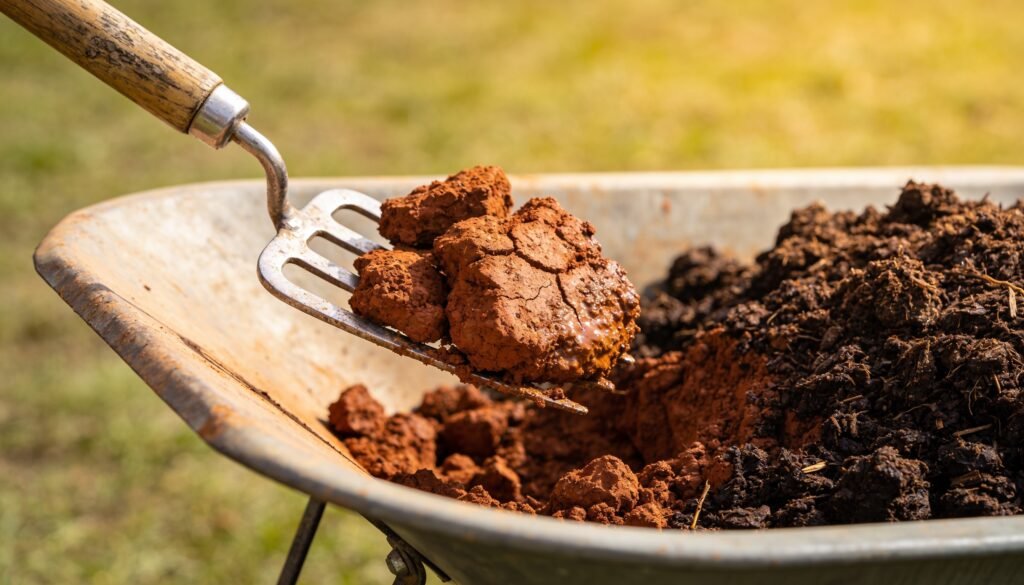
1 Comment
[…] Related: Mulch in Australia: What to Use Where (and What to Avoid). […]