
Clay soil has a terrible reputation it only half deserves. Yes: it sets like terracotta in a dry August, waterlogs in a wet week, and breaks cheap tools and spirits. But clay is also the most nutrient-rich base soil most Australians will ever garden on — its problem is structure, not fertility. Fix the structure and clay outgrows sand comfortably. The catch is that the most famous clay remedy — gypsum — only works on some clays, and the thing that works on all of them is less glamorous.
First, the two-minute tests
Confirm it’s clay: moisten a ball of soil and roll it into a ribbon between your fingers. The longer and shinier the ribbon, the heavier the clay.
Test whether gypsum will help: gypsum works by flocculating dispersive (sodic) clays — clays whose particles drift apart in water and then set like concrete. Drop a dry clod into a jar of rainwater or distilled water and leave it a few hours. If a milky cloud halos the clod, your clay disperses and gypsum should genuinely improve it. If the clod sits there sulking with clear water around it, your clay is stable — gypsum will do little, and the money belongs in compost instead. This one test separates the gypsum success stories from the “I spread three bags and nothing changed” stories; both groups were telling the truth about different clays. (If you do use gypsum, amounts come from the bag, not from blogs.)
The universal fix: organic matter, relentlessly
Every clay, dispersive or not, improves the same way: organic matter, added repeatedly, from the top. Compost, aged manures, and mulches breaking down at the surface feed the soil life — worms, microbes, roots — that build crumb structure no bag of anything can create directly. The realistic program:
- Start where you’re planting, not everywhere. Improving a whole yard is a decade; improving this year’s beds is a season.
- Fork, don’t flip. Drive a garden fork in and rock it to create fracture channels, then spread compost over the surface and let biology carry it down. Digging wet clay smears it into pottery; digging bone-dry clay is punishment. Work it just-moist.
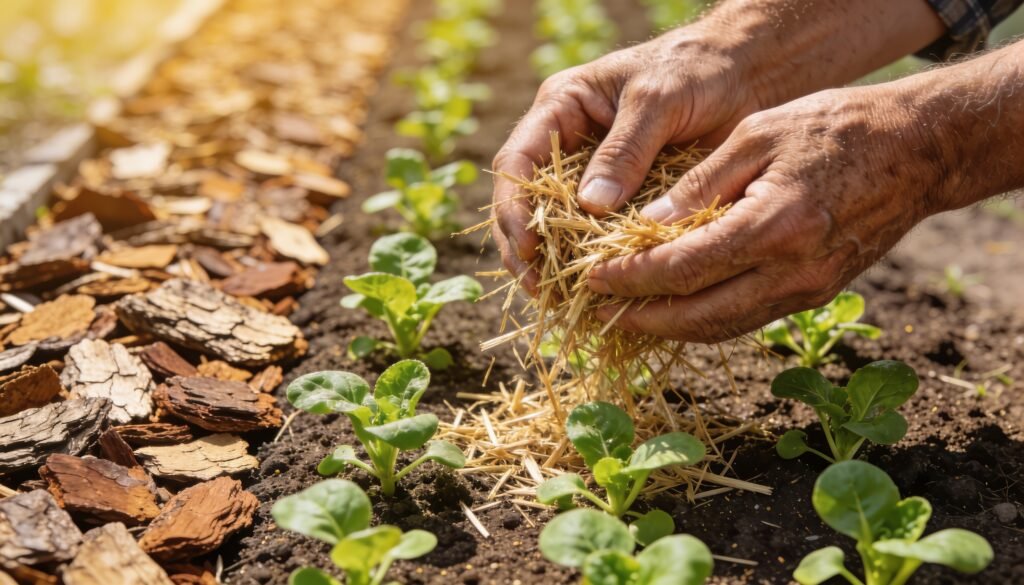
- Mulch permanently. Bare clay bakes to crust and sheds water; mulched clay stays workable and keeps its worms. If water is beading off the surface crust rather than soaking, deal with the repellence layer as its own step.
- Grow roots as tools. Green manures and deep-rooted plants open channels and leave organic matter exactly where it’s needed. Even one season of a cover crop visibly changes the top layer.
The strategic shortcut: go up, not down
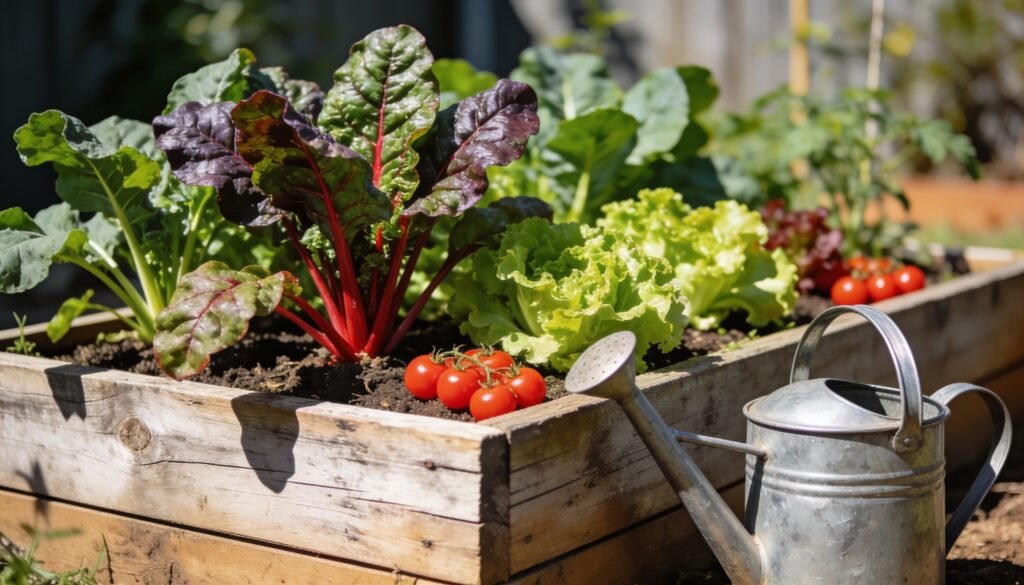
The fastest good garden on clay doesn’t fight the clay at all: build raised or no-dig beds on top and let the layers improve the ground beneath over the years (worms commute upward with enthusiasm). This is the honest counter to the classic clay trap — digging a lovely compost-filled hole in clay creates a bathtub that drowns the plant in the first wet week. If planting into clay, plant into a broad, slightly mounded area of improved soil rather than a neat deep hole, so water has somewhere to go — a lesson that matters most in waterlogged-week country.
Work with what clay is
Meanwhile, plenty of plants treat structured clay as a feature — it holds water and food through dry spells that leave sandy gardens gasping. Improve where you must, mound where it’s wet, mulch always, and let the ribbon-rolling soil that broke your fork in year one hand you the district’s best tomatoes in year three. Yellowing plants along the way have their own checklist — on clay, “drowning” ranks higher than usual.
Related: Waterlogged Garden After Rain: Triage and Drainage Fixes.

 By anastasnowla@gmail.com
3 Comments
[…] Related: Improving Clay Soil Without Replacing It (Gypsum Isn’t Always the Answer). […]
[…] Related reading: What to Plant Now in Subtropical Australia: A Month-by-Month Calendar and Improving Clay Soil Without Replacing It (Gypsum Isn’t Always the Answer). […]
[…] Related: Improving Clay Soil Without Replacing It (Gypsum Isn’t Always the Answer). […]