
In two square metres, grow fast, frequently picked crops: herbs, salad greens, spring onions, a cherry tomato and a chilli. Use the rail, wall and railing for height, and keep the floor for a few rectangular pots. Match the crop to your light first, because fruiting plants need far more sun than leaves.
This checklist works through what to plant, where to put it and how to keep it going. If you are still deciding whether your balcony suits a garden at all, start with the complete guide to setting up a balcony garden.
What should you prioritise in a tiny space?
Choose crops you will use weekly and that give repeated pickings from one plant or one pot.
- Herbs: parsley, chives, mint (in its own pot), basil in warm months, thyme and oregano.
- Salad greens: lettuce, rocket, mizuna, Asian greens and spinach. The NSW Government’s small-space gardening advice lists herbs, lettuce, spinach and Asian greens as doing well in pots.
- Spring onions: compact, shallow and easy to harvest a few at a time.
- One cherry tomato: a single bush or compact type gives more return than three crowded plants.
- One or two chillies: compact plants that stay productive for months in warm climates.
Skip space hogs: pumpkins, corn, broccoli and most root crops need more room or depth than two square metres comfortably gives. If you want to add something heavier-rooted later, the container vegetable growing guide covers pot depth and potting mix in more detail.
How much sun does each crop need?
Count the hours of direct sun your balcony actually receives on a clear day, in the season you plan to grow.
| Crop type | Light guide | Notes |
|---|---|---|
| Tomatoes, chillies | About 6 to 8 hours direct sun | Oregon State University Extension gives this for fruiting crops |
| Lettuce, Asian greens, spinach | Tolerate some shade | Same source; less sun means slower growth, not no growth |
| Herbs, spring onions | Mixed | Mediterranean herbs prefer sun; parsley, chives and mint cope with less |
Treat these as guides, not guarantees. Reflected heat from walls and glass can matter as much as hours of sun.
What to plant by aspect (southern hemisphere)
In Australia the sun tracks across the northern sky, so a north-facing balcony gets the most sun, especially in winter. The NSW Government notes that north-facing balconies get the most winter sun, east-facing ones gentle morning sun and west-facing ones harsher afternoon sun. South-facing is the shadiest by the same logic. For a deeper look at hot afternoon spots, see our guide to plants that cope with a west-facing balcony.
| Aspect | Light pattern | Suggested layout for 2 m² |
|---|---|---|
| North | Most sun, especially in winter | Cherry tomato on the rail trellis, chilli in a large pot, herb pots at the front, a shallow greens trough beneath |
| East | Gentle morning sun, cooler afternoons | Salad greens and spring onions in two troughs, parsley and chives, a compact chilli in the sunniest corner; tomato only if you get close to full sun hours |
| West | Strong afternoon sun, heat stress | Chilli and thyme or oregano along the wall; greens in a pot shaded by taller plants; shade cloth or a movable screen in peak summer |
| South | Least direct sun | Leafy greens, mint, parsley, chives and spring onions; skip tomato and chilli unless you have a bright spot |
These are editorial suggestions; a tall building opposite, or an overhang above, changes everything. Watch one day of sun and note it before buying plants.
How do you use vertical space?
Height is your biggest free resource on a small balcony.
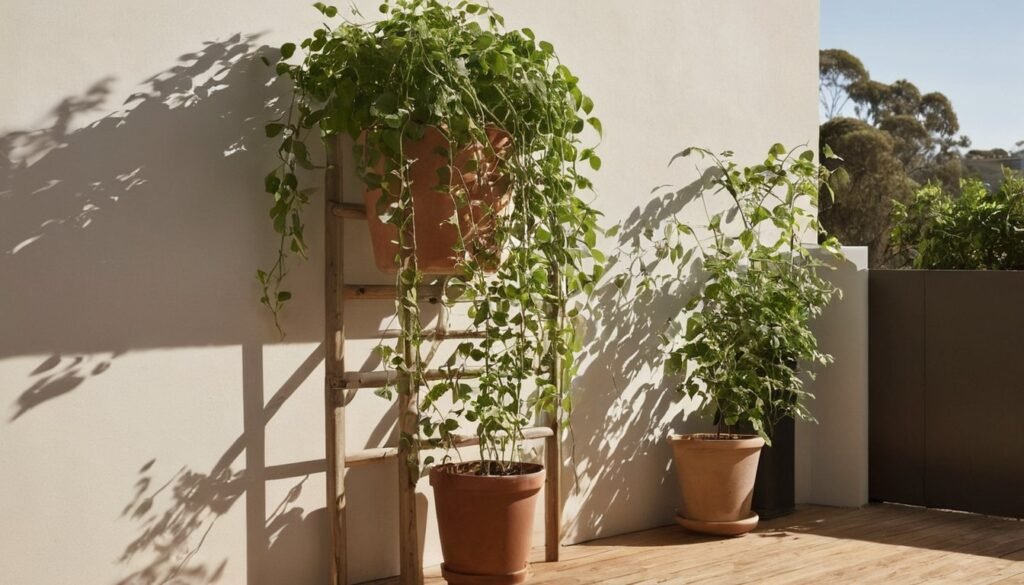
- Trellis or mesh against the wall or rail for a cherry tomato. Secure it firmly and check the fixing method with your building manager.
- Hanging baskets for herbs and trailing types. The NSW Government notes baskets must be well secured to the railing.
- Rail planters for greens and spring onions, if rules allow items hung over the edge.
- Tiered shelving with the tallest, sun-hungry plants at the sunny end and shade-tolerant leaves lower down.
Weight matters on a balcony. Wet potting mix and large pots are heavy, so check with your building manager before loading the space. Lightweight pots and potting mix also keep containers movable, as the NSW advice points out.
How do you keep harvests coming? Succession planting
Small pots mean small batches, so stagger them.
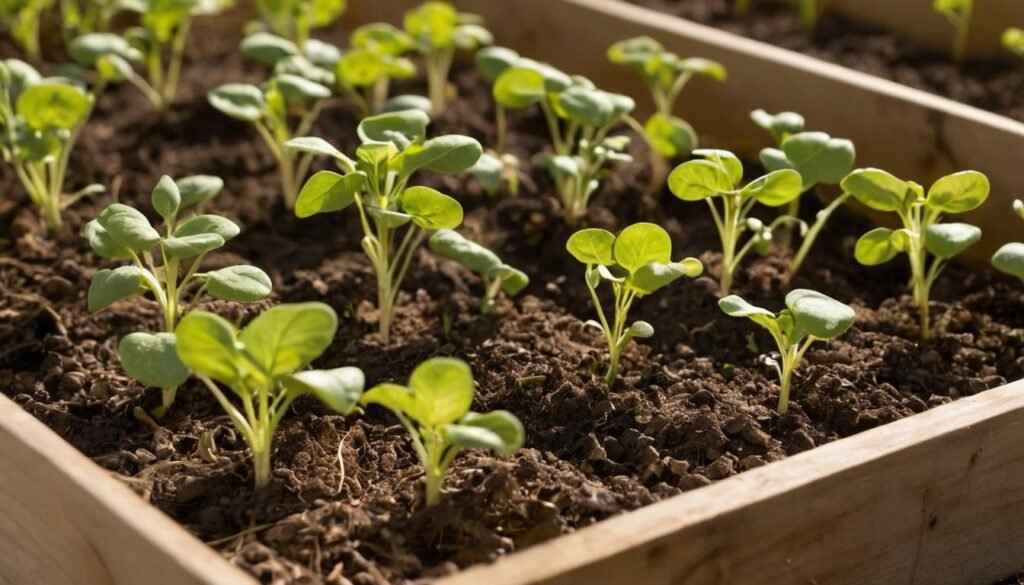
- Sow a short row or pot of lettuce, rocket or Asian greens every two to three weeks rather than all at once.
- Plant spring onions in a fresh pot every month or so in the growing season.
- Pick outer leaves and the tops of herbs to keep plants producing.
- Replace worn-out plants rather than nursing them through poor seasons.
Succession timing depends on local temperature. In heat, greens bolt (flower and turn bitter) sooner, so favour smaller, more frequent sowings and a little shade.
What does a simple watering routine look like?
Container soil dries out faster than ground soil, especially in sun and wind. Oregon State University Extension advises watering when the top soil feels dry and continuing until water runs from the drainage holes.
- Check each pot with a finger most mornings in warm weather.
- Water slowly until water drains, then empty saucers so roots do not sit in water.
- Group thirsty pots together and herbs that prefer drier soil separately.
- Use mulch on larger pots to slow drying.
- In hot, windy weather, check twice a day if needed. Hanging baskets dry fastest.
Plastic pots hold more moisture than terracotta or concrete, per the NSW advice, which can reduce your workload on a hot balcony. Do not let drainage run onto neighbours below; use trays and check building rules.
Summer and winter swaps by climate zone
Timing is climate-dependent, so treat this as a framework and check local advice.
| Zone | Summer (December to February) | Winter (June to August) |
|---|---|---|
| Tropical (Top End, far north Queensland) | Hot, humid wet season: stick to tough herbs and chillies, with shade for greens; check local advice for tomatoes | Cooler dry months are generally the easier window for tomatoes, salad greens and herbs |
| Subtropical (south-east Queensland, northern NSW) | Chilli, basil, cherry tomato where sun allows; shade greens or grow in part shade | Lettuce, rocket, Asian greens, spinach, spring onions, parsley |
| Temperate (Sydney, Melbourne, Adelaide, Perth) | Tomato, chilli, basil, with afternoon shade in heat | Greens, spring onions, parsley, chives; tomato and chilli rest |
| Cool, Tasmania and highlands | Short tomato and basil season; greens and herbs thrive | Hardy greens and spring onions if sheltered; many plants slow |
For tomatoes in cooler places, plant out when frost has passed and soil has warmed. The City of Hobart puts ideal soil at roughly 16 to 20 degrees Celsius and advises planting out after Show Day rather than in early spring.
Common mistakes
- Planting tomatoes and chillies in a spot with only three or four hours of sun.
- Too many plants crammed into too few pots.
- Pots without drainage, or sitting in full saucers.
- Sowing everything at once, then having a glut and a gap.
- Ignoring weight and the rules of your building. Check with your building manager before adding heavy planters or fixing anything to the structure.
- Forgetting that wind and reflected heat on a high balcony dry plants quickly.
Quick checklist
- [ ] Measure one day of direct sun and note your aspect.
- [ ] Check weight, fixing and drainage rules with the building manager.
- [ ] Choose 4 to 6 crops from the priority list.
- [ ] Put fruiting crops in the sunniest spot and leaves in the lower light.
- [ ] Set up a trellis or secured basket for height.
- [ ] Plan a staggered sowing every two to three weeks.
- [ ] Water when the top soil is dry, until it drains, and empty saucers.
- [ ] Swap crops each season for your climate zone.

 By anastasnowla@gmail.com


No comment yet, add your voice below!