Container vegetable growing fails in Australia for one main reason, and it isn’t variety choice or fertiliser or love. It’s small pots. A small pot in Australian sun is an oven with a plant in it: the root zone swings hot by day and the whole thing dries out by lunchtime, and no crop performs with cooked, thirsty roots. Choose the crop to fit the pot you can offer — or better, size the pot to the crop — and container growing suddenly works the way the pictures promised.
The honest pot-size table
Practical minimums per plant — bigger is always better, and these assume a quality potting mix (never garden soil, which compacts and drains badly in containers):
- Herbs (basil, parsley, chives, mint): 20 cm pot each; mint always alone, it’s a thug.
- Salad greens (lettuce, rocket, spinach, spring onions): anything 15–20 cm deep — a trough or foam box works; these are the shallow-rooted exception that forgives small containers.
- Cherry tomato: 40 cm / roughly 30 L minimum, plus a stake. The single most popular balcony crop and the most commonly under-potted.
- Full-size tomato, capsicum, chilli, eggplant: 40–50 cm pot; chilli is the most forgiving of the four.
- Zucchini: 50 cm+ tub, and accept it will still dominate.
- Bush beans: a 30 cm pot takes several plants; climbing beans want a deeper tub plus something to climb.
- Carrots, beetroot, radish: depth over width — 30 cm+ deep for carrots (choose shorter round varieties in pots), radish happy in 20 cm.
- Dwarf citrus: half-wine-barrel scale, 50 cm+ — a long-term resident, covered separately soon.
If a crop’s minimum is bigger than your space allows, grow something else. A thriving pot of herbs beats a suffering tomato every time.
Why the size rule dominates here
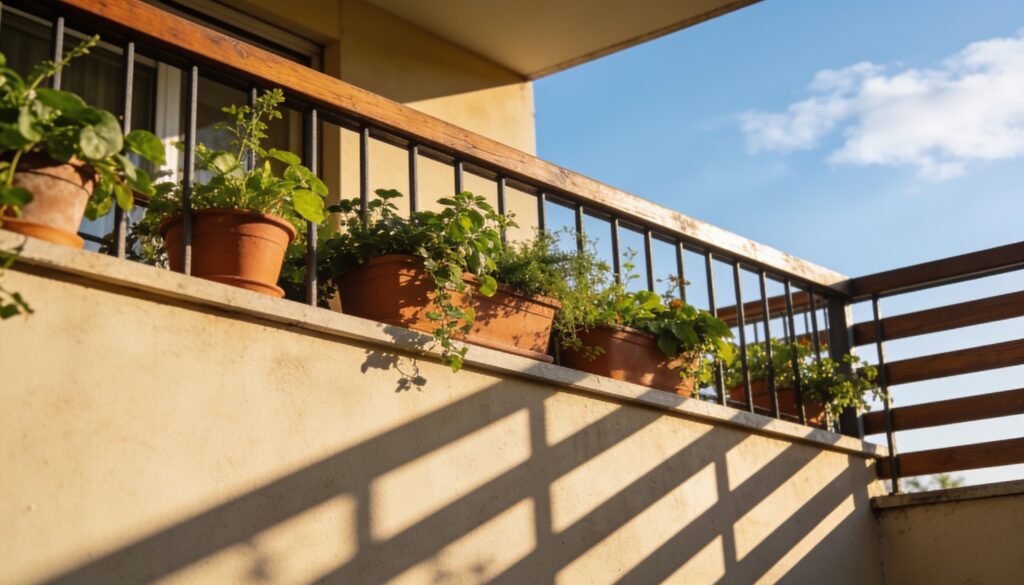
Volume is buffer. Soil mass evens out temperature swings and holds a day’s water; a big pot rides out a 35-degree afternoon that would wilt the same plant in a small one. Australian conditions — high sun angle, hot dry winds, balcony concrete radiating heat (the balcony guide covers the microclimate) — punish thin margins harder than the northern-hemisphere sources most container advice comes from. Practical corollaries: light-coloured pots beat dark ones in full sun; grouped pots shade each other’s root zones; mulch on top of the mix isn’t optional in summer; and watering runs on the check-don’t-schedule method in the watering guide, which for small pots in January means checking daily.
Matching crops to your light
Pots can’t fix aspect. Fruiting crops — tomatoes, capsicum, zucchini, beans — want the sunniest position you have, which in the southern hemisphere means north-facing (here’s the aspect guide — and yes, most international advice has it backwards for us). Leafy greens and many herbs are the shade-tolerant team, and in a Queensland summer they actually prefer protection from brutal afternoon sun. East-facing morning sun suits almost everything soft.
Timing still applies in a pot
A pot doesn’t exempt you from the calendar — a balcony tomato planted in October hits the same December wall as one in the ground. Plant container crops in the same windows as garden crops: the subtropical month-by-month calendar applies pot-for-pot, with one bonus — pots are movable, so you can chase winter sun and dodge summer hail in a way no garden bed can.
Start with three big pots and one crop per pot, get a season of wins, then expand. In containers, scale kills; success compounds.
Related: Citrus in Pots: Growing Lemons and Limes in Small Spaces.
Related: Self-Watering Pots: How They Work, When They’re Worth It, When They Fail.

 By anastasnowla@gmail.com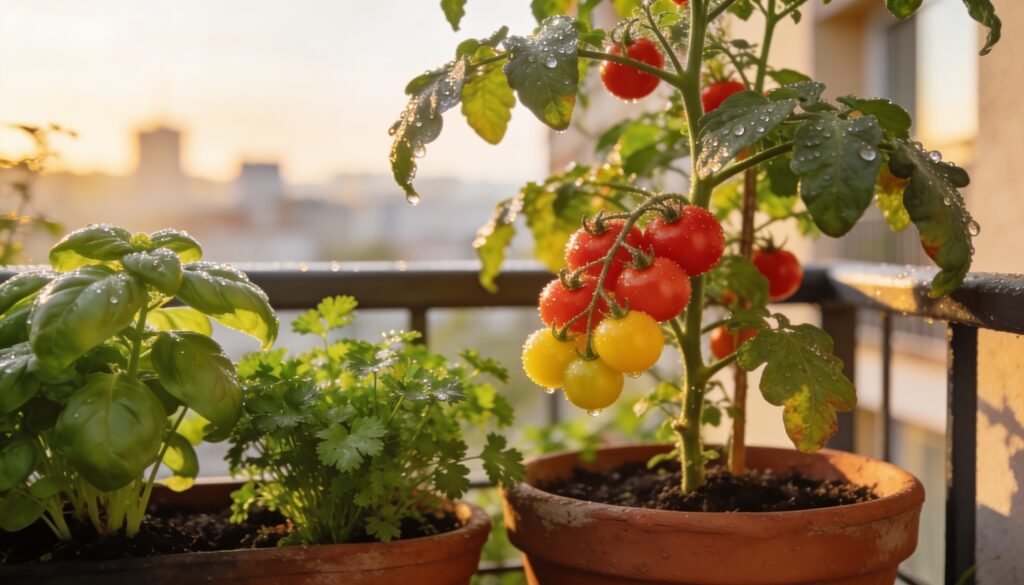
No comment yet, add your voice below!