
Vertical gardening has a renter problem: nearly every inspiring green-wall photo began with a masonry drill. But the drill was never the point — the point is growing upward instead of outward, and every genuinely useful version of that can stand, lean, clamp or hang without leaving a mark. Here’s the no-hole toolkit, in rough order of usefulness.
Freestanding: the workhorses
Ladder-style plant shelves — an A-frame or step-shelf unit against the wall — are the highest-value option per dollar: four or five staggered levels, air and light to every pot, no attachment, moves out when you do. Choose one rated for outdoor use and remember pot weight adds up fast (the wet-soil warning applies vertically too — heaviest pots on the bottom rungs, always).
Purpose-built freestanding vertical planters — tiered towers and frame-with-pockets systems that support themselves. They pack the most plants per footprint; their trade-off is small soil cells that dry quickly, so treat them as herb-and-greens territory rather than tomato territory (why cell size rules what you grow).
The lean-and-trellis combo: a heavy planter box at the base with a trellis rising from the box itself (not the wall) turns one large pot into square metres of growing face for climbers — beans, snow peas, star jasmine for scent. The base pot’s weight is the anchor; nothing touches the render.
Clamp, tension and hang
Railing planters with clamp or saddle fittings use the balustrade instead of the wall — no tools, huge sun exposure. Two cautions: check body-corporate rules about anything visible from outside or hanging over the edge (rules vary — that’s a check-your-scheme point), and respect wind, which treats railing pots as sails; clamp hard, plant low and tough.
Tension rods and poles (the floor-to-ceiling spring-loaded kind rated for outdoor use) can carry lightweight hanging pockets in a covered balcony corner — zero marks, surprisingly sturdy, strictly for light loads.
Over-door and over-rail hangers do small jobs — a strip of herb pots on the utility rail — without commitments.
What about adhesive hooks? For anything holding soil and water: no. Sun, heat and moisture are exactly the conditions adhesives fail in, and they fail at 2am onto tiles. Adhesives are for fairy lights.
Planting the wall you’ve built
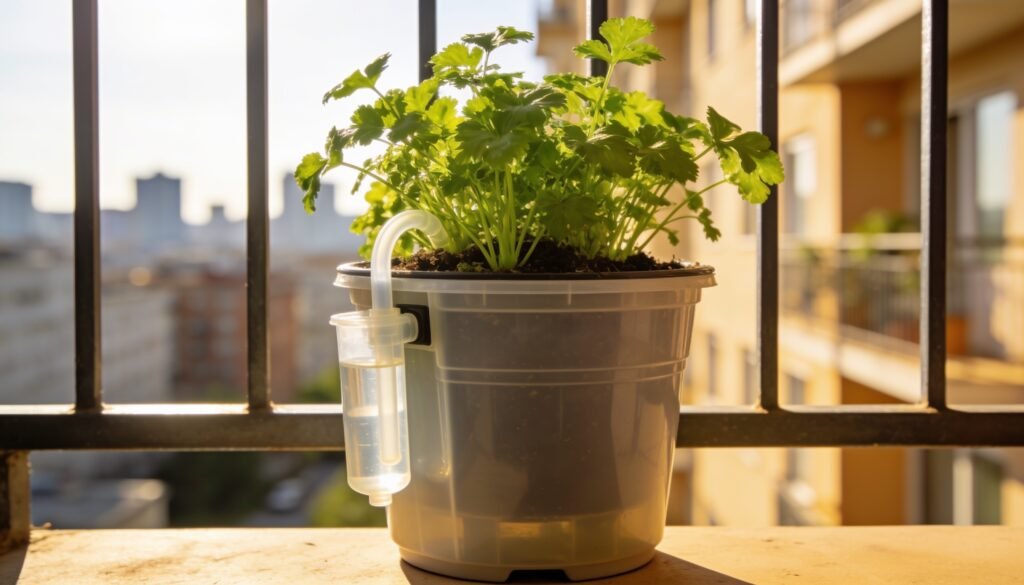
Vertical gardens amplify the container rules: small cells dry fastest of anything you can grow in, top rows drain onto bottom rows (plant the thirstiest low), and the whole face shares one aspect — so read your balcony’s light honestly first (the southern-hemisphere aspect guide; a green wall on a dark south wall becomes a brown wall). The reliable cast: herbs (the classic vertical crop), loose-leaf greens and rocket, strawberries in the pockets, trailing succulents and dichondra for the ornamental rows, ferns and rhipsalis for shaded frames. Water more often than feels reasonable — vertical set-ups can need daily attention in summer — or choose a system with a built-in reservoir and treat it like any self-watering pot.
The renter’s exit plan
The quiet advantage of doing it this way: your garden is an asset, not a liability. No patch-and-paint negotiations, no bond deductions — the whole green wall disassembles into pots and frames and rides the moving truck. Build nothing you can’t carry out, and the vertical garden becomes the one part of the apartment that’s genuinely yours.

 By anastasnowla@gmail.com
1 Comment
[…] Related: Vertical Gardens That Don’t Damage the Wall (or Your Bond). […]