
The single most common lawn mistake in Australia is mowing too short. It feels tidy for a day, and then the lawn spends a fortnight recovering — or, in summer, doesn’t. Every grass has a height range where it thrives and a scalping point where you’re cutting into stems rather than leaf. Set the mower once for the grass you actually have, and half of lawn care sorts itself out.
The heights, by grass
The ranges below reflect standard Australian turf-industry guidance (Lawn Solutions Australia and major turf producers). Treat them as ranges, not laws — sun, season and how often you mow all move you within them.
- Buffalo (Sir Walter and similar): 30–50 mm. Buffalo carries its energy in its broad leaf; cut it to couch height and it sulks visibly. Go toward 50–60 mm in winter and in shade.
- Kikuyu: 30–50 mm. It will survive lower, because kikuyu survives nearly everything, but it looks and wears best in this range — and mowing it regularly matters more than mowing it low, because it grows faster than anything else in the yard.
- Couch: 5–30 mm. The one Australian lawn that genuinely suits short. But short couch is a commitment: the lower you go, the more often you must mow, because the one-third rule (below) arrives fast.
- Zoysia: 5–50 mm, or leave it. The flexible one. It’s slow-growing enough to hold a tidy look between infrequent mows, and some varieties can simply be left semi-unmown.
The one-third rule
Whatever the height, never remove more than about a third of the leaf blade in a single mow. Take more and the plant loses too much of its food-making surface at once — it stresses, pales and leans on its reserves. Practically, the rule sets your frequency: if you want couch at 20 mm, mow before it reaches 30 mm. If the lawn has gotten away from you (holidays, wet weeks), don’t fix it in one brutal pass — bring it down in stages over two or three mows a few days apart.
Scalping: how lawns get hurt
Scalping is cutting into the brown stemmy layer below the green leaf. It happens when the deck is set too low, when wheels drop into hollows, and on the humps of uneven lawns. A scalped patch in mild weather recovers; a scalped patch in an Australian January bakes, and often becomes the brown patch you’re diagnosing next month. If your lawn scalps in the same spots every mow, the fix is levelling those spots — not mowing the whole lawn higher forever.
One deliberate exception: warm-season lawns are sometimes cut very low once in early spring (a “renovation” or dethatch mow) to clear winter thatch before the growing flush. That’s a once-a-year tool for enthusiasts, done as growth resumes — not a way to mow in general, and never in summer heat.
Setting your mower honestly
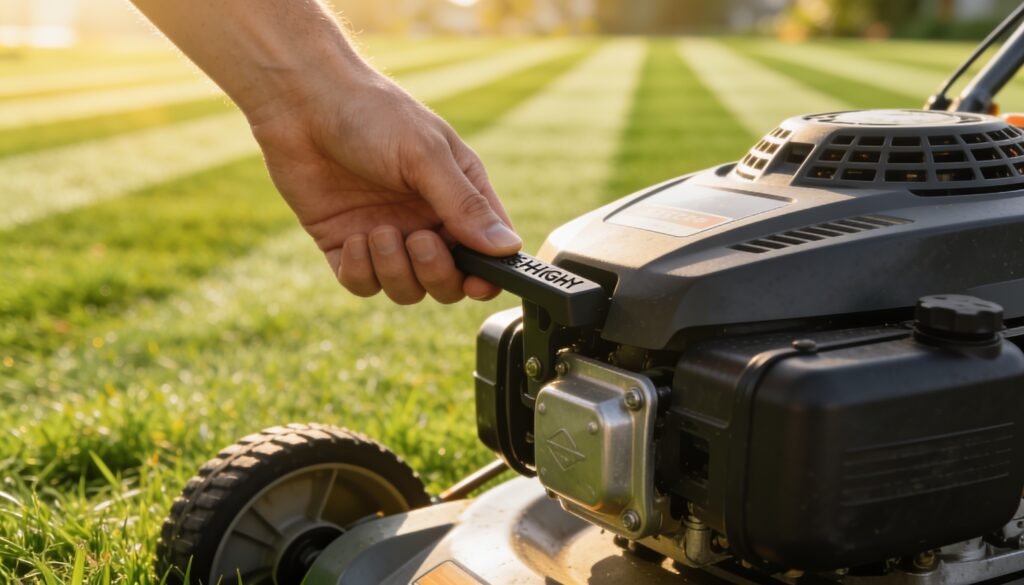
Mower height markings are approximate. Park the mower on concrete, measure from the ground to the blade, and label the lever positions once — then you actually know what “3” means. Keep the blade sharp: a blunt blade tears rather than cuts, leaving whitish frayed tips that brown off and invite disease. And in winter, go up a notch across the board — slower-growing grass wants more leaf, as covered in the seasonal care rhythm.
Height sorted, the next lever is food: when to fertilise — and when it’s wasted.
Related: Battery vs Petrol Mowers for Australian Yards: An Honest Decision Guide.
Related: Lawn Mower Maintenance Before Spring: Blades, Oil, Clean-Out.

 By anastasnowla@gmail.com
1 Comment
[…] Related: How Short to Mow: Cutting Heights for Australian Grass Types. […]