
Succulents suit a bright balcony, but “full sun” is not the same for every plant or every spot. Acclimatise new plants gradually, use a gritty mix in pots with drainage holes, and water only after the mix has dried. On humid subtropical balconies, rot from wet weather kills more succulents than heat does.
Most failures come down to three things: a sudden move into harsh sun, a mix that stays wet, and watering on a fixed schedule rather than by the season and the weather.
Why do succulents burn when you move them into full sun?
Nursery plants are usually grown under shade cloth or in a greenhouse. The Arizona-Sonora Desert Museum notes that greenhouse-grown plants are apt to sunburn in their first outdoor season, even when the species is known to be sun-hardy, if they are planted out without proper acclimation.
Sunburn shows as white, beige or black patches. The UC Master Gardeners of Orange County say this means the cells are damaged and the scars last as long as the leaf does. Burnt leaves do not recover; the plant grows new ones.
Acclimatise like this:
- Start in bright shade or morning sun only, for about a week.
- Add an hour or two of stronger sun every few days, building over two to four weeks. The exact pace is a judgement call, so watch the leaves.
- Keep newly bought and newly repotted plants out of hot afternoon sun for longer, as both are more vulnerable.
- Move through the change on an overcast stretch if you can, rather than just before a heatwave.
Do not rotate a plant to a different face of the sun without checking it first. The side that has been shaded is the side that burns.
How hot does a balcony really get?
Hotter than the air temperature suggests. Pale walls, glass balustrades, sliding doors and paving bounce light and heat back onto the plants. A west-facing balcony in summer can be harsh, particularly where heat builds against brick or glass in the afternoon.
Practical adjustments:
- Pull pots 20 to 30 centimetres away from walls and glass.
- Lift pots off hot paving onto a stand or timber slats so air moves underneath.
- Put the most sun-hardy plants closest to the heat and softer, leafier types behind them.
- Use removable shade cloth or a side screen for the hottest summer weeks. The Orange County guide notes that many succulents look better with a little shelter from hot afternoon sun in summer.
Small pots in dark colours heat up fastest. Larger pots in lighter colours buffer the roots better, although they stay wet longer after rain.
What potting mix and drainage do succulents need?
Succulents need soil with good drainage and aeration. A standard potting mix on its own tends to hold too much water for them.
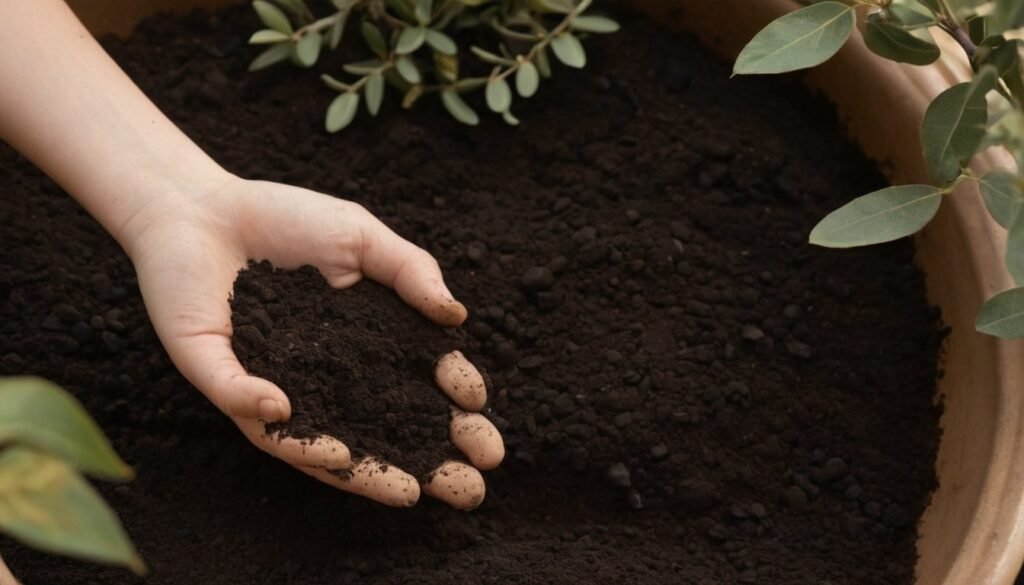
A workable recipe is a cactus and succulent mix, or a general potting mix with a generous portion of coarse grit, coarse sand or pumice mixed through. Aim for something that looks and feels gritty and that water runs through quickly. The proportion is a judgement: wetter climates and shaded spots call for more grit.
Two common mistakes:
- A layer of gravel at the bottom of the pot. The Orange County guide says this makes drainage worse, not better. Use the same free-draining mix all the way through.
- Pots without drainage holes. Decorative outer pots collect water at the base. Tip it out after rain or watering.
Which pot suits a hot, sunny balcony?
The Orange County guide recommends a shallow pot with a drainage hole rather than a deep one, because most succulents have shallow roots. A big, deep pot of mix stays wet far longer than the roots can use.
| Pot | Good for | Watch out for |
|---|---|---|
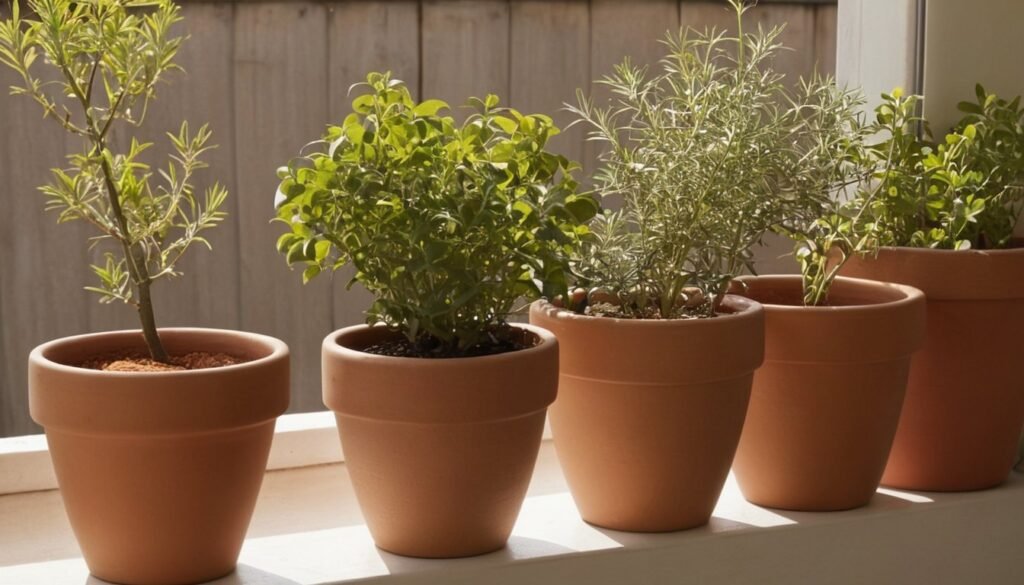
| Terracotta | Humid or rainy sites, since it dries faster than glazed pots | Needs more frequent watering in dry heat; can heat up in direct afternoon sun |
| Glazed ceramic | Hot, dry, windy balconies where the mix would dry too fast | Holds moisture longer in wet spells; check the drainage hole is not blocked |
| Plastic | Light weight, which matters on a balcony | Heats up when dark; dries slowly |
Weight matters on a balcony, so check how much load your space can carry before stacking heavy pots. If the building has rules about balcony loads, follow them. For tall pots, wind is another factor, covered in our guide to plants that cope with balcony wind.
How often should you water succulents in pots?
Water by the state of the mix, not the calendar. The University of Illinois Extension advises checking that the soil has dried before watering again, then soaking the container thoroughly and letting the excess drain away. It describes overwatering as by far the easiest way to kill one.
A rough seasonal pattern, to be adjusted for your climate:
| Season | Typical approach |
|---|---|
| Summer (Dec to Feb) | Water deeply in the early morning once the mix is dry. In a heatwave small pots may dry within days; large ones take longer. Do not water hot leaves in midday sun. |
| Autumn (Mar to May) | Water less often as days shorten and cool. |
| Winter (Jun to Aug) | Water sparingly, and in temperate or cool areas very little. Cold, wet mix is what rots roots. |
| Spring (Sep to Nov) | Increase watering as growth picks up. |
In the tropics the rhythm follows wet and dry seasons more than hot and cold ones. In the subtropics and temperate zones it follows temperature. In cool areas and Tasmania, protect frost-tender types, since many succulents are frost-sensitive.
Watch the plant. Wrinkled or withered leaves suggest thirst. Soft, translucent, yellowing or blackening leaves and stems suggest too much water.
Summer-growing or winter-growing: does it matter?
Yes, a little. Many succulents grow mainly in warm weather, while others, often from regions with hot dry summers and mild wet winters, grow mainly in cooler months and rest in summer. This is an editorial generalisation, and the divide is loose: in a warm climate many species grow most of the year. Check the label or a reliable reference for each plant.
For a hot balcony, the practical rule is to water in the plant’s growing period, ease off when it rests, and avoid dumping water on a resting plant during humid summer weather. If you cannot find out which a plant is, treat it cautiously: less water, more grit.
What about humid summers and heavy rain?
This is the hard part in Brisbane, the Gold Coast, Cairns and similar places. Succulents evolved for dry air, and warm, wet, still conditions encourage rot. A hot balcony and a downpour together are worse than either alone.
- Move pots under an eave or covered section for the wet season, if the light there is bright enough.
- Tilt pots slightly or raise them so water cannot sit in the saucer.
- Use more grit and a terracotta pot in the wettest spots.
- Keep plants spaced out so air moves between them.
- Remove soft, collapsing leaves promptly and let the area dry.
If a plant shows black, mushy stem at the base, the rot is probably advanced. Cutting above healthy tissue, drying the cutting for a few days, and replanting in fresh dry mix gives it a chance, but results are not guaranteed.
How do succulents fit with the rest of your balcony?
Succulents are the dry, sun-loving end of a mixed balcony, which usually means they should not share a watering routine with thirstier plants. Keep them in their own corner, away from pots that need regular watering, such as cherry tomatoes in containers. Our balcony gardening guide for Australian conditions covers how to lay out a space with different light and water needs.
Common mistakes to avoid
- Buying a plant from a shaded shelf and putting it straight into afternoon sun.
- Watering on a fixed day each week all year.
- Using a deep pot, or one without a drainage hole.
- Putting pots hard against a hot wall or glass.
- Feeding heavily. Pots can run low on nutrients, but a light dose once or twice in the growing season is usually enough. Follow the label.
- Leaving a plant in standing water after rain.
What is established here is the sunburn mechanism, the need for drainage and the risk of overwatering. What depends on you is the exact acclimatisation pace, the watering interval and how much shelter your balcony needs.

 By anastasnowla@gmail.com
No comment yet, add your voice below!